

Stroller time can be peaceful when your baby feels safe, comfortable, and curious about what is happening around them. The best way to keep a baby entertained in a stroller is not one trick. It is a mix of safe toys, your voice, simple games, fresh scenery, shade, and regular comfort checks.
You do not need expensive gadgets or loud screens. Most babies enjoy soft sounds, faces, movement, color, and gentle interaction. The goal is to make the ride interesting without overstimulating your baby or ignoring basic safety.
Quick Answer
To keep a baby entertained in a stroller, use age-appropriate clip-on toys, sing softly, play peekaboo, point out trees or cars, rotate simple toys, and check comfort often. Keep toys secure, avoid small parts, protect your baby from sun and heat, and take breaks during longer outings.
Key Takeaways
- Choose soft, lightweight, age-rated toys that do not have loose small parts, long cords, or detachable pieces.
- Your voice is one of the best stroller tools. Talk, sing, narrate, smile, and play peekaboo.
- Comfort matters. Check the harness, seat angle, diaper, clothing, temperature, shade, and hunger before adding more entertainment.
- Use snacks only when your baby is developmentally ready, sitting upright, and closely supervised.
- Change the view when possible. Parks, quiet streets, trees, birds, and store colors can keep stroller time interesting.
At a Glance
| Time Required | 1 to 5 minutes to set up before each walk |
| Difficulty | Easy |
| Tools Needed | Age-rated stroller toys, soft book, toy strap, canopy, hat, water for caregiver, diaper supplies |
| Cost | Free to low cost; many ideas use your voice, surroundings, and toys you already own |

Keep Baby Entertained in a Stroller With Interactive Toys
Interactive toys can make stroller time easier because they give your baby something safe to look at, touch, shake, or explore. Choose toys that match your baby’s age and stage. A newborn may enjoy high-contrast patterns, while an older baby may enjoy soft crinkle books, textured toys, or a gentle rattle.
Before you attach anything to the stroller, check the toy label and inspect the toy. Avoid loose beads, broken parts, button batteries, magnets, sharp edges, long cords, or anything small enough to fit fully inside a young child’s mouth. The U.S. Consumer Product Safety Commission explains that small parts can create choking, aspiration, or ingestion hazards for children under 3.
Warning: Never use long strings, necklaces, loose cords, or homemade ties near your baby’s neck, hands, or stroller seat. Use short, stroller-safe toy straps only as directed, and check them often.
If you want a calmer ride, attach one or two toys at a time. Too many toys can distract, overstimulate, or fall into the seat. A small toy rotation works better than filling the stroller tray or canopy with everything at once.
Recommended Products

Filled with pattern, texture and soothing sounds, our cute chime & teethe toy keeps baby busy and happy—at home and on the go. Complete with a textured teether and a colorful clip that easily attaches to strollers

ON-THE-GO ENTERTAINMENT: Make travels with your little one a joy with Itzy Ritzy's Spiral Activity Toy. Perfect for infants aged 0 months and up, it ensures a delightful experience during car rides and strolls, keeping your baby happily engaged.

ON-THE-GO ENTERTAINMENT: Make travels with your little one a joy with Itzy Ritzy's Activity Toy. Perfect for infants aged 0 months and up, it ensures a delightful experience during car rides and strolls, keeping your baby happily engaged.
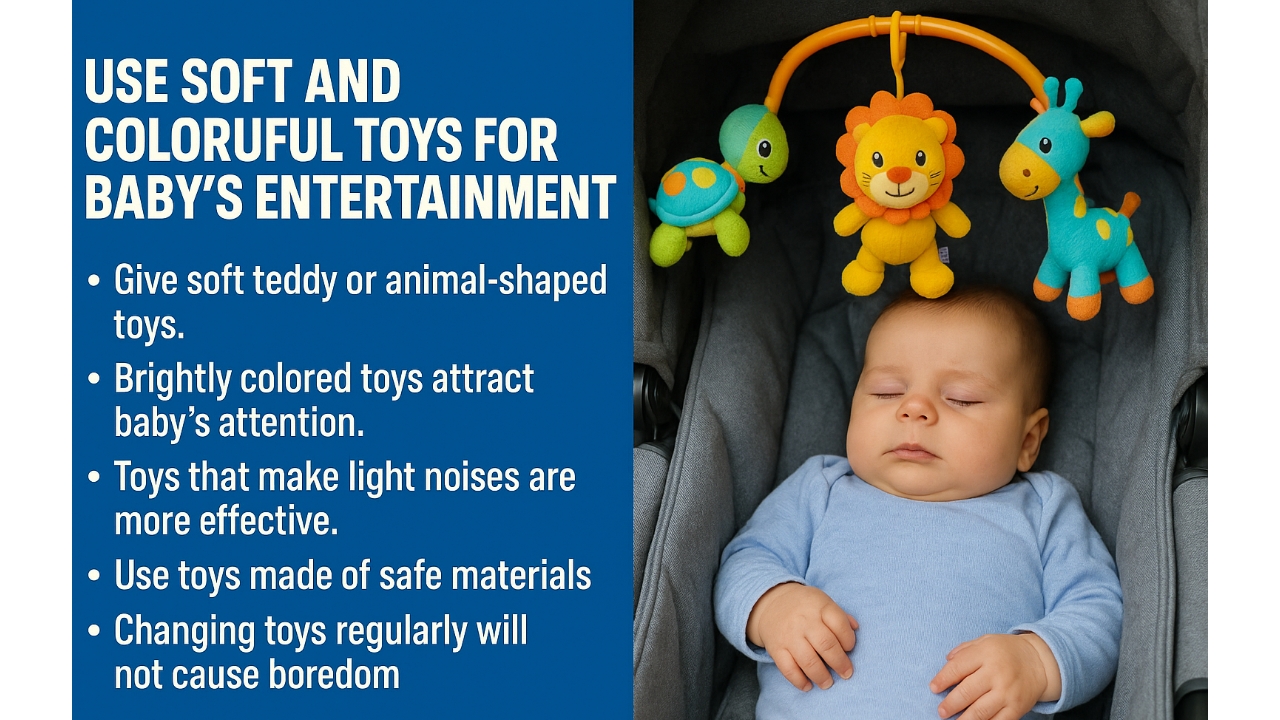
Use Soft and Colorful Toys for Baby’s Entertainment
Soft and colorful toys work well because they are easy to see, easy to touch, and simple for small hands to explore. Pick lightweight toys that will not hurt your baby if they drop into the seat.
- Use soft cloth books, plush animals, or textured toys that match your baby’s age rating.
- Choose bright colors, bold contrast, or simple patterns that are easy for your baby to focus on.
- Try crinkle toys or soft rattles instead of loud electronic toys.
- Choose washable toys because stroller toys often fall, collect dust, or touch sticky hands.
- Rotate toys every few walks so the same stroller ride feels fresh.
Keep the toy within your baby’s view, but not pressed against the face. If the stroller seat feels awkward or your baby cannot sit comfortably, review your setup first. A calm ride often starts with a comfortable seat, a secure harness, and the right recline for your baby’s age. You can also review how to make stroller comfortable for baby for more comfort ideas.
Attach Rattles or Musical Toys to the Stroller
Rattles and musical toys can help, but softer is usually better. Babies have sensitive ears, and a loud toy can make a fussy ride worse. Choose gentle sounds, low volume, and simple music.
- Use rattles that make soft, pleasant sounds.
- Clip toys to the side or front only if the clip is made for stroller use.
- Keep toys close enough to see, but not so close that they block breathing or movement.
- Choose washable toys with no loose buttons, cracked plastic, or peeling parts.
- Stop using a toy right away if a piece breaks, detaches, or becomes loose.
Pro Tip: Keep one “stroller-only” toy in your bag. When your baby sees it only during walks, it can feel new and more interesting.
Keep Baby Entertained in a Stroller With Fun Activities
Stroller entertainment does not have to come from toys. Your face, voice, and the world around you can keep your baby engaged. Simple parent-led activities also help you notice when your baby is tired, hungry, too warm, or overstimulated.
Use the ride as a gentle conversation. Point to a tree and say, “green leaves.” Point to a dog and say, “dog.” Wave at a bus, count steps, or describe the weather. The CDC’s developmental milestone resources remind parents to track development and act early if they have concerns, and everyday interaction is a simple way to stay tuned in to your baby.
Engage Your Baby With Visual Stimulation
Many babies enjoy watching movement, light, faces, and colors. You can make a walk more interesting by slowing down and showing your baby what is nearby. Keep your voice calm and your pace relaxed.
- Pause near leaves moving in the wind.
- Show safe, colorful flash cards for a short time.
- Point out birds, flowers, trees, cars, or clouds.
- Use store colors, window displays, and people walking by as short talking points.
- Sit near a window at home and let your baby watch outdoor movement from the stroller while supervised.
Watch your baby’s cues. Turning away, rubbing eyes, arching the back, crying, or stiffening may mean the activity is too much. When that happens, lower the stimulation, slow the stroller, or take a break.
Play Peekaboo or Singing Games With Baby
Peekaboo, soft singing, and smiling are simple ways to keep a baby entertained in a stroller. These activities work because your baby already knows your face and voice. You do not need to perform loudly. A calm, familiar voice often helps more than a noisy toy.
- Sing a short song softly while you walk.
- Use simple songs like “Twinkle, Twinkle, Little Star” or “The Wheels on the Bus.”
- Play peekaboo with your hands, not with a blanket over the stroller.
- Hide a small toy behind your hand and reveal it slowly.
- Smile, make eye contact, and pause so your baby can respond.
When babies hear music, they may kick, flap their arms, smile, or make sounds. These are normal ways to join the game. If your baby becomes fussy, stop the stroller safely and check comfort before trying another activity.
Peekaboo and singing work best when your baby can still see you. If you use a parent-facing stroller seat, talk face to face. If your baby faces forward, step to the side during stops and reconnect with your face and voice.
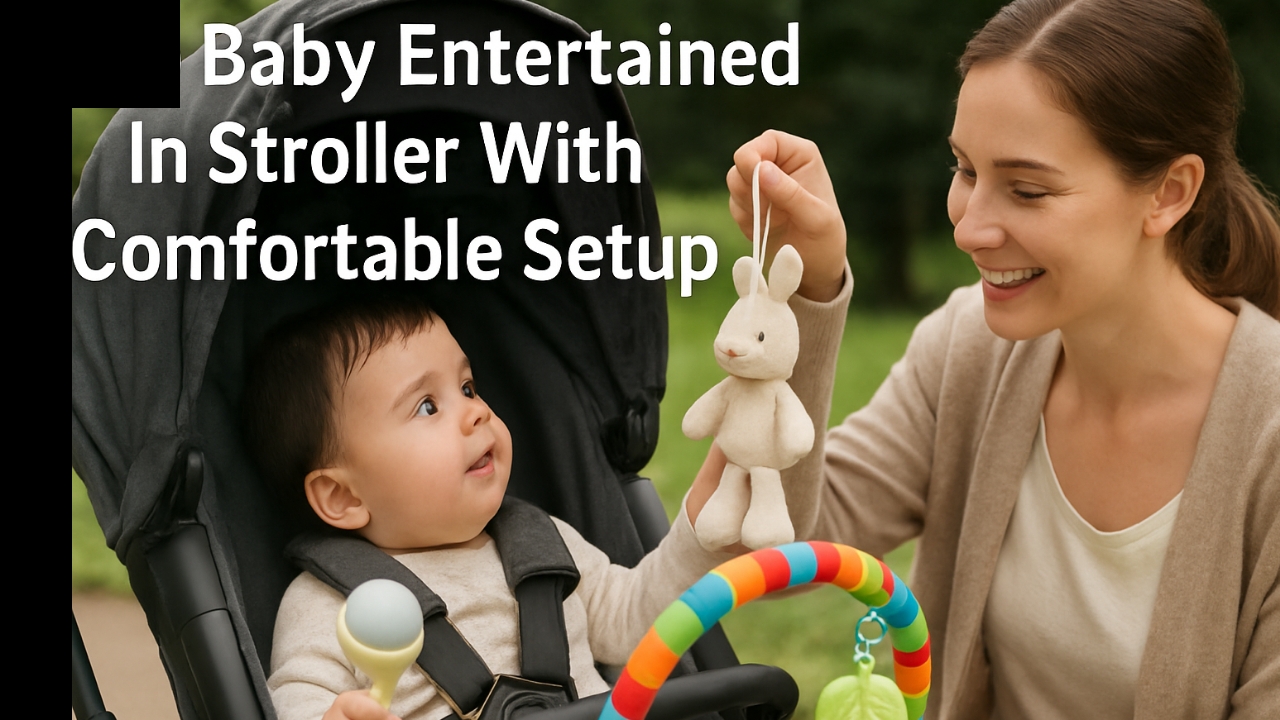
Keep Baby Entertained With a Comfortable Stroller Setup
A baby who feels hot, cold, hungry, tired, or poorly positioned will not stay entertained for long. Before you add more toys, check the basics. Comfort is the foundation of a peaceful stroller ride.
Make sure the stroller is appropriate for your baby’s age, weight, and stage. Use the harness as directed by the stroller manual. Do not add thick pillows, loose blankets, or extra padding that can affect harness fit or airflow.
Recommended Products

Ultra-Soft & Universal:Designed with strategically placed openings for the shoulder, waist, and crotch safety harness, this car seat mat ensures a secure and universal fit for most strollers.This seat liner provides extra support for your baby's back and head, reducing pressure points and ensuring a cozy ride every time.

2 pcs of 7x4.9 inches crotch pads included. Universal accessories for almost all the baby carriages, car seats and other baby car products.

This car seat straps shoulder pads designed to protect baby’s neck , shoulder and chest from being uncomfortably rubbed by the car seat belts.
Ensure Your Baby’s Comfort During Rides
A comfortable stroller setup keeps your baby secure without pinching, slumping, or overheating. Check your baby often, especially during long walks, warm weather, cold weather, shopping trips, and naps.
- Use the stroller harness every time, even for short walks.
- Adjust the seat recline based on your baby’s age and stroller instructions.
- Dress your baby in soft, breathable layers that match the weather.
- Check for twisted straps, bunched clothing, or toys trapped behind the back.
- Plan breaks for feeding, diaper changes, stretching, cuddling, and floor play during longer outings.
Babies and young children need time to move, rest, and sleep well. The World Health Organization guidelines for children under 5 cover physical activity, sedentary behavior, sleep, screen time, and restrained time. For stroller use, that means you should not treat the stroller as a place to keep a baby contained for long stretches without checking their needs.
Make Sure Baby Is Protected From Sunlight and Heat
Sun and heat can quickly make a stroller ride uncomfortable. Use the stroller canopy, choose shaded routes, and avoid the hottest part of the day when possible. The FDA says babies younger than 6 months should usually be kept out of direct sunlight, with shade and protective clothing as the first protection.
- Use the stroller canopy or a safe stroller sunshade that allows airflow.
- Choose shade from trees, buildings, or covered walking paths.
- Dress your baby in lightweight clothing that covers sensitive skin.
- Use a brimmed hat that shades the face, ears, and neck.
- Ask your pediatrician before using sunscreen on a baby younger than 6 months.
- Watch for fussiness, redness, sweating, unusual sleepiness, or signs of overheating.
If you want more stroller shade ideas, you can read about whether you need a sunshade on the stroller. You can also review how to protect baby from sun in stroller for more focused sun-safety tips.
Note: Do not cover a stroller with a thick blanket to block sun. It can reduce airflow and make the stroller hotter. Use a breathable canopy or safe stroller shade instead.
Keep Baby Entertained in a Stroller With Toys and Games
A small set of stroller games can help when your baby starts to lose interest. Keep the games simple and short. Babies do not need constant entertainment. They need a safe mix of interaction, quiet time, and changes in scenery.
Recommended Products

Entertained Car Seat Toy: Keep your baby engaged and entertained during car rides with this stroller arch toy that conveniently clips onto your little one's car seat handle.

Our baby toy safety straps are made of food-grade platinum silicone, BPA free. They offer better elasticity and durability, ensuring they won't easily break or snap, unlike most common silicone or rubber materials found in the market.

Car Seat Toy with Multi - Drawstring Structure: The multi - drawstring structure allows babies to exercise fine hand movements and grasping ability during pulling and tugging, keeping babies engaged and happy during daily routines or car rides.
Rotate a Small Stroller Toy Kit
Pack two or three small items instead of a full toy bag. A soft book, a textured toy, and a gentle rattle are enough for many walks. Swap one item every few outings so your baby sees something fresh.
- Use one soft book for looking and pointing.
- Use one textured toy for touch and grip practice.
- Use one quiet rattle or crinkle toy for sound.
- Keep a backup toy in your bag in case one falls or gets dirty.
Use Snacks Only When It Is Safe
Snacks can help older babies during a walk, but they are not the first entertainment tool. Only offer food if your baby is developmentally ready for solids, can sit upright, and you can watch closely. Avoid hard, round, sticky, or large pieces that can raise choking risk.
The CDC infant and toddler nutrition guidance notes that foods and drinks other than breast milk or infant formula are usually introduced around 6 months. Even then, stroller snacks should be soft, age-appropriate, and cut safely. If your baby is reclining, crying, laughing hard, sleepy, or moving too much, wait until you can stop and feed them safely.
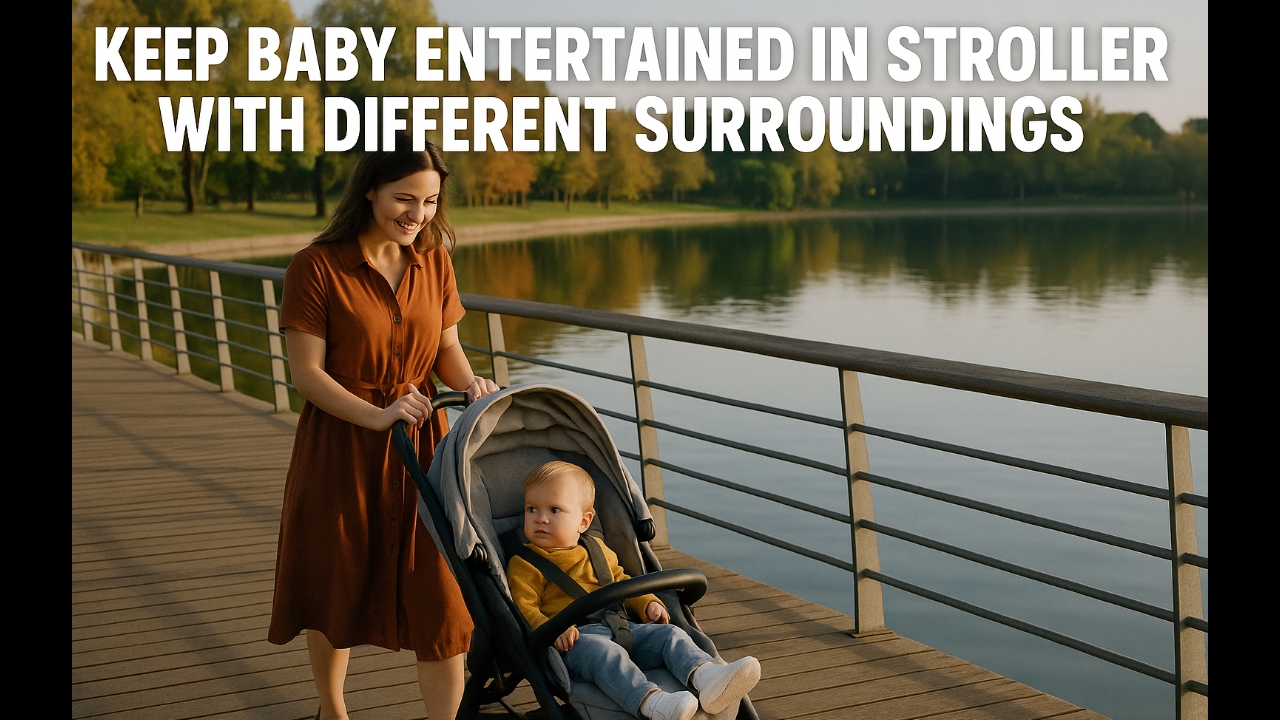
Keep Baby Entertained in a Stroller With Different Surroundings
The environment around your baby can be part of the entertainment. A stroller ride through the same route every day can feel dull, but a small change in scenery can bring new colors, sounds, and faces.
Choose calm places when your baby seems tired and more active places when your baby seems alert. A quiet park, shaded sidewalk, garden path, library entrance, or calm store aisle can give your baby something new to watch without becoming too noisy.
If you are unsure when your baby is ready for certain stroller positions, review when to place the baby in the stroller. A safe seat position makes every activity easier.
Take Baby for Scenic Walks
New scenery can hold your baby’s attention. Nature is especially useful because it changes without needing screens or loud toys. Leaves move, birds call, sunlight shifts, and flowers add color.
- Walk near trees, flowers, or quiet water when it is safe.
- Pause for a few seconds and name what your baby can see.
- Use simple words like “bird,” “tree,” “car,” “sky,” and “flower.”
- Keep the route shaded and stroller-friendly.
Your baby does not need a big outing to enjoy new scenery. A different street, a calm corner of a park, or a short walk near a garden can be enough.
Visit New Places to Keep Baby Interested
Babies are naturally curious. A new place gives them fresh sounds, colors, and movement to notice. Try a different walking route, a quiet park, a safe community path, or a calm shopping area during a less crowded time.
- Choose places with smooth paths and safe stroller access.
- Avoid loud, crowded, or very hot places when your baby is tired.
- Take short trips first so you can learn your baby’s limits.
- Keep feeding, diaper, shade, and comfort supplies close.
If you plan to use a jogging stroller, make sure your baby is old enough and the stroller is designed for that activity. You can learn more about new places with a jogging stroller before trying faster routes.
What to Do If Baby Cries in the Stroller
Crying does not always mean your baby is bored. It may mean something feels uncomfortable, scary, too bright, too loud, too hot, too cold, or too long. Before adding another toy, pause and check the basics.
- Check hunger, diaper, tiredness, and temperature.
- Check whether the harness is twisted, too loose, or too tight.
- Check whether sunlight, wind, or noise is bothering your baby.
- Remove extra toys if your baby seems overstimulated.
- Stop safely, make eye contact, speak softly, and offer comfort.
- If crying sounds unusual or your baby seems ill, end the outing and call your pediatrician if needed.
A calm reset often works better than pushing through. Pick up your baby when it is safe, offer a cuddle, and restart the ride only when your baby settles.
Frequently Asked Questions
How do I keep my baby entertained in a stroller during walks?
Use one or two safe stroller toys, sing softly, talk about what you see, play peekaboo during stops, and change the scenery when possible. Also check comfort often because hunger, heat, tiredness, or a twisted strap can look like boredom.
Can toys really help keep a baby entertained in a stroller?
Yes, toys can help when they are safe, age-appropriate, and not overwhelming. Soft books, textured toys, crinkle toys, and gentle rattles are good options. Avoid small parts, long strings, broken toys, button batteries, and anything not rated for your baby’s age.
What kind of music helps entertain a baby in a stroller?
Soft songs, lullabies, nursery rhymes, and your own voice work well. Keep the volume low. If your baby turns away, cries, stiffens, or rubs their eyes, stop the music and give them a quieter moment.
Is it safe to give snacks to a baby in a stroller?
Only offer snacks if your baby is developmentally ready for solids, sitting upright, calm, and closely supervised. Use soft, age-appropriate pieces. Do not offer food while your baby is reclined, crying, laughing hard, sleepy, or moving too much.
Can visual stimulation help keep a baby entertained in a stroller?
Yes. Babies often enjoy watching faces, trees, light, movement, colors, and animals from a safe distance. Keep it gentle and short. Too much noise, light, or movement can overstimulate some babies.
How long can I keep my baby in a stroller?
There is no single time that fits every baby. Check your baby often and take breaks during longer outings for feeding, diaper changes, stretching, cuddling, and movement. If your baby seems uncomfortable, overheated, hungry, or tired, stop and respond to those needs.
What should I do if my baby cries in the stroller?
First check comfort. Look for hunger, a wet diaper, heat, cold, tiredness, twisted straps, sun in the eyes, or too much noise. Then try a calm voice, eye contact, a short song, or a safe stop for a cuddle.
Is sunlight harmful for babies in strollers?
Direct sun can be harmful, especially for young infants. Use shade, a stroller canopy, lightweight protective clothing, and a brimmed hat. For babies younger than 6 months, ask your pediatrician before using sunscreen.
Can I entertain a baby in a stroller while shopping?
Yes. Use a quiet toy, talk about colors and shapes, sing softly, and take breaks away from crowds if your baby gets overwhelmed. Avoid hanging shopping bags on stroller handles because they can affect stroller balance.
Do babies enjoy stroller time with parents?
Many babies do, especially when they feel secure and can hear your voice. Smiling, talking, singing, pointing, and pausing for eye contact can turn a normal stroller ride into bonding time.
Conclusion
Keeping a baby entertained in a stroller starts with safety and comfort. Once your baby is secure, shaded, and comfortable, simple ideas can make the ride more enjoyable. Use soft toys, short songs, peekaboo, gentle narration, and changing scenery.
Do not feel pressured to entertain every second. Babies also need quiet time to watch, rest, and take in the world. Pay attention to your baby’s cues, check comfort often, and take breaks during longer outings.
With a safe setup, a calm voice, and a few age-appropriate toys, stroller time can become easier for both you and your baby.
Sources
- U.S. Food and Drug Administration: Should You Put Sunscreen on Infants? Not Usually — supports infant sun protection, shade, clothing, and sunscreen cautions for babies younger than 6 months.
- U.S. Food and Drug Administration: The Sun and Your Medicine — supports broader sun-safety guidance, shade, clothing, hats, and sunscreen use as directed.
- U.S. Consumer Product Safety Commission: Small Parts Ban and Choking Hazard Labeling — supports toy small-parts and choking-hazard guidance for children under 3.
- World Health Organization: Guidelines on Physical Activity, Sedentary Behaviour and Sleep for Children Under 5 — supports guidance on activity, sleep, screen-based sedentary time, and restrained time.
- CDC: Learn the Signs. Act Early. — supports child development monitoring and milestone awareness.
- CDC: Infant and Toddler Nutrition — supports age-appropriate feeding guidance for infants and toddlers.


9 thoughts on “How to Keep Baby Entertained In Stroller: 8 Easy Ways”