

If you’re debating whether an umbrella stroller belongs in your family’s stroller lineup, focus on how you actually move through the day. These strollers work best for quick errands, travel days, public transit, small apartments, and caregivers who need a simple backup. They are not the best choice for newborns, rough terrain, long naps, or families who need a large basket and plush ride every day.
Quick Answer
You may need an umbrella stroller if you want a lightweight, easy-fold stroller for short trips, travel, stairs, public transit, or a spare caregiver stroller. Skip one if your child is a newborn, you need car-seat compatibility, you take long walks on rough paths, or your full-size stroller already feels easy to carry.
Key Takeaways
- Umbrella strollers are best for short, simple outings where low weight and a quick fold matter more than storage or suspension.
- Most classic umbrella strollers are not ideal for newborns because they usually lack full recline and infant head support.
- Safety matters more than convenience: check the harness, brakes, frame, hinges, wheels, weight limit, and recall status before use.
- A compact travel stroller may be a better fit if you want a tiny fold, smoother push, or car-seat compatibility on select models.
What Is an Umbrella Stroller?
Definition and Key Features
An umbrella stroller is a lightweight stroller made for portability. The name comes from the long, narrow fold used on many classic models. Parents often choose one for errands, daycare drop-offs, airport connections, grandparents’ homes, and quick walks where a full-size stroller feels too bulky.

A good umbrella stroller usually focuses on a few basics:
- Low weight: Many lightweight stroller models sit around the low-teens in pounds. For example, UPPAbaby lists the 2018-later G-LITE true weight at 11.2 lb.
- Compact fold: It should fit in a closet, car trunk, hallway corner, or travel storage area without much effort.
- Simple steering: Small front swivel wheels help in stores, airports, sidewalks, and narrow doorways.
- Basic safety features: Look for a five-point harness, easy brakes, locking frame, and a stable base.
- Limited storage: Most have a small basket or pocket, not the deep storage you get with full-size strollers.
These trade-offs make umbrella strollers useful, but they also explain why one may not replace your main stroller.
How It Differs from Other Stroller Types
Classic umbrella strollers are usually lighter and simpler than full-size strollers. They often skip features like large wheels, deep baskets, parent consoles, reversible seats, and infant car seat adapters. That makes them easier to carry, but less comfortable for long outings.
Some newer compact travel strollers fold almost as small as an umbrella stroller and offer more features. For example, the gb Pockit+ All-Terrain folds to 20 x 34 x 42 cm and is designed to work with gb and CYBEX car seats when used with the correct accessories. That type of stroller is better described as a compact travel stroller, not a classic umbrella stroller.
| Stroller Type | Best For | Main Trade-Off |
| Classic umbrella stroller | Short errands, travel backup, grandparents, small spaces | Less storage, less padding, smaller wheels |
| Compact travel stroller | Flights, tight storage, travel families who want more features | Can cost more and may need adapters for car seats |
| Full-size stroller | Daily walks, larger storage, smoother ride, younger babies | Heavier and harder to store or carry |
Who Should Think About Getting an Umbrella Stroller?
Parents Who Travel Often
An umbrella stroller can make travel easier when your child is old enough for the seat and you need something quick to fold at security, the gate, a taxi stand, or a train platform. It is especially helpful when your main stroller feels too heavy to lift repeatedly.

For air travel, always check your airline’s stroller and carry-on rules before you pack. IATA notes that baggage allowances vary by airline, cabin class, and aircraft type, even though many airlines use 56 x 45 x 25 cm, or 22 x 18 x 10 in, as a common carry-on reference. A stroller that folds small may still need to be gate-checked depending on the airline and aircraft.
- Choose one for travel if you need a fast fold, low weight, and easy carrying through busy places.
- Be cautious if you need a stroller for naps, rough sidewalks, cobblestones, or all-day sightseeing.
- Check the manual if you plan to use a car seat, because most classic umbrella strollers do not accept infant seats.
Note: A stroller that is “airplane friendly” is not automatically cabin-approved on every flight. Airline policies, aircraft size, and gate-agent decisions can still affect whether you carry it on or gate-check it.
City Families with Small Spaces
City life often means small closets, apartment stairs, narrow sidewalks, crowded elevators, and public transportation. If that sounds familiar, an umbrella stroller can be a practical second stroller. It stores easily and does not take over your entryway.
City families also benefit from the lighter frame when they need to carry the stroller up steps or onto buses. The smaller footprint can help in cafés, shops, medical offices, and daycare pickup lines.
| Feature | Why It Helps City Families |
|---|---|
| Small fold | Fits in closets, trunks, apartment corners, and shared storage areas. |
| Light frame | Easier to carry on stairs, buses, and train platforms. |
| Quick setup | Useful when you need to fold and unfold several times in one outing. |
| Narrow profile | Helps in shops, sidewalks, elevators, and tight indoor spaces. |
Caregivers Who Need a Spare Stroller
An umbrella stroller can be a smart backup for grandparents, babysitters, relatives, or daycare pickup help. It is easier to store than a large stroller and simpler to learn than a stroller system with several attachments.
This is especially useful when the caregiver only needs a stroller for a park visit, short walk, school pickup, or quick errand. Before you leave it with anyone, show them how the fold lock, brakes, harness, and canopy work.
Benefits of an Umbrella Stroller
Recommended Products

Lightweight & Travel-Friendly Design - Weighing just 7.4 pounds, the Dream On Me Aero Travel Light Stroller makes traveling with your little one effortless. Ideal for families on the go — perfect for vacations, city strolls, and quick errands.

LIGHTWEIGHT - A lightweight stroller makes any outing a little easier; The Ingenuity 3D Mini Convenience Stroller has a durable steel frame that weighs 11 pounds and has a full-sized seat, plus auto-lock, anti-shock front wheels and lockable rear wheels

SMOOTHEST RIDE: Swivel front wheels feature precision technology for outstanding control and effortless push | Easier than ever to glide, turn and maneuver any surface | Locking back brakes | Puncture-proof 6-inch tires are durable/shock absorbing
Lightweight and Easy to Carry
The main benefit is portability. A lighter stroller can be the difference between bringing a stroller and leaving it behind. The UPPAbaby G-LITE, for example, is listed by UPPAbaby at 11.2 lb for the 2018-later model, including canopy, wheels, and basket.
| Decision Point | Why It Matters |
|---|---|
| Can you lift it with one hand? | You may need your other hand for your child, diaper bag, door, or ticket. |
| Can you fold it quickly? | Fast folding helps in parking lots, buses, airport lines, and daycare pickup. |
| Can you carry it comfortably? | Some models include a strap or handle, while others are awkward when folded. |
The best umbrella stroller is not always the lightest one. It is the one you can fold, carry, brake, and steer confidently while managing your child.
Compact and Space-Saving Design

Short on space? An umbrella stroller can fit where a full-size stroller cannot. You can keep it in a small closet, trunk, hallway, mudroom, or at a caregiver’s home. This makes it useful even if you already own a larger stroller for daily walks.
Compact fold matters most when you regularly deal with tight storage, public transit, or travel. Models vary widely, so measure your trunk, closet, or luggage area before buying.
- Measure first: Check the stroller’s folded length, width, and height against your storage space.
- Check the lock: A folded stroller should stay closed while you carry it.
- Try the carry position: Some long umbrella folds are light but awkward on stairs.
Usually More Affordable Than Full-Size Strollers

Umbrella strollers are often less expensive than full-size stroller systems because they use a simpler frame and fewer features. That can make one useful as a second stroller or backup stroller.
Do not buy on price alone, though. A low-cost stroller still needs a secure harness, reliable brakes, a stable frame, and a weight limit that fits your child. Check the current retailer listing and the manufacturer manual before buying.
Convenient for Quick Errands or Short Trips
Umbrella strollers shine on quick outings. They are easy to grab for grocery aisles, short walks, school pickup, mall trips, doctor visits, and travel days. Small wheels and limited padding mean they are less ideal for long walks, rough paths, trails, grass, gravel, or deep sand.
| Use Case | Umbrella Stroller Fit |
|---|---|
| Quick store run | Good fit if your child sits comfortably and you need a fast fold. |
| Airport or train station | Good fit if the folded size works for your route and airline policy. |
| All-day sightseeing | Maybe, but check recline, canopy, storage, and wheel comfort. |
| Rough park trails | Usually not the best fit because small wheels can catch or shake. |
When You Might Not Need One
Recommended Products

LIGHTWEIGHT - A lightweight stroller makes any outing a little easier; The Ingenuity 3D Mini Convenience Stroller has a durable steel frame that weighs 11 pounds and has a full-sized seat, plus auto-lock, anti-shock front wheels and lockable rear wheels

Lightweight & Travel-Friendly Design - Weighing just 7.4 pounds, the Dream On Me Aero Travel Light Stroller makes traveling with your little one effortless. Ideal for families on the go — perfect for vacations, city strolls, and quick errands.

LIGHTWEIGHT - A lightweight stroller makes any outing a little easier; The Ingenuity 3D Mini Convenience Stroller has a durable steel frame that weighs 11 pounds and has a full-sized seat, plus auto-lock, anti-shock front wheels and lockable rear wheels
If You Already Own a Versatile Stroller
If your current stroller is easy to fold, fits your trunk, has good storage, and handles daily trips well, you may not need an umbrella stroller. Many full-size strollers offer smoother wheels, better shade, deeper recline, and more storage.

Still, think about your pain points. If your main stroller is too bulky for quick errands or travel, an umbrella stroller can still make sense as a second option.
If You Rarely Travel or Use a Stroller
If your stroller already sits unused most weeks, adding another one may not help. Umbrella strollers are useful when they solve a real problem: stairs, travel, storage, caregiver backup, or short errands.
For longer outings, you may prefer a stroller with more padding, better recline, a bigger canopy, and storage for snacks, water, diapers, jackets, and toys. If you rarely need those features, you may be able to skip the purchase completely.
If Your Child Has Outgrown Stroller Use
Children outgrow stroller use at different times. Some preschoolers still need a stroller for travel days or long outings, while others prefer walking. The more important question is whether your child still fits within the stroller’s height and weight limits and can ride safely without trying to climb out.
| Situation | Best Choice |
|---|---|
| Your child exceeds the stroller’s height or weight limit. | Skip that stroller and choose a safe alternative. |
| Your child walks most places but tires during travel. | Consider a lightweight stroller only for trips. |
| Your child tries to stand, unbuckle, or lean out. | Reconsider stroller use and focus on safer options. |
| Your child still naps on outings. | Look for better recline, shade, and comfort, not just a light fold. |
How to Choose the Right Umbrella Stroller

Start with Your Child’s Age, Size, and Head Control
Most classic umbrella strollers work best for babies who can sit with good head and trunk control. Many families start using this style around 6 months, but you should always follow the stroller maker’s age, height, weight, and recline rules.
For newborns, a classic umbrella stroller is usually not the right first choice unless the manufacturer clearly says the model is suitable from birth and provides the needed recline and support. If your baby falls asleep in a stroller, supervise them and move them to a firm, flat, safe sleep surface when appropriate.
Warning: Do not use a stroller as a routine sleep space for an infant. The American Academy of Pediatrics warns that sitting devices, including strollers, are not for routine infant sleep. Follow your pediatrician’s guidance and the stroller manual.
Think About Weight and Folding
Pick a stroller that is light enough to carry but sturdy enough for your routine. A very light model may feel convenient, but it still needs a solid frame, reliable fold lock, and stable push. Try the fold before buying if possible.
Ask these questions:
- Can you fold it while holding a diaper bag?
- Does it lock closed when folded?
- Can you lift it into your trunk without strain?
- Does it stand when folded, or will you need to lean it against a wall?
- Will the folded stroller fit your closet, trunk, or travel storage space?
Pro Tip: Test the fold, brake, and harness before you buy. A stroller that looks compact online may feel awkward when you are carrying a child and a bag.
Check for Safety Features
In the United States, 16 CFR §1227.2 requires carriages and strollers to comply with applicable provisions of ASTM F833-21. For everyday use, that means you should look beyond marketing claims and inspect the actual safety features.
- Harness: Choose a five-point harness that adjusts snugly over the shoulders, hips, and between the legs.
- Brakes: Test the brakes on a flat surface and a slight incline. The stroller should not roll when locked.
- Frame lock: Make sure the stroller locks fully open before your child gets in.
- Hinges: Keep your child’s fingers away when folding and unfolding.
- Base: A wider, stable base helps reduce tipping risk.
- Storage: Use the basket instead of hanging heavy bags from the handles, which can tip the stroller backward.
Make Sure Your Child Is Comfortable
Comfort matters because an uncomfortable stroller becomes a stroller you avoid using. Look for a seat that supports your child’s posture, a canopy that gives useful shade, and a recline that matches your outing length.
For sun protection, the American Academy of Pediatrics recommends keeping babies younger than 6 months out of direct sunlight and using shade from a tree, umbrella, or stroller canopy. For older babies and children, shade, protective clothing, hats, sunglasses, and sunscreen all help.
- For short errands: A basic seat and small canopy may be enough.
- For travel days: Look for a better recline, bigger canopy, and easier carry strap.
- For warm climates: Check airflow, shade coverage, and washable fabric.
- For taller children: Check seat height, shoulder strap height, and footrest comfort.
Decide on a Budget and Compare Choices
Set your budget after you decide which features matter. If you only need a spare stroller for quick errands, a simple umbrella stroller may be enough. If you travel often, a compact travel stroller with a smaller fold, better canopy, and smoother wheels may be worth comparing.
Do not rely only on star ratings or photos. Read the manual, check the child weight and height limits, confirm the folded dimensions, and look up any recall history before buying used or accepting a hand-me-down.
Safety Checks Before Buying Used or Using a Hand-Me-Down
A secondhand umbrella stroller can save money, but only if it is safe. Before you use one, check the brand, model name, model number, and manufacture date. Then search the CPSC recall database and the manufacturer’s site.
- Confirm the stroller has not been recalled.
- Check that the harness has all straps and buckles.
- Test the brakes several times.
- Open and close the stroller to confirm the frame locks securely.
- Inspect wheels, rivets, screws, hinges, and fabric for damage.
- Skip any stroller with missing parts, bent frame pieces, frayed straps, or unclear model information.
Recommended Products
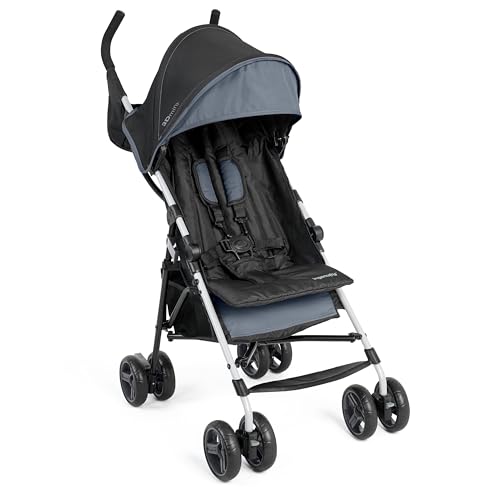
LIGHTWEIGHT - A lightweight stroller makes any outing a little easier; The Ingenuity 3D Mini Convenience Stroller has a durable steel frame that weighs 11 pounds and has a full-sized seat, plus auto-lock, anti-shock front wheels and lockable rear wheels

Lightweight & Travel-Friendly Design - Weighing just 7.4 pounds, the Dream On Me Aero Travel Light Stroller makes traveling with your little one effortless. Ideal for families on the go — perfect for vacations, city strolls, and quick errands.

Easy to store anywhere with its compact umbrella fold
Quick Decision Guide: Buy, Skip, or Consider
| Decision | Choose This If |
| Buy an umbrella stroller | You need a light stroller for quick errands, travel backup, public transit, stairs, or a caregiver’s home. |
| Consider a compact travel stroller | You want a tiny fold, better recline, smoother ride, or car-seat compatibility on select models. |
| Skip it | Your child is a newborn, your main stroller is already easy to carry, or you need storage, suspension, and comfort for long outings. |
Frequently Asked Questions
What age is good for an umbrella stroller?
Many families use an umbrella stroller once a baby can sit with good head and trunk control, often around 6 months. Always follow the stroller manufacturer’s age, height, weight, and recline rules.
Can I take an umbrella stroller on long walks?
You can use one for longer walks if your child is comfortable and the path is smooth, but most umbrella strollers are better for short trips. For long walks, rough paths, or daily outdoor use, a stroller with larger wheels, better recline, and more suspension usually feels better.
Are umbrella strollers okay for newborns?
Most classic umbrella strollers are not the best choice for newborns because they usually do not offer the flat recline and support young babies need. Choose a model only if the manufacturer clearly says it is suitable from birth, and never use a stroller for routine infant sleep.
Can an umbrella stroller replace a full-size stroller?
It can replace a full-size stroller for some families who only need short-trip convenience. It usually will not replace a full-size stroller if you need infant car seat use, large storage, plush recline, better wheels, or daily comfort.
Is an umbrella stroller good for air travel?
Yes, it can be good for air travel because it is light and easy to fold. Check your airline’s stroller rules before flying because carry-on and gate-check policies vary by airline, cabin class, aircraft, and route.
What should I check before buying a used umbrella stroller?
Check the model number, manufacture date, recall status, harness, brakes, frame lock, wheels, hinges, and fabric condition. Skip any stroller with missing parts, unclear model information, a bent frame, frayed straps, or a recall that has not been repaired.
Conclusion
An umbrella stroller makes sense when you need a light, simple stroller for short outings, travel, small spaces, or backup care. It is most useful when portability matters more than storage, suspension, and plush comfort.
Skip one if your child is too young for the seat, your current stroller is already easy to manage, or your outings require rough-terrain wheels and all-day comfort. The right choice is the stroller that fits your child safely and makes your real routine easier.
Sources
- American Academy of Pediatrics: How to Choose a Safe Baby Stroller — backs up brake, harness, tipping, storage, and supervision safety guidance.
- 16 CFR §1227.2: Requirements for Carriages and Strollers — backs up the U.S. stroller safety standard reference to ASTM F833-21.
- U.S. Consumer Product Safety Commission Recalls — backs up the recommendation to check recall status before using a secondhand stroller.
- American Academy of Pediatrics: Sun Safety — backs up shade and sun-protection guidance for babies and children.
- IATA Passenger Baggage Rules — backs up airline-specific carry-on and baggage-size guidance.
- gb Pockit+ All-Terrain Official Product Page — backs up compact fold and car-seat compatibility examples for compact travel strollers.

4 thoughts on “Do You Need an Umbrella Stroller? A 2025 Parent Guide”