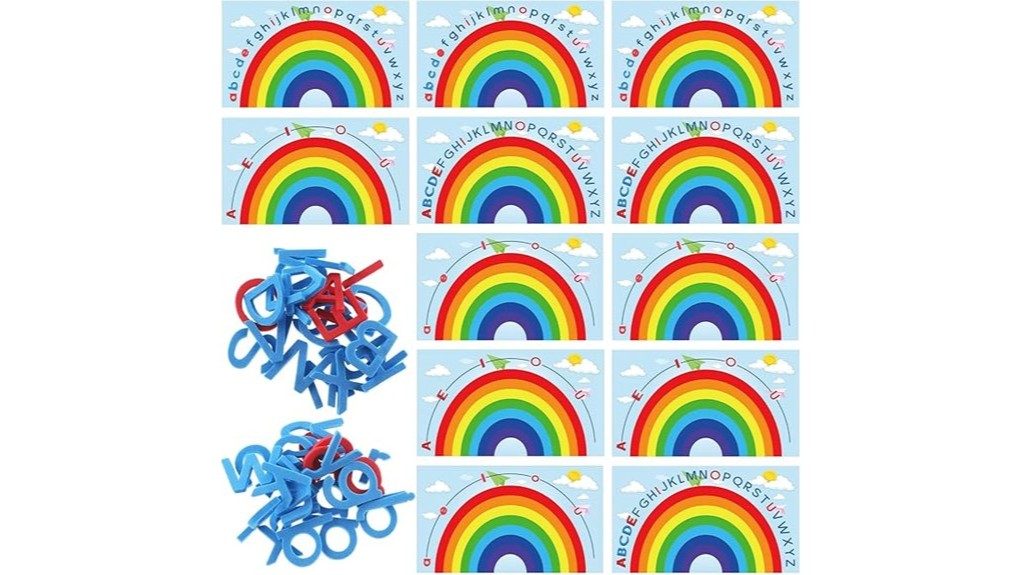
The Geyee Rainbow Alphabet Mats are designed for early learning, featuring six double-sided mats measuring 29.5 x 29.5 inches each. They come with 156 EVA foam letters, promoting alphabet recognition and sorting skills. Constructed from durable, waterproof materials, these mats guarantee longevity and safety. The vibrant colors and tactile elements encourage engagement, making learning interactive. Understanding their key features and educational benefits can help enhance their effectiveness. What strategies can be implemented for ideal use?
Key Takeaways
- The Geyee Rainbow Alphabet Mats enhance alphabet recognition with vibrant designs and tactile foam letters, making learning engaging for young children.
- Constructed from durable materials, the mats feature a waterproof film cover to withstand wear and tear during educational activities.
- With six double-sided mats and 156 EVA foam letters, these mats support effective sorting activities and cognitive skill development.
- Creative usage strategies, such as sorting games and storytelling, promote interactive learning experiences for both individual and group settings.
- Available through various online and local retailers, the mats offer convenience and potential special deals for interested buyers.
Top Reasons to Choose Geyee Rainbow Alphabet Mats for Early Learning
The Geyee Rainbow Alphabet Mats stand out as an exceptional resource for early learning, particularly in the areas of alphabet recognition and sorting.
These mats, measuring approximately 20 x 11.5 inches, foster creative play and sensory exploration through vibrant designs and tactile foam letters. With 162 teaching tools, including six double-sided mats and 156 EVA foam letters, children engage in a hands-on learning experience.
The light blue background with rainbow patterns captivates attention, while the inclusion of red vowels emphasizes key concepts. Such features encourage independent learning and skill development, making these mats an excellent choice for educators and parents alike.
Key Features of the Geyee Rainbow Alphabet Mats
Bright and engaging, the Geyee Rainbow Alphabet Mats offer several key features that enhance early learning experiences.
Constructed from quality paper, these mats guarantee durability, with a waterproof film cover protecting them from wear and tear. Each mat measures approximately 20 x 11.5 inches, providing ample space for children to explore.
The included foam letters, made from safe, odorless EVA foam, promote foam safety, allowing children to interact without health concerns.
The foam letters, crafted from safe, odorless EVA foam, ensure a worry-free play experience for children.
Featuring vibrant rainbow patterns and clear letters, these mats not only attract attention but also facilitate effective alphabet recognition and sorting, making them an ideal choice for educational play.
Educational Benefits of the Geyee Rainbow Alphabet Mats
Educational benefits of the Geyee Rainbow Alphabet Mats are numerous and impactful for early childhood development. These mats greatly enhance alphabet recognition through their vibrant design and interactive learning features.
With six double-sided mats measuring approximately 20 x 11.5 inches, children engage with both capital and lowercase letters effectively. The inclusion of 156 foam letters allows for sorting activities, fostering cognitive skills.
The user-friendly design, featuring visible letters on one side and a blank reverse, encourages active participation. This promotes a deeper understanding of the alphabet, making learning not only effective but also enjoyable, laying a strong foundation for future literacy.
How to Use the Alphabet Mats for Maximum Impact
Utilizing the Geyee Rainbow Alphabet Mats effectively requires a structured approach that maximizes their educational potential. To achieve this, consider the following strategies:
- Incorporate Creative Activities: Use the mats for artistic letter displays or storytelling, encouraging imaginative engagement.
- Engage in Sorting Games: Create activities where children sort letters by sound or color, enhancing recognition and cognitive skills.
- Interactive Learning Sessions: Organize group sessions where children can collaborate, fostering social skills while learning.
Where Can You Get Geyee Rainbow Alphabet Mats?
Where can one find the Geyee Rainbow Alphabet Mats? These educational tools are available through various channels. Online retailers often carry the mats, providing convenience and competitive pricing. Additionally, specialized educational stores may stock them, allowing for in-person examination.
| Retailer Type | Purchase Method | Notes |
|---|---|---|
| Online Retailers | Website Purchase | Fast shipping, often discounted |
| Educational Stores | In-Store Purchase | Hands-on experience available |
| Local Distributors | Direct Inquiry | May offer special deals |
Exploring both options guarantees accessibility for all interested in enhancing early literacy.
Frequently Asked Questions
Are the Mats Suitable for Outdoor Use?
The mats exhibit notable durability factors due to their waterproof film cover, suggesting they can withstand light outdoor use. However, prolonged exposure to harsh weather conditions may compromise their integrity and longevity.
How Do I Clean the Mats Effectively?
To effortlessly maintain the mats’ vibrant allure, gentle cleaning solutions like mild soap and water work wonders. Regular maintenance tips guarantee longevity, keeping them pristine for endless educational adventures and joyful alphabet explorations.
What Age Group Is Ideal for These Mats?
The ideal age group for these mats includes toddlers to kindergarteners, as they promote color recognition and sensory play. Engaging with vibrant designs encourages exploration, fostering a liberated learning environment for young minds to thrive.
Can the Foam Letters Be Used Independently?
“Every cloud has a silver lining.” The foam letters can indeed be used independently, offering durable sensory play. Their versatility fosters creative learning, allowing children to explore letters freely while enhancing their alphabet recognition skills.
Are the Mats Recyclable or Eco-Friendly?
The mats are made from quality paper, which can be recyclable, aligning with sustainability practices. Their waterproof film cover guarantees durability while maintaining material safety, making them a responsible choice for environmentally conscious consumers.
Conclusion
To sum up, the Geyee Rainbow Alphabet Mats stand out as an invaluable tool for early literacy development, much like a sturdy bridge connecting playful learning to essential skills. Their vibrant designs and durable materials not only engage children but also foster alphabet recognition and sorting abilities effectively. By incorporating these mats into learning routines, parents and educators can create an interactive environment that promotes foundational literacy, ensuring children are well-prepared for future educational endeavors.