
Choosing a baby stroller in 2026 is easier when you start with safety, your baby’s age, and your daily routine instead of the trendiest model. A good stroller should meet current safety standards, fit your car and home, move well on your usual surfaces, and make outings simpler for the caregiver pushing it.
This guide walks through the features that matter most: brakes, harnesses, newborn support, car seat compatibility, stroller types, travel needs, storage, budget, testing, and maintenance. Use it as a practical checklist before you buy online or test a stroller in person.
Affiliate disclosure: This article contains affiliate links. If you buy through some links, Babyqur may earn a small commission at no extra cost to you. Safety advice is general guidance only; always follow your stroller manual, car seat manual, pediatrician guidance, and local rules.
Quick Answer
When buying a baby stroller, choose one that matches your baby’s age, meets current safety standards, has a secure five-point harness and reliable brakes, fits your car and home, and suits your daily terrain, travel habits, storage needs, and budget.
Key Takeaways
- For newborns, look for a stroller that supports a flat bassinet, approved carry cot, fully flat recline, or compatible infant car seat.
- Safety basics include a five-point harness, easy brakes, stable frame, clear weight limits, and current U.S. compliance with 16 CFR Part 1227.
- Choose the stroller type around your real routine: city errands, car travel, flights, jogging, rough sidewalks, twins, or a growing family.
- Before buying used, check the model number, date label, recalls, brakes, wheels, harness, frame, and missing parts.
At a Glance
| Time Required | 30–60 minutes to compare models, plus a short in-person test drive if possible |
| Difficulty | Easy when you know your baby’s age, terrain, trunk space, travel needs, and must-have features |
| Tools Needed | Tape measure, car trunk dimensions, doorway width, baby’s current weight/height, and the stroller manual or spec sheet |
| Cost | Budget models can cost under $100, while premium, convertible, and electric-assist strollers can cost several hundred dollars or more |
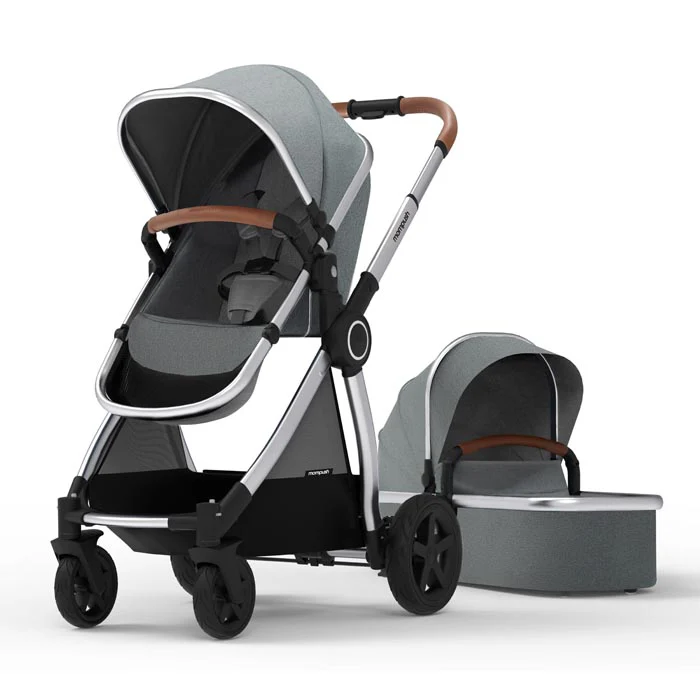
Image credit: mompush.com
Safety Features
Safety should come before color, brand, accessories, or price. In the United States, carriages and strollers are regulated under 16 CFR Part 1227, which incorporates ASTM F833-21. The U.S. Consumer Product Safety Commission also lists key performance requirements, including brakes, stability, restraining systems, occupant retention, and wheel assembly safety.
Recommended Products
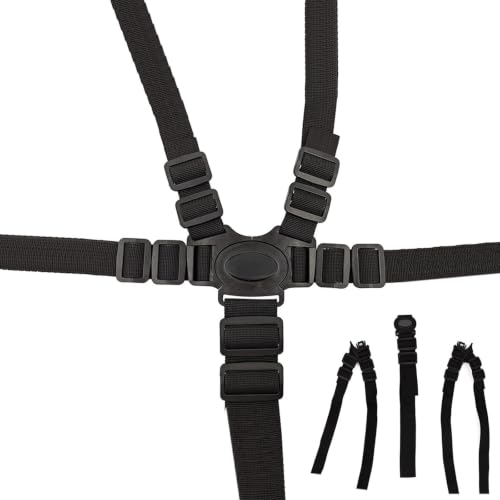
NOTE: For specific installation methods, please refer to the images and videos! Our products can be installed without the need for clamps.

【Easy to install】You just need take about 1minut to install it. Eliminates the hassle of lugging bulky seats through the airport,and does not take up much space and can easily be stored in your diaper bag, handbag or stroller.

Five-Point Safety Design, Flexible Conversion: using a convenient five-point safety belt, all-round protection of the baby's safety, to prevent slipping or turning out; can easily remove the two straps, the second into a three-point safety belt, to meet the needs of different scenarios, the use of more flexible.
Brakes And Locking Systems
Brakes should be easy for an adult to press, but hard for a child to release. A one-touch brake can make quick stops easier, especially when you are holding a diaper bag or standing on a slope. Test the brake more than once before buying. The stroller should stay still when the brake is engaged, and the brake pedal should not feel flimsy or hard to reach.
Always apply the brakes whenever you stop. Do not park the stroller on a slope, curb edge, escalator, or moving walkway. If the stroller folds, check that the frame locks fully open before placing your baby inside.
Five-Point Harness
A five-point harness secures your baby at the shoulders, waist, and between the legs. This helps prevent slipping, standing, or climbing out. Look for straps that adjust smoothly as your baby grows, padded areas that do not rub the neck, and a buckle that is easy for adults but difficult for curious toddlers.
Use the harness every time, even for short walks. A stroller is not safe if the harness is loose, twisted, missing, or difficult to buckle correctly.
Stability And Weight Distribution
Check the stroller’s weight distribution before you buy. A well-balanced stroller is less likely to tip when turning, stopping, or rolling over uneven ground. A wide base usually improves stability, but it may also make the stroller harder to fit through narrow doors.
Warning: Do not hang heavy bags, purses, or shopping totes from the handlebar. This can pull the stroller backward and cause it to tip. Use the under-seat basket and stay within the manufacturer’s storage weight limit.
Safety Verifications And Standards
Look for clear safety labeling, a model number, a date of manufacture, and proof that the stroller meets current safety rules where you live. In the U.S., the baseline standard is compliance with 16 CFR Part 1227. A Baby Safety Alliance Verified Seal, formerly associated with JPMA certification, can be a useful extra signal because it points to third-party verification. Still, do not rely on a seal alone. Read the manual, check the weight limit, inspect the frame, and confirm there are no recalls.
Adjustable Seat And Reclining Options
Adjustable seats help your child ride comfortably as they grow. For newborns, the safest stroller setup is usually a bassinet, approved carry cot, fully flat newborn-approved recline, or compatible infant car seat. Newborns cannot hold their head and neck steady, so they need a position that supports breathing and avoids chin-to-chest slumping.
For older babies who can sit with good head and neck control, adjustable recline is still useful for comfort. Make sure the seat moves smoothly and locks securely into each position.
Age And Weight Limits
Every stroller has manufacturer-specified age, height, and weight limits. Some standard strollers work from birth only with a compatible car seat, bassinet, or newborn insert. Others are suitable only once a baby has enough head and neck control to sit in the main seat.
Do not guess based on looks. Check the manual and label. Many everyday strollers support children into the toddler years, but limits vary widely. A higher weight limit may offer longer use, but only if the stroller still fits your child safely and comfortably.
Comfort, Convenience, And Daily Use
Comfort and convenience matter because the best stroller is the one you can use safely without frustration. Your baby needs a supportive seat and a smooth ride. You need a stroller that folds, lifts, steers, stores, and cleans in a way that fits real life.
Easy Maneuverability
Wheel design affects how smoothly a stroller moves. Swivel front wheels help in tight stores and crowded sidewalks. Larger wheels handle grass, gravel, cracked pavement, and park paths better. Suspension can reduce bumps, especially if you walk daily on uneven surfaces.
Lightweight frames are easier to lift into a car, carry upstairs, and push through public transport. Adjustable handlebars are helpful when caregivers have different heights.
Comfortable Seating
Padding should support your child without trapping too much heat. Breathable fabrics can help keep your baby more comfortable in warm weather. A washable or wipeable seat is also important because spills, crumbs, sunscreen, and diaper leaks happen often.
A five-point harness keeps your baby safe, but it should also fit without digging into the shoulders or belly. Check whether the footrest adjusts as your child grows.
User-Friendly Features
One-hand fold mechanisms are available on many new stroller models and can help when you are holding your baby. Storage compartments hold diapers, wipes, bottles, snacks, and a change of clothes. Cup holders are convenient, but they should not make the stroller unstable or block the fold.
For sun protection, consider strollers with large canopies, breathable side panels, and UPF-rated stroller covers that protect babies without blocking airflow. Peek-a-boo windows help you check your baby while walking.
Weight And Portability
Lightweight strollers are easy to carry and ideal for travel, stairs, small cars, and quick errands. Ultra-light models can be convenient, but make sure you are not giving up needed features such as recline, canopy coverage, storage, or suspension.
Compact designs fit more easily in car trunks, apartment closets, and public transportation. A freestanding fold is useful because the stroller can stand upright instead of lying on the floor.
Pro Tip: Before buying, measure your trunk and front doorway. A stroller that looks compact online may still be awkward if it is too long when folded or too wide for your hallway.
Car Seat Compatibility And Travel Systems
Car seat compatibility is one of the most important stroller features for the first year. A stroller that works with your infant car seat can make errands easier because you can move a sleeping baby from the car to the stroller frame without unbuckling them.
Recommended Products

Versatile Design: 3-wheel stroller design provides superior maneuverability and easy turning for seamless navigation through crowded spaces.

Versatile Stroller and Car Seat Combo with 6 Modes of Use: The Baby Trend Passport Switch Modular Travel System is a versatile stroller and car seat combination featuring our EZ-Lift PLUS Infant Car Seat and Base

Stroller Modes: Transforms from an Infant Car Seat Carrier to Infant Pramette, to Toddler Stroller
Click-And-Go Systems
Many strollers offer adapters that let you snap an infant car seat directly onto the stroller frame. This can be helpful for quick stops, doctor visits, school drop-offs, and grocery runs. Check compatibility before purchasing because adapters are not universal. A stroller may fit one car seat brand but not another, even when both are popular.
Make sure the car seat clicks into place every time. Tug gently after installation to confirm it is locked, and never use a seat or adapter combination that the manufacturer does not approve.
Car Seats Are For Transport, Not Routine Sleep
Car seat compatibility is convenient, but it does not turn a car seat into a crib. The American Academy of Pediatrics says sitting devices such as car seats, strollers, swings, infant carriers, and slings are not recommended for routine sleep, especially for infants younger than 4 months. If your baby falls asleep in a car seat or stroller, move them to a firm, flat, noninclined sleep surface as soon as it is safe and practical.
Warning: Never leave a baby unattended in a stroller or car seat. For longer outings with a newborn, choose a stroller setup that allows a flat, manufacturer-approved newborn position.
Choosing Between Bundled And Separate Systems
Travel systems bundle a stroller and matching car seat together. This is often simpler and may cost less than buying each piece separately. Buying separately gives you more control if you want a specific car seat and a different stroller frame.
Choose a bundled travel system if ease and compatibility matter most. Choose separate pieces if you want the best fit for your car, your stroller use, and your budget. Either way, confirm the car seat fits your vehicle safely before relying on it for daily use.
Trending Stroller Features In 2026
The baby stroller market changes quickly, but not every new feature is necessary. Treat trends as options, not requirements. The right stroller is the one that solves your real daily problems.
One-Hand Fold Technology
Many modern strollers feature one-hand folding. This helps when you are holding your baby, loading the car, or boarding public transportation. Some models also stand on their own when folded, which makes storage cleaner and easier.
Test the fold before buying. A fold that works in a showroom video may feel stiff, heavy, or awkward in real life.
Sustainable And Eco-Friendly Materials
Eco-conscious parents now have more stroller choices. Some brands use recycled fabrics, vegan leather accents, or recyclable aluminum frames. Others offer repair parts, longer warranties, or take-back programs.
Sustainability is a plus, but safety and fit still come first. A stroller should be stable, easy to brake, comfortable for your baby, and practical for your routine.
Electric-Assist Strollers
Electric-assist strollers are a premium category designed to help with hills, heavy loads, and longer walks. Some use sensors to adjust assistance based on slope or terrain. These models can be helpful in hilly neighborhoods, but they are expensive and more complex than standard strollers.
Before buying one, check battery life, charging time, airline restrictions, warranty support, repair access, and what happens if the battery dies during a walk.
Modular Accessory Ecosystems
Some stroller brands now build modular systems where one frame can support a bassinet, toddler seat, car seat adapter, second seat, ride-along board, or accessory basket. This can be valuable if you plan to grow your family or want one system for different stages.
Check the cost of add-ons before deciding. A modular stroller may look affordable at first, but the second seat, adapter, bassinet, and snack tray can raise the total price.
Budget Considerations
Choosing a baby stroller involves balancing cost with safety, comfort, and convenience. The best value is not always the cheapest stroller or the most expensive one. It is the stroller that fits your daily life and lasts as long as you need it.
Consider Your Financial Limits
Decide how much you can spend comfortably before you start comparing models. Strollers can range from basic budget options to high-end luxury or electric-assist models. Your stroller budget should also leave room for other baby expenses, such as diapers, clothing, feeding supplies, and car seats.
Evaluate Feature Costs
Some features are essential. Others are nice but not necessary. A newborn-safe setup, reliable brakes, a secure harness, and a frame that fits your space matter more than luxury fabrics or extra accessories.
Extra features such as reversible seats, all-terrain wheels, large storage baskets, modular add-ons, and premium suspension often increase the price. A mid-range stroller with the right features for your routine is often a better buy than a premium model loaded with extras you will not use.
Compare Prices And Brands
Prices vary across brands for similar features. Compare warranty length, replacement part access, customer support, reviews, safety labels, and real-world folding dimensions. Lesser-known brands can offer strong value, but check that they provide clear manuals, replacement parts, and contact information.
Best Time To Buy And Where To Find Deals
Seasonal sales, registry completion discounts, holiday promotions, and retailer events can lower stroller prices. If you are not in a rush, track the model for a few weeks before buying.
Buying a gently used stroller can also save money, but only if the stroller is safe. Before purchasing second-hand, check the model number and date label, search the CPSC recalls database, inspect the harness and brakes, and avoid strollers with missing parts, cracks, damaged frames, or unknown history.
Types Of Strollers
When you’re shopping for a baby stroller, the number of options can feel overwhelming. Start with how and where you will use it most often. A family in a walk-up apartment may need a different stroller than a family with twins, a large SUV, and weekend park trips.
Recommended Products

3 Wheel Stroller for easy turning / mobility

Enjoy face-to-face smiles by raising the Slide2Me seat or infant car seat to one of three height positions to find just the right ride as baby grows

3 strollers in 1: Infant Car Seat Carrier, Infant Stroller, and Toddler Stroller to stroll from infant to toddler
Standard Strollers
Standard strollers are everyday strollers designed for regular use. They often include reclining seats, storage baskets, sun canopies, and comfortable padding. Choose this type if you want one main stroller for walks, errands, and daily outings.
Travel Systems
Travel systems combine a stroller with an infant car seat. They are helpful if you drive often and want to move a sleeping baby from the car to the stroller for short stops. For more options, you can also explore this guide to the best strollers with car seats.
Umbrella Strollers
Umbrella strollers are lightweight and easy to fold. They are useful for quick trips, grandparents’ cars, travel, and crowded places. They usually have fewer features than standard strollers, so check recline, canopy size, storage, and age limits before buying. Consider an umbrella stroller if portability is your top priority.
Travel Strollers For Flights
Travel strollers are ultra-compact models designed to fold small. Some fit within many airline carry-on limits, but airline rules vary by carrier, aircraft, route, and ticket type. Never assume a stroller is allowed in the overhead bin just because a brand calls it cabin-ready.
If you fly often, check folded dimensions, folded weight, shoulder strap, travel bag, gate-check policy, and whether the stroller can be used from birth with a compatible car seat or bassinet.
Jogging Strollers
Jogging strollers are designed for active parents. They usually have three sturdy wheels, suspension, air-filled or foam-filled tires, and better stability at higher speeds. If you love running or hiking, a jogging stroller may be the right fit.
Most babies should not jog in a stroller until they have strong head and neck control. Many brands suggest waiting until around 6–8 months, but you should follow the stroller manual and ask your pediatrician if your baby was premature or has medical concerns.
Double Strollers
For twins or two young children, double strollers let you transport both kids in one stroller. Side-by-side designs give each child a similar view but can be wide. Tandem designs are narrower but can be longer and harder to turn.
Measure your doors, trunk, hallway, and elevator before choosing a double stroller.
Single-To-Double Convertible Strollers
If you plan to have another child, a single-to-double convertible stroller can be a smart investment. These models start as a single stroller and expand with add-on seats, ride-along boards, or second-seat kits.
Check the full cost of the second-child setup before buying. Also compare seat weight limits because the upper and lower seats may not support the same child size.
Stroller Wagons
Stroller wagons combine the push-and-steer function of a stroller with the open space of a wagon. They can work well for families with multiple children, zoo trips, beach outings, sporting events, and days when you need to carry extra gear.
Many stroller wagons include harnesses and canopies, but they are usually larger and heavier than standard strollers. Check whether the model is allowed at your favorite parks, event venues, or airports before relying on it.
All-Terrain Strollers
All-terrain strollers are built for rough and uneven surfaces. They usually have larger wheels, stronger suspension, and durable frames. Choose this type if your walks often include gravel, grass, trails, cracked sidewalks, or park paths.
Lifestyle And Usage
Your lifestyle should drive the final choice. A stroller that works beautifully for one family may be frustrating for another. Think through your normal week before comparing brands.
Urban Vs. Suburban Living
City families often need strollers that turn tightly, fold quickly, and fit on public transportation. If you live in a walk-up apartment, weight may matter more than basket size.
Suburban families may prefer larger wheels, more storage, and a stroller that handles sidewalks, parks, and longer walks. If you drive often, trunk fit and easy folding become major priorities.
Active Lifestyle
If exercise is part of your routine, consider a jogging stroller for running and brisk walks. For hiking paths, gravel, or grass, an all-terrain stroller may be better than a lightweight travel stroller.
Do not use a regular stroller for running unless the manufacturer says it is designed for jogging.
Travel Frequency
Traveling families need strollers that are lightweight, compact, and easy to fold under pressure. Look for a stroller that fits your car trunk and is simple to gate-check or carry through the airport.
If you want to bring the stroller on board, check your exact airline’s carry-on size rules before each trip. Policies can differ, and overhead bin space is never guaranteed.
Daily Usage
Think about how often you will use the stroller. Daily users may want better suspension, stronger wheels, a larger basket, a comfortable handlebar, and fabrics that clean easily. Occasional users may prefer a simple, affordable stroller that folds small and covers basic needs.
Growing Family Considerations
If you are planning more children in the next few years, think ahead. A single-to-double stroller or stroller wagon may save money and storage space compared with buying a second stroller later.
Still, avoid buying more stroller than you need. A large expandable stroller can feel heavy if you only need a compact single stroller for one child.
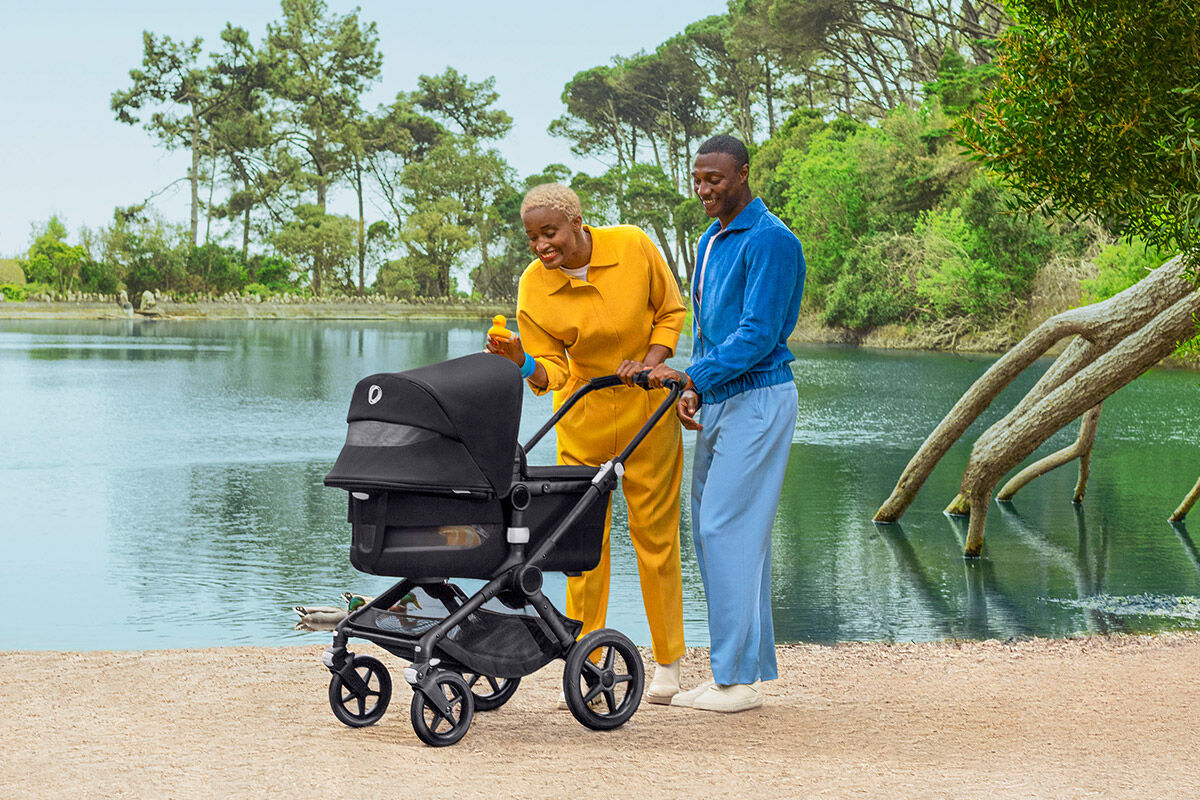
Image credit: www.bugaboo.com
How To Test A Stroller Before Buying
Experts often recommend test-driving a stroller before committing. Online specs help, but a short hands-on test can reveal whether the stroller is too heavy, too wide, too stiff, or too hard to fold.
In-Store Or In-Person Checks
Push the stroller on different surfaces if possible, such as smooth floors, carpet, and uneven pavement near the store. Test the fold mechanism several times. Check whether you can fold it with one hand, whether the folded stroller stands on its own, and whether it fits into your car trunk.
Adjust the harness, recline, handlebar height, canopy, and footrest. Open the storage basket and try placing a diaper bag inside. Engage the brake with one foot and confirm the stroller stays still.
Key Questions To Ask Yourself
- Can I lift this stroller into my car without straining?
- Does it fit through my front door, hallway, elevator, and trunk?
- Is the handlebar comfortable for every caregiver?
- Can I fold and unfold it while holding my baby?
- Does the canopy give enough shade?
- Is the basket easy to reach when the seat is reclined?
- Are replacement wheels, adapters, and parts easy to find?
Note: If you are buying online, read the manual before ordering. The manual usually gives the most reliable information on age limits, weight limits, compatible car seats, cleaning, folding, and warnings.
Durability And Maintenance
A durable stroller reduces stress and can last through years of use. Proper maintenance ensures the stroller remains safe and functional, especially if you use it daily or plan to use it for more than one child.
Durability: Built To Last
Strollers face bumps, curbs, folding, spills, sun, rain, and frequent loading into cars. Look for a sturdy frame, strong hinges, durable wheels, and fabric that resists tearing.
Aluminum frames are common because they balance strength and weight. Steel can be strong but may make the stroller heavier. Premium materials are helpful only if the stroller also fits your daily needs.
Maintenance: Easy Care
Regular cleaning prevents dirt buildup and keeps moving parts working well. Check whether fabric is machine washable or wipeable. Inspect wheels, brakes, harness straps, buckles, and folding hinges often. Remove hair and debris from wheels when needed.
Store the stroller in a dry place to reduce rust, mildew, and fabric damage. If the manual allows lubrication for moving parts, use only the recommended product and amount.
Parts Replacement: Simple Solutions
Replacement parts can extend a stroller’s life. Before buying, check whether the brand sells wheels, brake parts, harness pieces, adapters, canopies, and fabric replacements. Tires, brakes, and handles may wear over time.
Good customer support and clear parts availability can make a stroller a better long-term value than a cheaper model with no repair path.
Frequently Asked Questions
What type of stroller is best for newborns?
For newborns, choose a stroller with a bassinet, approved carry cot, fully flat newborn-approved recline, or compatible infant car seat. A bassinet attachment is often the most comfortable option for longer walks because it lets your baby lie flat. Always follow safe-sleep guidance and the stroller manual.
How important are stroller safety features?
Safety features are essential. Look for reliable brakes, a stable frame, a five-point harness, clear labels, current safety compliance, and a manual with age and weight limits. A Baby Safety Alliance Verified Seal can be helpful, but you should still inspect the stroller and check for recalls.
Can I use a stroller for jogging?
Use only a stroller designed for jogging. Jogging strollers usually have three wheels, stronger suspension, and better stability. Many brands recommend waiting until a baby has strong head and neck control, often around 6–8 months, but the manual and your pediatrician should guide the decision.
How do I choose stroller size?
Measure your car trunk, front door, hallway, and storage space before buying. Compact strollers work well for city homes, travel, and small cars. Larger strollers often offer more storage, smoother wheels, and more comfort for long walks.
What is a stroller wagon and do I need one?
A stroller wagon is a hybrid between a stroller and a classic wagon. It can be pushed like a stroller but has a more open seating and storage area. It can be useful for multiple children, outdoor outings, and hauling gear, but it is usually heavier and bulkier than a standard stroller.
Are expensive strollers worth it?
They can be worth it if you use the stroller daily, walk long distances, need strong suspension, plan to have more children, or want a convertible setup. If you only need a stroller for occasional errands, a safe mid-range or lightweight model may be a better value.
How long do strollers last?
A well-made stroller can last several years with proper maintenance. Lifespan depends on frame quality, wheel condition, fabric wear, storage, cleaning, and whether replacement parts are available. Always stop using a stroller if the frame, brakes, harness, or folding lock becomes unsafe.
Do I need a separate travel stroller?
If you fly often or use public transportation, a dedicated travel stroller can be worth it. Look for a compact fold, low weight, carrying strap, travel bag, and easy gate-check handling. Check your airline’s rules before each trip because carry-on stroller policies vary.
When can a baby sit in a stroller without a car seat?
Most babies can use the stroller seat without a car seat once they have steady head and neck control, often around 6 months. Before then, use a manufacturer-approved newborn setup such as a bassinet, fully flat recline, or infant car seat adapter.
Should I buy a new or second-hand stroller?
A second-hand stroller can save money, but inspect it carefully. Check the CPSC recalls database, model number, date of manufacture, brakes, wheels, folding lock, harness, frame, and missing parts. Avoid strollers with cracks, rust, accident history, missing labels, or unclear weight limits.
Can my baby sleep in a stroller?
A stroller is not automatically a safe sleep space. For routine sleep, babies should be on a firm, flat, noninclined surface designed for infant sleep. If your baby falls asleep in a stroller seat or car seat, move them to a safe sleep surface as soon as it is safe and practical.
Conclusion
Choosing the right baby stroller in 2026 is about matching the stroller to your baby, your home, your travel habits, and your daily routine. Start with safety: brakes, stability, a five-point harness, clear age and weight limits, current safety compliance, and no active recalls.
Then compare stroller type and lifestyle fit. A compact stroller may be best for city living and flights. A standard stroller may work better for daily errands. A jogging or all-terrain stroller may suit active families. A convertible stroller or stroller wagon may make sense if you have twins, multiple children, or plans to grow your family.
Most importantly, test the stroller before you buy whenever possible. Push it, fold it, lift it, brake it, measure it, and check the manual. The right stroller should make outings safer and easier, not add stress to your day.
Sources
- eCFR 16 CFR Part 1227 — federal safety standard for carriages and strollers.
- U.S. Consumer Product Safety Commission: Carriages and Strollers Business Guidance — stroller definitions, safety requirements, labeling, registration, and certification guidance.
- HealthyChildren.org: How to Choose a Safe Baby Stroller — AAP-backed stroller safety tips.
- American Academy of Pediatrics 2022 Safe Sleep Recommendations — safe sleep guidance for flat surfaces and sitting devices.
- CPSC Recalls & Product Safety Warnings — recall checks for new and second-hand strollers.
- Baby Safety Alliance Verified Seal — third-party baby product verification information.



Помощь можно получить анонимно, с аккуратным оформлением и внимательным отношением к личным данным.
Ознакомиться с деталями – вывод из запоя в клинике москва