

Last updated: July 19, 2026
This guide provides general safety information and does not replace advice from your baby’s pediatrician.
Affiliate disclosure: This article may include product recommendations. If you buy through a qualifying link, we may earn a commission at no extra cost to you.
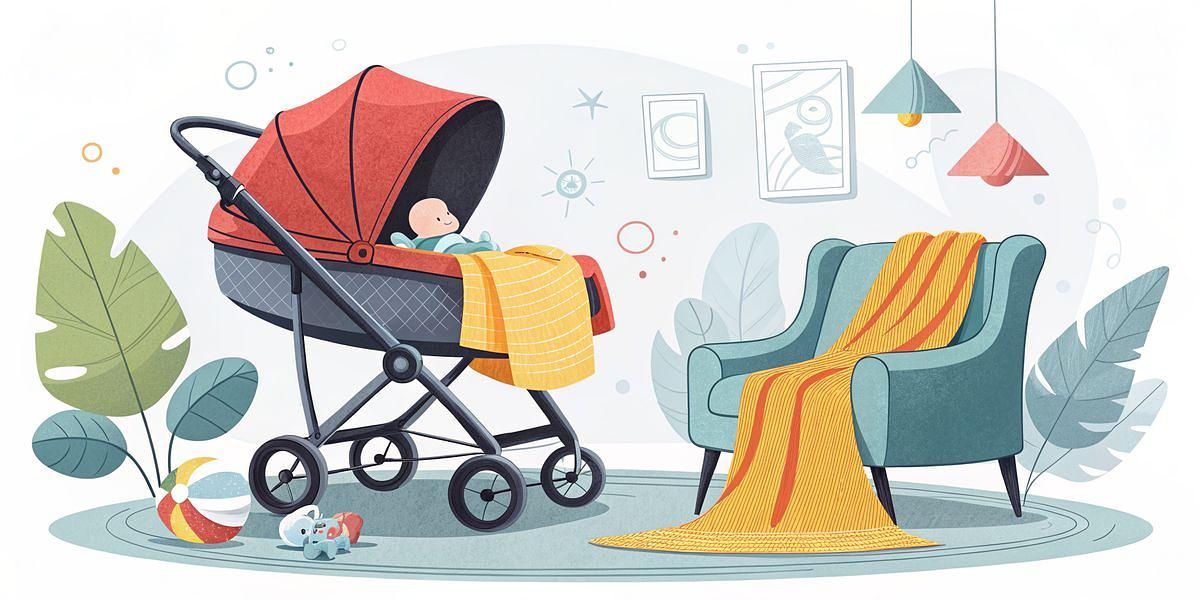
To protect a baby from the sun in a stroller, use an extendable, UPF-rated canopy while keeping the stroller opening ventilated. Dress your baby in loose clothing that covers exposed skin, add a brimmed hat and UV-protective sunglasses, and plan walks outside peak sun and heat whenever possible. Never drape a blanket or muslin cloth over the stroller because it can restrict airflow and trap heat.
For babies under six months, shade and protective clothing should be your first defenses. If those aren’t available, the American Academy of Pediatrics says you can apply sunscreen to small exposed areas. For babies over six months, apply broad-spectrum sunscreen to exposed skin and reapply it as directed. AAP/HealthyChildren.
Treat UV exposure and overheating as separate risks. A canopy can block direct sunlight, but safe stroller use also requires open airflow, age-appropriate hydration, frequent checks, and attention to both the UV Index and heat index.
How to Protect a Baby From the Sun in a Stroller: Quick Checklist
- Create shade without sealing the stroller. Use the built-in canopy or a compatible, breathable sunshade. Never cover the opening with a blanket.
- Look for documented UPF protection. UPF 50 fabric blocks about 98% of UV radiation that reaches the covered area. Skin Cancer Foundation.
- Cover exposed skin. Choose loose, lightweight clothing, a brimmed hat, and sunglasses labeled UV400 or at least 99% UV protection. AAP/HealthyChildren.
- Use sunscreen according to age. For babies under six months, use it only on small exposed areas when shade and clothing aren’t available. For older babies, cover exposed skin with a broad-spectrum sunscreen.
- Check the UV Index and heat index. UV protection is needed from a UV Index of 3, and a heat index at or above 90°F can be dangerous for babies. EPA UV Index; AAP extreme-heat guidance.
- Watch your baby, not only the weather. End the outing if your baby becomes unusually sleepy, hard to wake, very hot, less interested in feeding, or begins breathing faster than normal.
How To Choose the Right Stroller for Sun Protection
Recommended Products

Quality Material: Made of cationic fabric, thick fabric, good shading effect. Stroller widen sun shade: This shade waterproof and UPF50+ for stroller can protect children from wind, dustproof, anti-pollen, sun rays and rain

Excellent in UV Ray Screening (UTF 50+ Certified)

Quality Material: Made of cationic fabric, thick fabric, good shading effect. Stroller widen sun shade: This shade waterproof and UPF50+ for stroller can protect children from wind, dustproof, anti-pollen, sun rays and rain
Look for Built-In Sun Protection Features
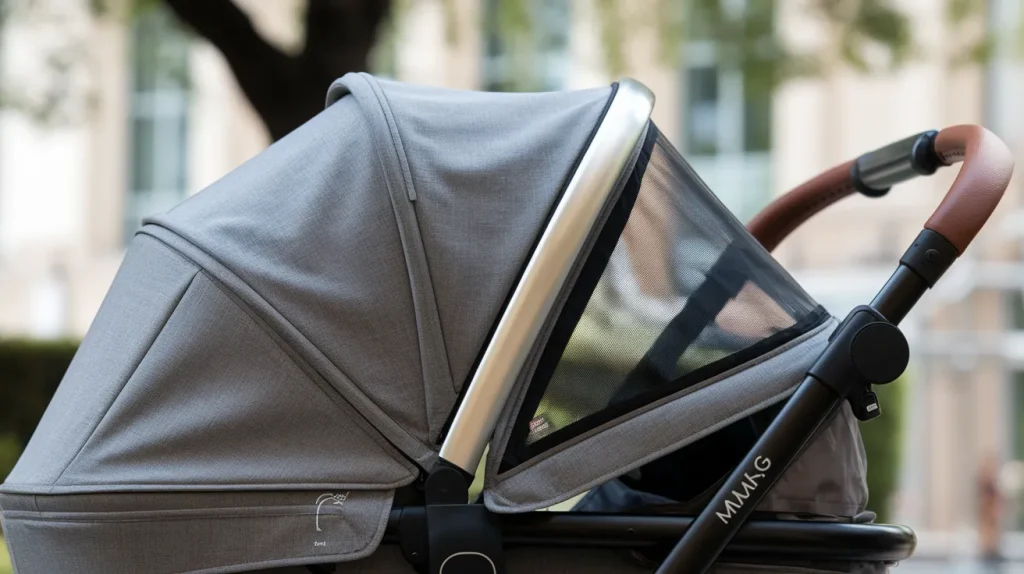
Sun protection should be near the top of your stroller checklist. A documented UPF rating tells you how much ultraviolet radiation can pass through the tested fabric. UPF 50 fabric blocks about 98% of UV radiation, but it protects only the area directly covered by that fabric. Skin Cancer Foundation.
Test the canopy in the positions you will actually use. Recline the seat, extend the canopy, and look from the front and both sides. Check whether low-angle sunlight can still reach your baby’s face, hands, or legs.
Mesh ventilation panels can improve airflow while the canopy is extended. A peekaboo window helps only when it is made from breathable mesh or can be opened. Avoid accessories that seal the stroller opening, reduce your view of the baby, or block the manufacturer’s ventilation points.
Tip: Choose coverage and airflow together. A deep canopy is helpful only when your baby remains visible and fresh air can move through the stroller.
Consider Strollers with Ventilation Panels
Airflow matters as much as shade on warm days. Mesh panels, opening canopy windows, and breathable seat materials can help warm air escape instead of collecting around your baby.
Check whether the ventilation remains open when the seat is reclined and the canopy is fully extended. Do not assume a small decorative window provides enough airflow for hot conditions.
For model-specific options, see our guide to the best strollers for sun protection. Keep this safety guide focused on how to use shade correctly after you have chosen a stroller.
How To Use Shade Effectively in a Stroller
Recommended Products

ADJUSTS TO ANY ANGLE: The 4-way, 360-degree swivel and 2 push button hinges allows the Versa-brella to be adjusted to any angle to block the sun
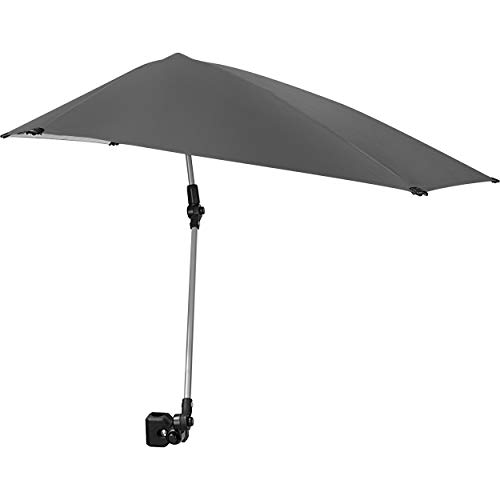
STAY SHADED ANYWHERE: The Versa-Brella features a heavy-duty clamp that opens up to 1.5 inches, allowing it to securely attach to various tubular and squared surfaces on chairs, wagons, strollers, golf carts, and more

STAY SHADED ANYWHERE: The Versa-Brella features a heavy-duty clamp that opens up to 1.5 inches, allowing it to securely attach to various tubular and squared surfaces on chairs, wagons, strollers, golf carts, and more
Adjust the Stroller Canopy as the Sun Moves
A fixed canopy position may work at the start of a walk but leave your baby exposed after you change direction. Check the sun angle whenever you turn, stop, or recline the seat.
Here’s what to look for in a canopy:
| Feature | Why It’s Important |
|---|---|
| Deep, extendable coverage | Shades more of the seat when the sun comes from the front or side. |
| Documented UPF rating | Shows how much UV radiation can pass through the tested fabric. |
| Adjustable positions | Lets you change the canopy angle as your route and the sun position change. |
| Mesh ventilation panel | Supports airflow and lets you check your baby without fully retracting the canopy. |
Do not rely on the canopy alone when hands, feet, cheeks, or legs remain exposed. Add protective clothing and age-appropriate sunscreen where needed.
Add a Compatible Sunshade or Umbrella When Coverage Is Limited
A clip-on sunshade or stroller umbrella may help when the built-in canopy leaves a gap, especially when the sun is low. Choose an accessory designed for your stroller or confirmed by its manufacturer as compatible.

- Confirm that the accessory stays secure while the stroller moves.
- Keep ventilation openings clear and maintain an unobstructed view of your baby.
- Reposition an umbrella or adjustable shade when your route changes direction.
- Do not use a full cover merely because it is advertised as UV protective. Airflow and safe fit still matter.
How To Dress Your Baby for Sun Protection
Choose Loose Clothing That Covers the Skin
Choose one loose, lightweight layer that covers as much skin as practical without making your baby hot. Tightly woven fabric or clothing with a documented UPF rating provides more predictable UV protection than a loose, open weave.
Light-colored clothing generally absorbs less heat, while darker fabric may block slightly more UV. Instead of relying on color alone, prioritize loose fit, adequate coverage, breathable construction, and a UPF label where available. AAP extreme-heat guidance.
Tip: Hold ordinary fabric up to a light. A tighter weave lets less light through and usually provides better UV coverage than a loose weave.
Add a Wide-Brimmed Hat and UV-Protective Sunglasses
A brimmed hat can shade your baby’s face, ears, scalp, and neck. Choose a soft style that fits securely without a loose cord or strap that could become a hazard.
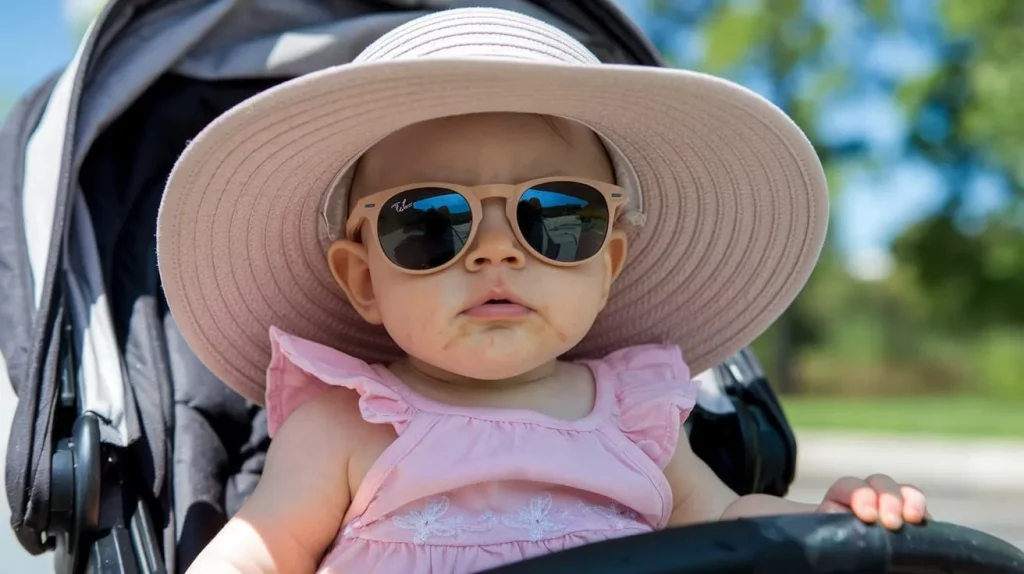
Choose child-sized sunglasses labeled UV400, “100% UVA and UVB protection,” or at least “99% UV protection.” Dark lenses without a verified UV-protection label are not enough. AAP/HealthyChildren.
Check these details before using sun accessories:
- A brim that shades the face, ears, and neck rather than only the forehead.
- Soft sunglasses frames sized for children, with a verified UV-protection label.
- A comfortable fit that does not leave pressure marks or slide over the nose.
Safety note: For babies under six months, shade and protective clothing come first. Sunscreen is a backup for small exposed areas when those protections are not available. AAP/HealthyChildren.
When Is It Safest to Take a Baby Out in a Stroller?
Avoid Peak UV and Extreme Heat
UV rays are usually strongest between 10 AM and 4 PM. Early morning or later afternoon walks can reduce direct UV exposure and may also provide cooler conditions. AAP/HealthyChildren.
Clock time is only one factor. Check the daily EPA UV Index and your local heat index before leaving. From a UV Index of 3, protective steps such as shade, clothing, a hat, sunglasses, and sunscreen are needed.
Clouds do not remove all UV exposure. Water, sand, snow, and concrete can also reflect UV toward exposed skin, so continue using protection even when your baby is under partial shade.
- Choose a cooler time of day when possible.
- Plan a shaded route with places where you can go indoors and cool down.
- Postpone or shorten the outing when the heat index is high.
- End the walk immediately if your baby appears hot, unusually tired, or unwell.
Check the Heat Index, Not Only the Temperature
Humidity can make the conditions feel much hotter than the measured air temperature. The AAP notes that a heat index at or above 90°F can be dangerous, especially for babies and young children. AAP/HealthyChildren.
| Before the Walk | Safer Action |
|---|---|
| UV Index is 3 or higher | Use shade, protective clothing, a hat, sunglasses, and age-appropriate sunscreen. |
| Heat index is approaching or above 90°F | Shorten, postpone, or replace the walk with an indoor activity. |
| No reliable shade or cool-down location | Choose a different route or time. |
Tip: Weather conditions can change during a walk. Recheck your baby’s comfort whenever you stop, change direction, or move from shade into direct sun.
Can You Cover a Stroller With a Blanket?
Recommended Products

Ultra-Light & Portable:This portable mini stroller fan weighs ONLY 0.26 lbs (lighter than an apple) to clip effortlessly onto diaper backpack, strollers, baby carriers, organizer, hight chair, nursing cover, crib. The fan gap is designed to be ≤4.5mm, allowing you to travel safely anytime, anywhere.(To ensure safe operation, please use the original cable and charge with standard 5V voltage power supply)

Ultra-Light & Portable:This portable mini stroller fan weighs ONLY 0.26 lbs (lighter than an apple) to clip effortlessly onto diaper backpack, strollers, baby carriers, organizer, hight chair, nursing cover, crib. The fan gap is designed to be ≤4.5mm, allowing you to travel safely anytime, anywhere.
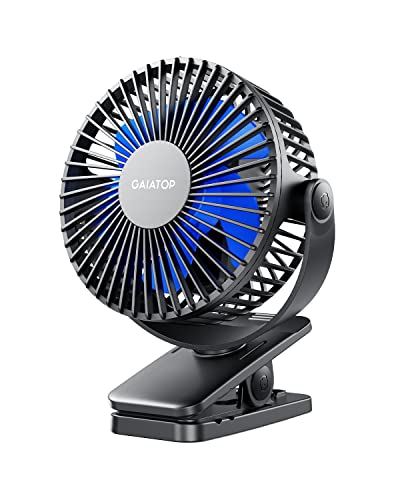
USB or Rechargeable Battery Operated: The clip-on fan has a 2000 mAh battery that can last from 3.5/6/10 hours(Depending on speeds), can be used while charging; suit for desks, strollers, camping, car seats; your beach/camping/travel essentials
Do Not Seal the Stroller Opening
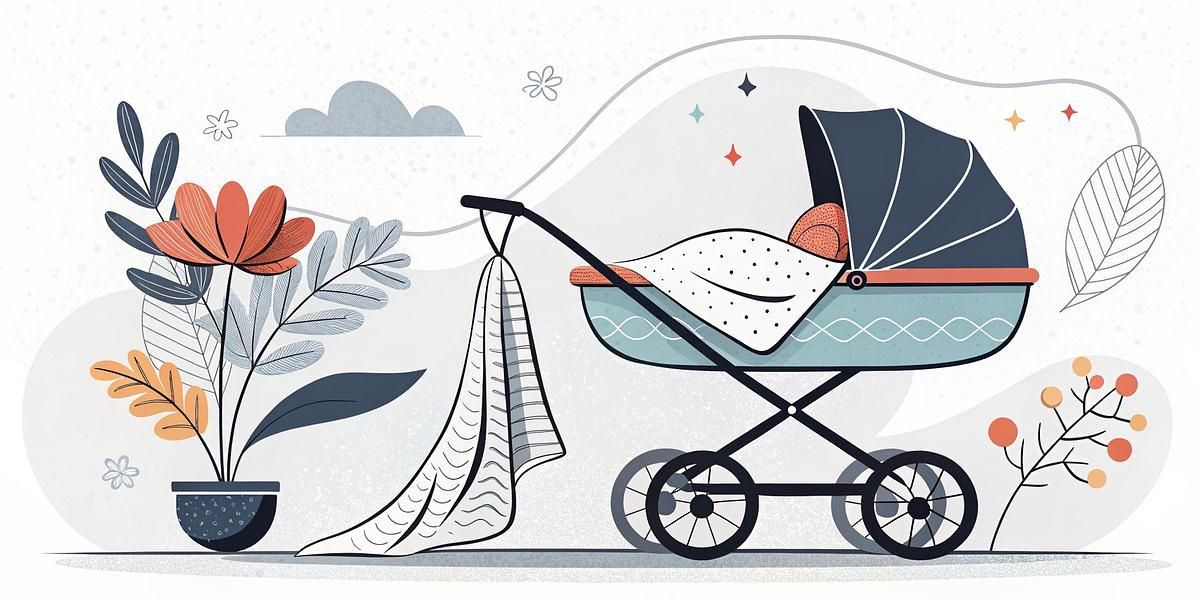
Do not drape a blanket, muslin cloth, or other fabric across the stroller opening to create shade. Even lightweight fabric can reduce airflow, trap warm air, and make it harder to see whether your baby is becoming distressed.
Use the built-in canopy, a stroller-compatible umbrella, or a breathable shade that leaves ventilation points open. Keep your baby visible and check their behavior, breathing, and skin temperature often. Loma Linda University Health; AAP/HealthyChildren.
| Unsafe Approach | Safer Alternative |
|---|---|
| Blanket or muslin stretched over the opening | Extend the stroller canopy or attach a compatible sunshade that keeps the sides open. |
| Full cover that blocks your view | Use a shade with an open or breathable viewing area. |
| Assuming shade prevents overheating | Check the heat index and monitor your baby for heat-illness signs. |
Tip: Shade should block direct sunlight without turning the stroller into an enclosed space.
Can a Stroller Fan Keep a Baby Safe in Hot Weather?
A stroller fan may improve airflow and comfort in mild warm weather, but it cannot make extreme heat safe. It should support, not replace, shade, cooler timing, suitable clothing, hydration, and regular monitoring.
Attach the fan securely where your baby cannot reach the blades, guard, controls, battery compartment, or charging cable. Keep the fan at a safe distance and do not aim it directly at your baby for an extended period in extreme heat. The AAP warns that direct fan airflow when conditions are hotter than 90°F can increase dehydration risk. AAP/HealthyChildren.
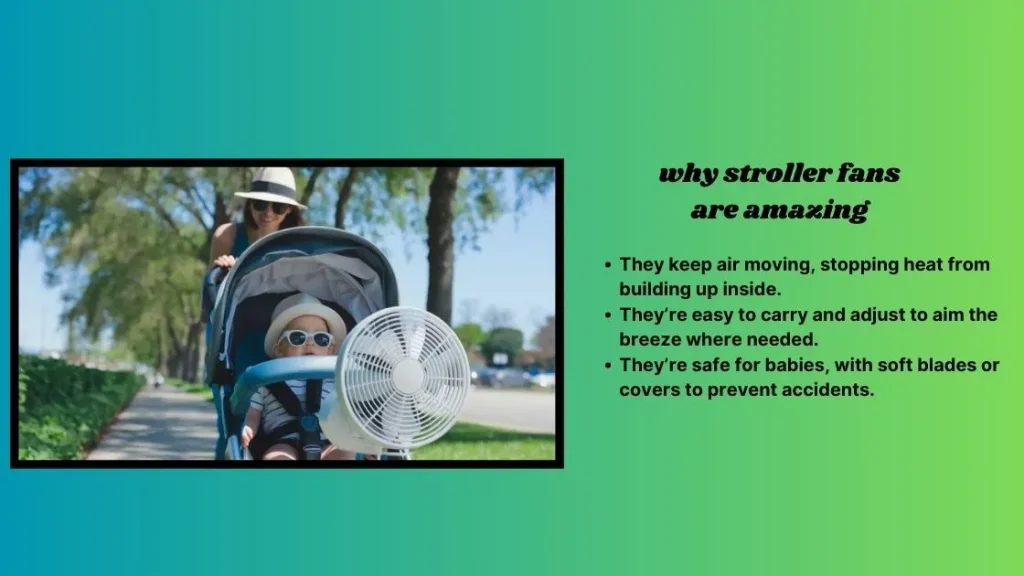
- Use a model with a tight blade guard or enclosed design.
- Secure the mount so the fan cannot fall into the seat.
- Keep cords, flexible legs, and small parts out of reach.
- Stop the outing rather than relying on the fan when the heat index is dangerous.
Safety note: A fan can circulate air, but it does not protect exposed skin from UV radiation and does not prevent heat illness in dangerous conditions.
How To Keep Your Baby Hydrated in the Sun
Offer Fluids According to Your Baby’s Age
For babies under six months, offer breast milk or formula more often during hot weather. Do not replace milk feeds with plain water unless your baby’s pediatrician gives different instructions. AAP/HealthyChildren.
From around six months, you can offer small amounts of water as complementary foods are introduced. Breast milk or formula should remain the main drink during the first year.
Quick hydration guide:
- Under six months: Offer breast milk or formula more frequently. Do not dilute formula.
- Around six months and older: Offer small amounts of water alongside regular milk feeds and complementary foods.
- At any age: Contact your pediatrician if your baby feeds poorly or you are worried about hydration.
Tip: Prepare feeds according to the product instructions. Never add extra water to formula in an attempt to prevent dehydration.
What Are the Signs of Dehydration in a Baby?
Look for a change from your baby’s normal feeding and diaper pattern rather than waiting for one fixed number of wet diapers.

Possible warning signs include:
- Noticeably fewer wet diapers than usual
- Dry mouth, lips, or tongue
- Few or no tears when crying
- Sunken eyes or a sunken soft spot
- Unusual sleepiness, fussiness, or poor feeding
Move your baby to a cool place and offer age-appropriate feeds. Contact your pediatrician promptly if the signs are significant, your baby refuses feeds, or the symptoms do not improve. AAP dehydration guidance.
Urgent warning: Seek medical help for a baby who is hard to wake, breathing rapidly, repeatedly vomiting, not urinating for many hours, or showing other severe signs of heat illness. AAP/HealthyChildren.
How Can You Tell if a Baby Is Overheating?
Watch for Changes in Behavior, Feeding, and Breathing
Babies cannot report dizziness, headache, or intense thirst. Focus on signs you can observe:
- Unusual sleepiness, extreme tiredness, or difficulty waking
- Fussiness, confusion, poor coordination, or reduced responsiveness
- Very hot, flushed, pale, or clammy skin
- Reduced feeding or intense thirst in an older child
- Nausea or vomiting
- Breathing faster or more deeply than normal
- Fewer wet diapers or no urination for many hours
| What You Notice | What to Do |
|---|---|
| Baby feels warm or becomes fussy | Move to a cooler place, remove extra layers, and offer an age-appropriate feed. |
| Unusual sleepiness, vomiting, faster breathing, or poor feeding | Cool the baby and contact the pediatrician immediately if symptoms do not improve quickly. |
| Hard to wake, confused, unresponsive, seizing, or losing consciousness | Treat this as a medical emergency and call emergency services. |
Heat illness can worsen quickly in infants and young children. Do not continue the walk to see whether symptoms pass. CDC; AAP/HealthyChildren.
What Should You Do if Your Baby Seems Too Hot?
Move your baby to an air-conditioned building or another cool, shaded place immediately. Remove extra layers and loosen tight clothing.
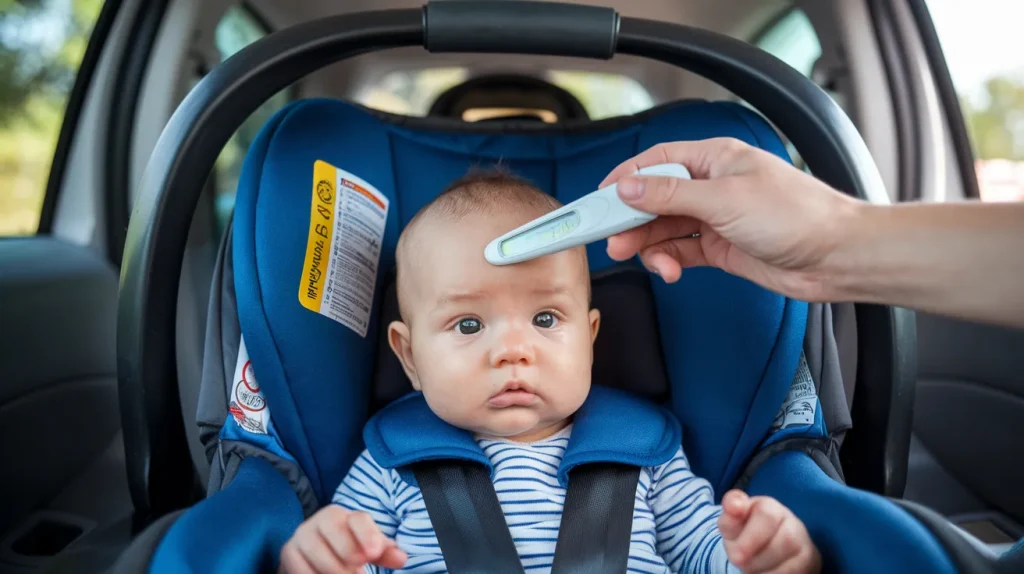
Use a cool, damp cloth or a gentle water mist to help with cooling. Do not use ice water, alcohol rubs, or medicated products unless a health professional instructs you to do so.
Offer breast milk or formula to a baby under six months. For an older baby who has started complementary foods, continue regular milk feeds and offer small amounts of water.
Emergency note: Call emergency services if your baby is hard to wake, confused, unresponsive, having a seizure, losing consciousness, or showing severe breathing difficulty. Heatstroke is a medical emergency.
Can Babies Use Sunscreen in a Stroller?
Shade and clothing should come first, but sunscreen can protect skin that remains exposed.
For babies under six months, keep them out of direct sunlight whenever possible. If adequate shade and clothing are not available, the AAP says you can apply a small amount of sunscreen to limited exposed areas such as the face. A product containing zinc oxide or titanium dioxide may be less irritating for sensitive skin. AAP/HealthyChildren.
For babies over six months, use a broad-spectrum, water-resistant sunscreen with SPF 30 or higher on exposed skin. Apply it 15 to 30 minutes before going outside and reapply at least every two hours, as well as after sweating, swimming, or towel drying. American Academy of Dermatology.
Keep sunscreen away from the eyes and mouth. If a product causes irritation, wash it off and ask your pediatrician about another option. Continue using the canopy, clothing, hat, and safer timing because sunscreen is only one part of sun protection.
What Should You Do if Your Baby Gets Sunburned?
Move your baby out of the sun immediately and keep the affected skin protected while it heals. Use cool water or a cool, damp cloth to ease discomfort. Do not apply medicated lotions unless your baby’s doctor says they are appropriate.
If a baby younger than one year gets sunburned, contact the baby’s doctor. For an older child, contact a doctor if the burn blisters, causes significant pain, or occurs with fever or illness. AAP/HealthyChildren.
Wrapping Up
Protecting a baby from the sun in a stroller requires both UV protection and heat protection. Use an adjustable canopy without sealing the stroller, cover exposed skin, apply sunscreen according to age, check the UV Index and heat index, and choose cooler walking times.
Keep your baby visible throughout the outing. Stop and move indoors if your baby becomes unusually sleepy, hot, less interested in feeding, or otherwise unwell. A shorter walk is always safer than trying to manage dangerous heat with an extra cover or fan.
Final check before leaving: open airflow, reliable shade, covered skin, age-appropriate feeds, a safe weather forecast, and a nearby place to cool down.
Frequently Asked Questions About Stroller Sun Protection
How can I tell if my stroller has enough sun protection?
Look for a deep, adjustable canopy with a documented UPF rating and open mesh ventilation. Test it with the seat upright and reclined, then check the front and sides for gaps where sunlight can reach your baby’s face, hands, or legs.
Can I cover the stroller with a muslin cloth or blanket?
No. A blanket or muslin cloth can restrict airflow, trap warm air, and block your view of the baby. Use the stroller canopy, a compatible umbrella, or a breathable shade that leaves ventilation openings clear.
Can I use sunscreen on a baby under six months?
Keep a baby under six months out of direct sunlight and rely on shade and protective clothing first. If those protections are not available, the AAP says you can apply sunscreen to small exposed areas such as the face. Ask your pediatrician if your baby has sensitive skin or a previous reaction.
Is a UPF 50 stroller canopy enough by itself?
No. UPF 50 fabric blocks about 98% of UV radiation reaching the covered area, but it does not protect skin outside the shade or prevent heat buildup. Combine the canopy with clothing, a hat, age-appropriate sunscreen, open airflow, and safer walking times.
Should I give my baby water during a hot stroller walk?
For babies under six months, offer breast milk or formula more frequently rather than plain water unless your pediatrician advises otherwise. From around six months, small amounts of water can be offered as complementary foods are introduced, while breast milk or formula remains the main drink.
What are the warning signs that my baby is too hot?
Warning signs include unusual sleepiness, difficulty waking, poor feeding, very hot or clammy skin, vomiting, faster breathing, and significantly fewer wet diapers. Move your baby to a cool place immediately and seek medical help if symptoms are severe or do not improve quickly.

4 thoughts on “How to Protect Your Baby from Sun in a Stroller (Safe & Simple Tips)”