

Many parents start wondering about a forward-facing stroller seat when their baby begins lifting their head, looking around, and getting curious on walks. The safest time is not one exact birthday. It depends on head control, sitting strength, your stroller manual, and whether your baby can ride without slumping forward or sliding sideways.
Last reviewed: July 5, 2026
Quick Answer
A baby can usually sit in a front-facing stroller when they have steady head and neck control, can sit upright with support, fit the stroller’s harness correctly, and meet the stroller maker’s age, weight, and recline rules. For many babies, this happens around 6 to 9 months, but readiness matters more than age.
Key Takeaways
- Most babies are not ready for regular forward-facing stroller rides until they have strong head and neck control.
- Many babies reach the needed sitting strength between 6 and 9 months, but some need more time.
- Use the stroller’s full harness every time, lock the brake when stopped, and follow the manufacturer’s age, weight, and recline limits.
- Newborns should use a newborn-ready reclined seat, bassinet, or approved infant car seat attachment, not an upright forward-facing stroller seat.
- If your baby slumps, cries hard, tilts their head forward, or cannot stay centered, switch back to a reclined or parent-facing setup.
At a Glance
| Time Required | 2 to 3 minutes before each walk |
| Difficulty | Easy, but safety checks matter every time |
| Tools Needed | Stroller manual, full harness, working brake, sun canopy, and weather-appropriate clothing |
| Cost | $0 if your current stroller already supports your baby’s age, weight, and seating stage |
What Does Baby Sit in Front Facing Stroller Mean?
When a baby sits in a front-facing stroller, the seat points outward. Your baby looks toward the path, street, trees, people, lights, and sounds instead of looking toward you. This position can feel exciting because your baby gets a wider view of the world.
Front-facing is different from parent-facing or rear-facing stroller use. In a parent-facing seat, your baby looks at you, and you can watch their face more closely. That setup often works better for younger babies who still need more support, comfort, and monitoring.
A front-facing stroller seat is best when your baby is physically ready. The most important signs are steady head control, stronger neck and trunk muscles, and the ability to sit upright without collapsing forward. The CDC’s 6-month milestones include leaning on hands to support the body while sitting, while the CDC’s 9-month milestones include getting to a sitting position and sitting without support.
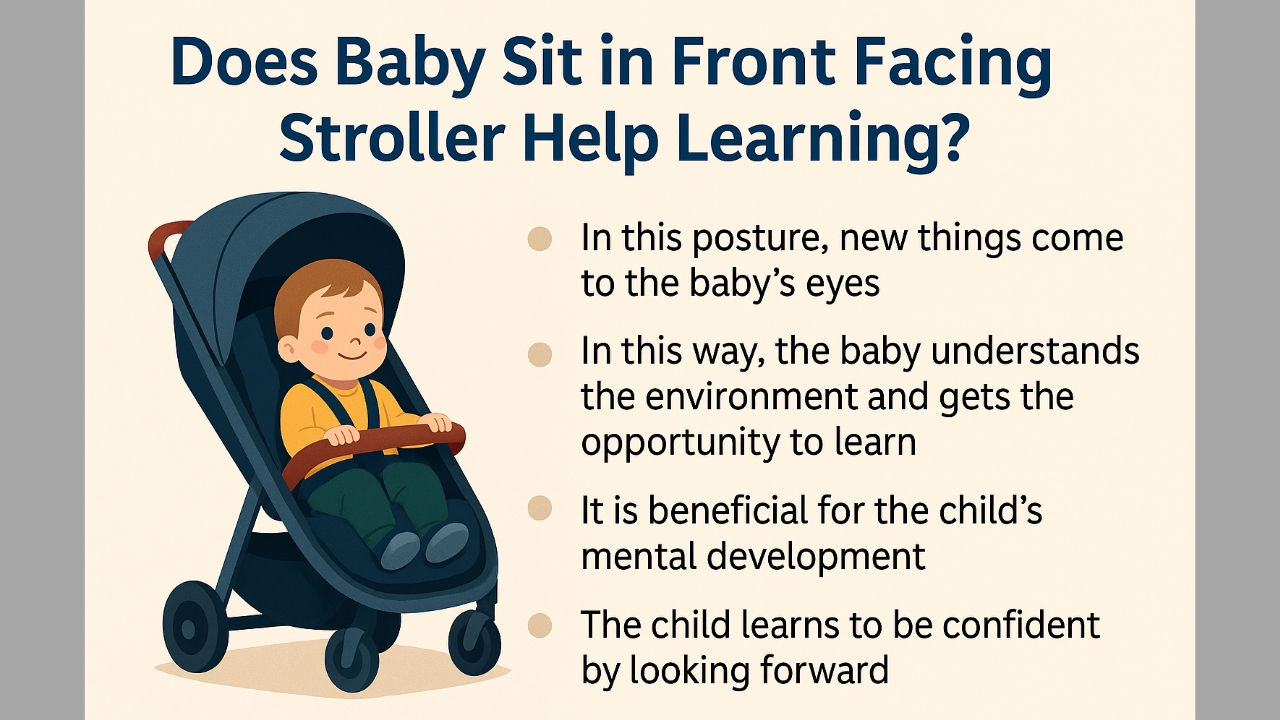
Does Baby Sit in Front Facing Stroller Help Learning?
A front-facing stroller can support learning in a simple, everyday way. Your baby sees movement, colors, animals, cars, leaves, and people. When you name those things during a walk, you turn the ride into a calm learning moment.
- Your baby sees more of the environment.
- You can point out simple things like trees, dogs, buses, and birds.
- Your baby can practice looking, listening, and reacting to new sights and sounds.
- Short walks can build curiosity, especially when you talk to your baby during the ride.
Still, front-facing is not required for healthy brain development. Babies also learn a lot from looking at your face, hearing your voice, and sharing back-and-forth interaction. The best stroller direction is the one that keeps your baby safe, supported, comfortable, and connected with you.

When to Switch Baby to Front Facing Stroller?
You can usually switch your baby to a front-facing stroller when your baby can hold their head steady, sit upright with support, and ride without slumping. For many babies, this stage comes around 6 to 9 months. Some babies are ready closer to 6 months. Others need more time, especially if they were born early or have low muscle tone or medical needs.
Do not decide by age alone. First, check your stroller manual. Some strollers allow forward-facing use only after a certain age, weight, or seat position. Others require a specific recline angle for younger babies. If the manual says to wait, follow the manual.
Warning: Do not place a newborn in an upright front-facing stroller seat. Use a newborn-ready fully reclined stroller seat, bassinet, or approved infant car seat attachment until your baby has strong head and neck control and meets the stroller maker’s instructions.
Signs Your Baby May Be Ready for a Front Facing Stroller
Your baby’s posture tells you more than the calendar. Before you switch, look for several readiness signs together.
- Your baby can hold their head steady without the chin falling onto the chest.
- Your baby has stronger neck and upper-back control and does not flop forward during short seated periods.
- Your baby can sit upright with support and stay centered in the stroller seat.
- Your baby fits the harness correctly at the shoulders, waist, and between the legs.
- Your baby shows interest in looking around without becoming upset right away.
- Your baby meets the stroller’s manual instructions for forward-facing use, seat angle, age, and weight.
Signs Your Baby Is Not Ready Yet
Wait longer or switch back to a reclined or parent-facing setup if your baby looks uncomfortable or unsupported.
- Your baby’s head falls forward or to the side.
- Your baby slides down in the seat even with the harness adjusted.
- Your baby cannot keep the chest open and upright.
- Your baby cries hard every time you face the seat outward.
- Your baby seems overstimulated by noise, crowds, or bright light.
- The harness cannot sit snugly against the body.
- Your stroller manual says your baby is too young or too small for that seat position.
Pro Tip: Try the first front-facing ride during a short, calm walk close to home. If your baby slumps, fusses, or looks tired, switch back and try again another day.
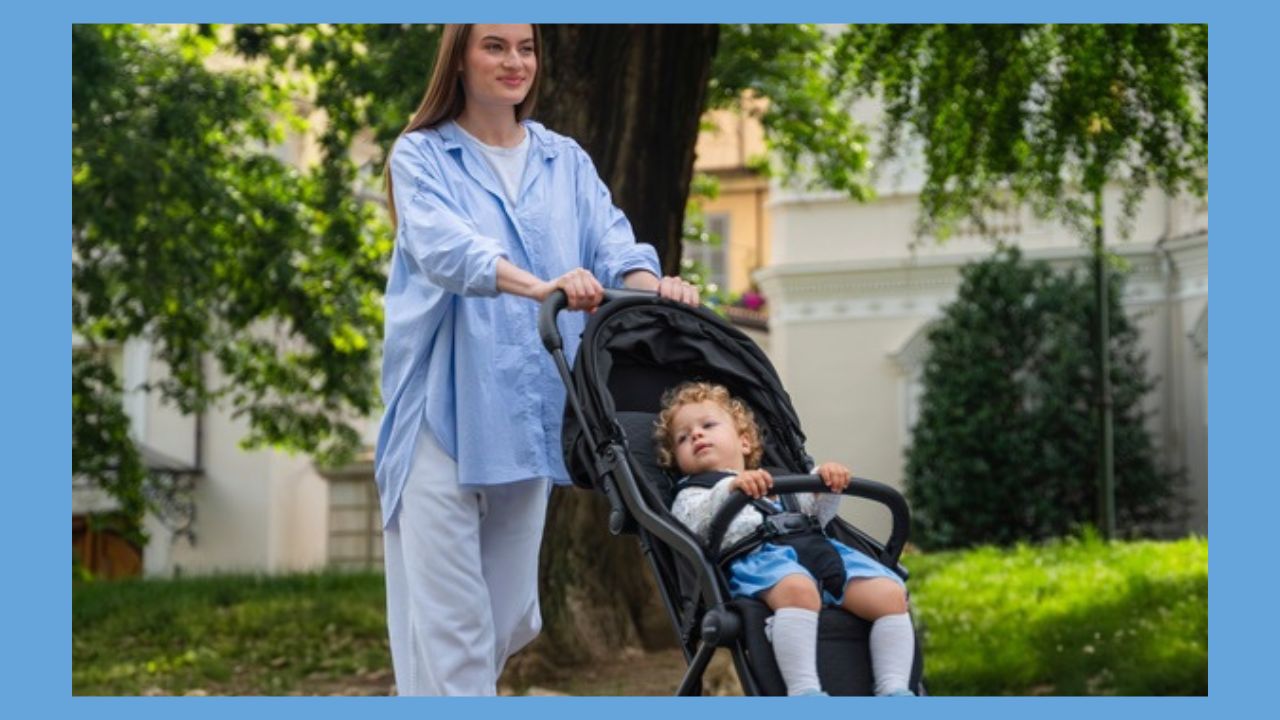
Benefits of Baby Sitting in Front Facing Stroller
Once your baby is ready, a front-facing stroller can make walks more interesting. Your baby can watch the path ahead, notice people and animals, and react to new sounds. This gives you natural chances to talk, point, name objects, and keep your baby engaged.
The biggest benefit is not “better brain growth.” It is safe exploration. Babies learn through everyday interaction, movement, faces, sounds, and repeated experiences. A stroller walk can support that when you keep talking to your baby and watching for comfort cues.
You can also keep your baby busy in the stroller with simple conversation, a safe stroller toy, or a slow walk through a quiet area. Keep toys attached safely, avoid loose strings, and never place small choking hazards in the stroller.
What Front Facing Stroller Time Can Encourage
- Observation: Your baby can watch movement and changes in the environment.
- Language exposure: You can name what your baby sees during the walk.
- Curiosity: Short, calm outings can introduce new sights and sounds.
- Confidence with movement: A supported seat can help a ready baby enjoy being upright while strolling.
- Shared attention: You can point to something, name it, and watch your baby respond.
Forward-facing stroller time can be useful, but it works best as shared time. Talk to your baby, watch their posture, and switch positions if they look tired or overwhelmed.

Front Facing Stroller vs Rear Facing Stroller
Both stroller positions can be useful. The right choice depends on your baby’s age, strength, mood, and the place you are walking. Many families use a rear-facing or parent-facing setup first, then switch to front-facing once the baby grows stronger.
| Position | Best For | Main Benefit |
| Rear-facing or parent-facing | Newborns, younger babies, sleepy babies, and babies who need more monitoring | You can see your baby’s face, posture, breathing, and comfort more easily |
| Front-facing | Babies with strong head control who can sit upright with support | Your baby can see more of the outside world during walks |
| Reversible seat | Families who want flexibility | You can switch based on baby’s age, mood, weather, and location |
If your baby is very young, tired, upset, or still building head control, rear-facing is usually the better option. If your baby is older, alert, strong, and curious, front-facing can be enjoyable when the harness and seat support fit correctly.
Recommended Products

MAXIMIZE YOUR VERSATILITY: Modularity allows seat to be easily positioned forward or parent-facing

Room to Grow: Use from birth as a newborn stroller with easy conversion to infant pramette mode, allowing your baby to sleep comfortably on the go. This stroller adapts as your child grows, providing a secure ride from newborn to toddler stages. Compatible with Maxi-Cosi and Nuna car seats (car seat adapter sold separately).

REVERSIBLE SEAT DESIGN – Adapt to your child's growing curiosity. The KOOLABABY Stroller features an innovative reversible seat that easily converts between parent-facing and world-facing positions. Keep your baby facing you for vital eye contact, bonding, and reassurance during the early months. As they grow older and more curious, simply flip the seat forward so they can explore the world. One stroller provides infinite possibilities for your family.
Features of Front Facing Baby Stroller Explained
A good front-facing stroller should support your baby’s body while giving you control during the walk. Do not choose a stroller only because it looks lightweight or stylish. Choose it because it fits your baby’s stage and gives safe support.
The U.S. Consumer Product Safety Commission explains that stroller safety requirements include performance areas such as parking brakes, stability, restraining systems, and occupant retention. That is why the harness, brake, frame lock, and seat support matter so much.
Many parents like lightweight strollers because they are easier to lift and fold. Lightweight can be helpful, but it should not come at the cost of a weak frame, poor recline, or loose harness fit.
Recommended Products

Convertible Baby Stroller: With 2-in-1 functional design, our stroller with multi-position recline allows your baby to lie comfortably for naps or sit up to take in the sights, Moreover, this reversible baby carriage offers the flexibility for baby to face you or face outwards.

ADORABLE DESIGN: Features a cheerful blue print with smiling cartoon dog and small animal accents that create a playful, kid-friendly pattern children will love

LIGHTWEIGHT - A lightweight stroller makes any outing a little easier; The Ingenuity 3D Mini Convenience Stroller has a durable steel frame that weighs 11 pounds and has a full-sized seat, plus auto-lock, anti-shock front wheels and lockable rear wheels
Key Features of a Front Facing Baby Stroller That Ensure Comfort and Safety
- Full harness: A five-point harness is ideal because it secures the shoulders, waist, and crotch area.
- Adjustable recline: Younger babies need more recline than older babies who sit strongly.
- Firm back support: The seat should support your baby’s back and help prevent slumping.
- Working brake: The brake should lock firmly whenever the stroller is stopped.
- Stable frame: The stroller should not tip easily when used as directed.
- Sun canopy: Shade helps protect your baby from direct sun and bright light.
- Safe storage basket: Use the basket instead of hanging heavy bags on the handle, which can cause tipping.
- Clear manual instructions: The stroller should list age, weight, recline, folding, and car-seat-attachment rules.
Note: If your stroller was bought used, check the model number, recall status, missing parts, harness condition, and manual before placing your baby in it.
How to Secure Baby in Front Facing Stroller Safe Way
Once your baby is ready, safety depends on how you set up the stroller every time. A quick check before each walk can prevent most common problems.
- Open and lock the stroller frame. Make sure the stroller is fully open and the folding latch is locked.
- Set the brake before placing your baby in the seat. Keep the stroller still while you adjust the harness.
- Choose the correct recline. Use the stroller manual to set the safest angle for your baby’s age and strength.
- Place your baby’s hips back in the seat. Your baby’s back should rest against the seat, not curve forward.
- Buckle the full harness. Secure the shoulder, waist, and crotch straps, then adjust them so they are snug but not painful.
- Check head and chest position. Your baby’s chin should not press down into the chest, and the airway should stay open.
- Keep loose items away. Avoid loose blankets, long strings, bulky coats, and small toys that can create safety risks.
- Use the brake when stopped. Lock the stroller at curbs, on slopes, and whenever you stop to talk or reach into the basket.
- Stay close and supervise. Never leave a baby unattended in a stroller.
If your baby seems uncomfortable, check the seat angle, harness height, diaper bulk, clothing layers, and footrest. You can also review this guide on how to make a comfortable stroller setup for smoother rides.
Warning: A stroller is not a safe sleep space for infants. If your baby falls asleep in a stroller, the American Academy of Pediatrics recommends moving them to a firm, flat sleep surface on their back as soon as possible.
Recommended Products

This 5-point harness features straps that pass over the shoulders, around the hips, and fasten at the crotch, fitting closely to the wearer’s pelvis, shoulders and chest. During unexpected movement, the harness restrains the wearer in the seat, stopping forward movement effectively.(Before placing your order, please verify your chair is equipped with the mounting points shown in the detail page images.)

2-IN-1 BABY STROLLER--- The infant basket can be detached when it is inconvenient to go with a baby stroller. Its adjustable seat can be reclined to accommodate your sleeping infants or attentive toddlers. With a push or pull, you can adjust the seat higher or lower as you like to make your baby well rested.

Easy To Use: The five-point harness belt passes over the shoulders and hips and fastens to the buckle between the legs. It anchors to the pelvis, shoulders and chest and can protect children from slipping in the seat.
Troubleshooting Common Front Facing Stroller Problems
Baby Cries When Facing Forward
Your baby may feel overstimulated, tired, hungry, or unsure about the new view. Try a shorter walk, use a quieter route, lower the canopy, or switch back to parent-facing for a while.
Baby Slumps Forward
Slumping means your baby may not be ready or the seat angle is too upright. Recline the seat if the manual allows it. If your baby still slumps, stop using the front-facing position and try again later.
Harness Feels Too Loose or Too Tight
Adjust the shoulder and waist straps before each ride. Bulky coats can make straps fit poorly, so dress your baby in safe layers and place a blanket over the harness if needed for warmth.
Baby Looks Tired During the Walk
Babies can get tired quickly in an upright seat. Shorten the ride, take breaks, or switch to a reclined position. If your baby falls asleep, move them to a safe sleep surface when you can.
Frequently Asked Questions
When can baby sit in front facing stroller safely?
A baby can usually sit in a front-facing stroller when they have steady head and neck control, can sit upright with support, fit the harness correctly, and meet the stroller manual’s age, weight, and recline rules. For many babies, this is around 6 to 9 months.
Is six months enough for front stroller seating?
Six months may be enough for some babies, but not all. At this age, many babies are still building sitting balance. Check for steady head control, good posture, correct harness fit, and your stroller’s instructions before using the front-facing position.
Does the baby need head control to sit forward?
Yes. Strong head and neck control is one of the most important signs. If your baby’s head falls forward, tilts to the side, or wobbles heavily, wait before using an upright front-facing stroller seat.
Is front-facing stroller better for brain growth?
Front-facing stroller time can give your baby new things to see and hear, which can support curiosity. It is not required for healthy brain growth. Babies also learn from face-to-face interaction, talking, play, and safe movement.
When should I switch from rear-facing to front-facing stroller seat?
Switch when your baby is physically ready and your stroller manual allows it. Many families start trying short front-facing rides around 6 to 9 months, but parent-facing can still be better when your baby is tired, upset, or needs closer monitoring.
Which is safer: front-facing or rear-facing stroller?
Rear-facing is often better for younger babies because you can watch their face, breathing, and posture more easily. Front-facing can be safe for a ready baby when the seat supports them well, the harness fits correctly, and the stroller is used as directed.
Can newborns use front-facing strollers too?
Newborns should not use upright front-facing stroller seats. They need a newborn-ready fully reclined seat, bassinet, or approved infant car seat attachment that supports the head, neck, and airway properly.
How do I know my baby is ready for front seating?
Your baby may be ready if they hold their head steady, sit upright with support, stay centered in the stroller, fit the harness correctly, and show interest in looking around without getting upset quickly.
What should I check before using the front stroller seat?
Check the manual, seat recline, frame lock, brake, harness height, strap tightness, sun canopy, and your baby’s posture. Your baby should not slump, slide, or have their chin pressed into the chest.
How do I keep my baby safe in a front-facing stroller?
Use the full harness, lock the brake when stopped, keep your baby’s airway open, avoid hanging heavy bags on the handle, keep fingers away from folding hinges, and never leave your baby unattended.
What if my baby was premature?
Use corrected age and your baby’s actual strength, not only birth age. If your baby was premature or has medical or developmental concerns, ask your pediatrician before switching to an upright front-facing stroller seat.
Can my baby nap in a front-facing stroller?
A stroller is not the best place for infant sleep. If your baby falls asleep in a stroller, move them to a firm, flat sleep surface on their back as soon as possible.
Conclusion
So, when can baby sit in front facing stroller? The safest answer is when your baby is strong enough, supported well, and allowed by the stroller manual. For many babies, that happens around 6 to 9 months, but your baby’s posture and comfort matter more than the date on the calendar.
Before you switch, check head control, sitting strength, harness fit, seat recline, and the stroller’s age and weight rules. Start with short walks, stay close, and switch back if your baby slumps, cries, or seems overwhelmed.
A front-facing stroller can make walks more fun and interesting for a ready baby. Use it as a safe way to explore together, not as a race to reach the next stage. Your baby’s safe smile matters more than switching early.
Sources
- CDC: Milestones by 6 Months — supports 6-month movement and sitting-support readiness.
- CDC: Milestones by 9 Months — supports sitting without support and getting to sitting position.
- U.S. Consumer Product Safety Commission: Carriages and Strollers Business Guidance — supports stroller safety features such as brakes, stability, restraining systems, and occupant retention.
- HealthyChildren.org / American Academy of Pediatrics: Safe Sleep Guidance — supports moving a sleeping baby from a stroller to a firm, flat sleep surface.
- NCBI Bookshelf: From Neurons to Neighborhoods, The Developing Brain — supports careful wording around early experience and brain-development claims.


5 thoughts on “When Can Baby Sit In Front Facing Stroller? Learn The Truth”