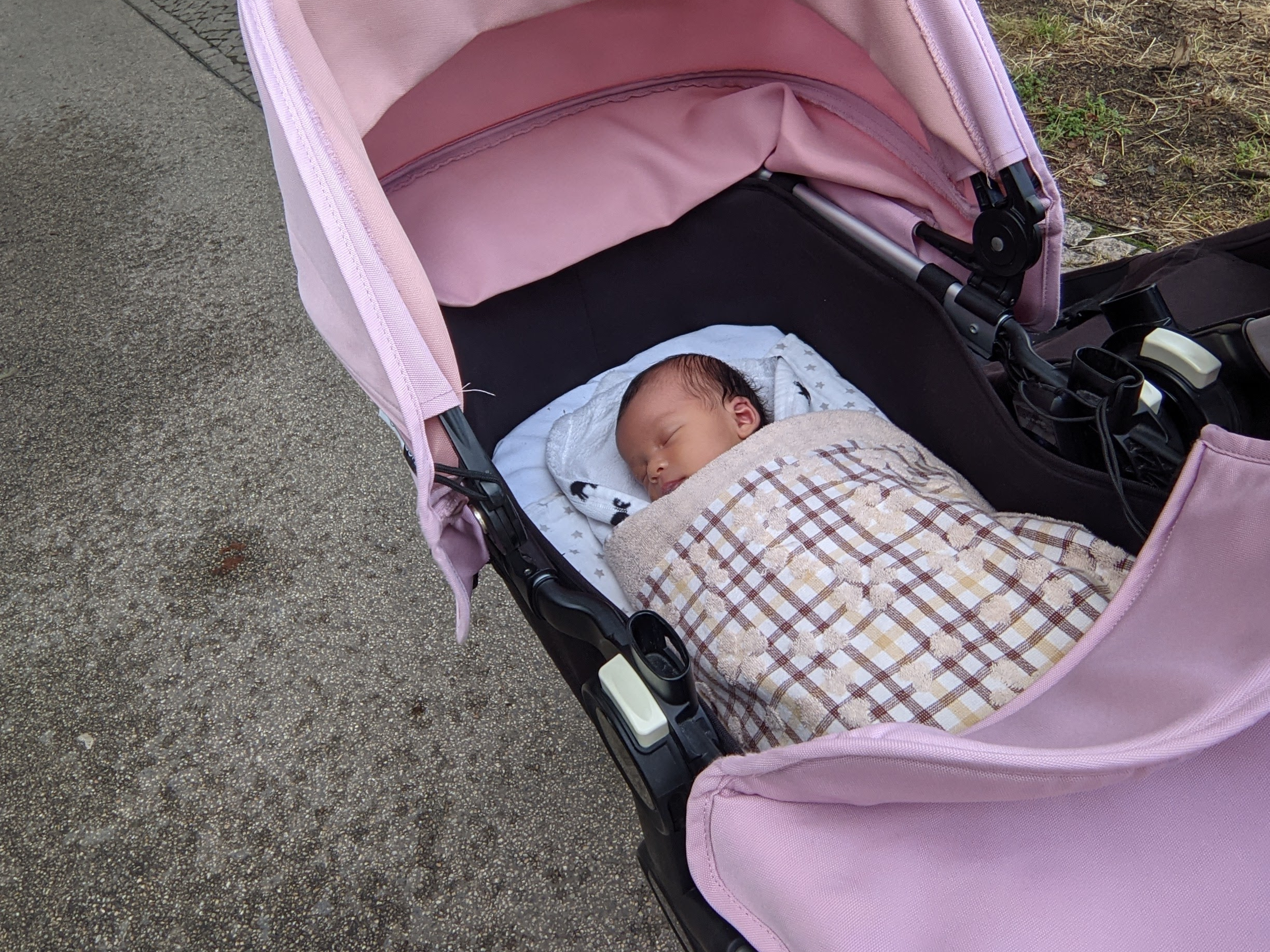
If your baby falls asleep in the stroller, you may wonder whether it is safe to leave them there overnight. The safest answer is no. A stroller can be useful for walks and supervised outings, but it is not designed to replace a crib, bassinet, portable crib, or play yard for nighttime sleep.
Babies sleep safest on their backs, on a firm, flat, level surface, with no pillows, blankets, toys, or loose bedding around them. A stroller seat can leave a baby curled, slumped, or semi-reclined, which can make breathing harder. This guide explains the risks, what to do if your baby falls asleep in a stroller, and safer overnight options.

Credit: anstel.com.au
Quick Answer
No, a baby should not sleep in a stroller overnight. If your baby falls asleep in a stroller, move them to a crib, bassinet, portable crib, or play yard on their back as soon as you can. Strollers are not firm, flat, level sleep spaces.
Key Takeaways
- A stroller is not a safe planned sleep space for overnight sleep.
- If your baby falls asleep in a stroller, move them to a firm, flat, level sleep surface as soon as possible.
- Use a crib, bassinet, portable crib, play yard, or CPSC-compliant bedside sleeper for sleep.
- Do not add pillows, blankets, positioners, or loose covers to make a stroller feel more comfortable.
- Talk with your pediatrician if reflux, breathing concerns, prematurity, or sleep struggles make safe transfers hard.
Warning: Do not use a stroller as an overnight crib. The U.S. Consumer Product Safety Commission says seated or semi-reclined positions can let a baby’s head tip forward and block the airway.
Is It Safe For A Baby To Sleep In A Stroller Overnight?
No. A stroller is not a safe place for overnight infant sleep. The safest sleep setup is a separate sleep space made for babies, such as a crib, bassinet, portable crib, or play yard that meets current safety standards.
The American Academy of Pediatrics policy explained by HealthyChildren.org says that if a baby falls asleep in a stroller, car seat, swing, carrier, or sling, you should move them to a firm sleep surface on their back as soon as possible.
This advice applies to naps and nighttime sleep. Overnight sleep creates extra risk because the baby may stay in one position for hours while you sleep and cannot watch their breathing, posture, temperature, or movement.
Risks Of Overnight Stroller Sleeping
Strollers are built for transportation and short supervised use. They are not built to give babies the same safe sleep surface as a crib or bassinet. The biggest risks come from position, padding, straps, temperature, and lack of supervision.
Recommended Products

2-IN-1 BABY STROLLER--- The infant basket can be detached when it is inconvenient to go with a baby stroller. Its adjustable seat can be reclined to accommodate your sleeping infants or attentive toddlers. With a push or pull, you can adjust the seat higher or lower as you like to make your baby well rested.

Convertible Bassinet Stroller – This premium baby stroller newborn doubles as a detachable, reversible bassinet stroller, letting your little one face you for cozy interaction or forward to explore the world. With 3 adjustable reclining positions (180° flat for sleeping, 145° semi-reclined for resting, 100° seated for playing), it’s the perfect stroller for baby from newborn to toddler, ensuring maximum comfort on daily walks, park visits, or family outings.

2-IN-1 BABY STROLLER--- The infant basket can be detached when it is inconvenient to go with a baby stroller. Its adjustable seat can be reclined to accommodate your sleeping infants or attentive toddlers. With a push or pull, you can adjust the seat higher or lower as you like to make your baby well rested.
Risk Of Suffocation And Positional Asphyxia
A baby’s head is heavy compared with the rest of their body. In a stroller, a young baby can slump forward, turn sideways, or slide into a curled position. If the chin drops toward the chest, the airway can narrow or become blocked.
The NIH Safe to Sleep campaign explains that a safe sleep area should be firm, flat, and level. A surface with one end raised can let a baby slide down and slump forward, which can get in the way of breathing.
Improper Sleeping Position
Most stroller seats are angled or shaped. Even a deep recline may not create a firm, flat, level surface. That matters because babies should sleep on their backs on a surface that does not tilt, sag, or curve around them.
Do not try to fix the angle with pillows, rolled blankets, cushions, or inserts. These soft items can create new suffocation hazards and may also go against the stroller manufacturer’s instructions.
Lack Of Overnight Supervision
A supervised stroller nap during a walk is very different from overnight sleep. During the night, you may not notice if your baby’s head drops, their body slides down, their face presses into fabric, or the stroller starts to overheat.
Safe overnight sleep should not depend on constant checking. Your baby needs a sleep space that stays safe while you sleep, too.
Temperature Regulation Issues
Babies can overheat more easily than adults. Strollers may hold heat, especially with covers, blankets, padded inserts, or limited airflow. Never drape a blanket over a stroller to make it darker for sleep because it can trap heat and reduce ventilation.
The CDC safe sleep guidance tells caregivers not to cover a baby’s head or allow the baby to get too hot. Signs of overheating can include sweating or a hot chest.
Strap And Entrapment Concerns
A stroller harness helps keep a baby from sliding or falling during use, but it does not turn the stroller into a safe crib. If straps sit poorly, loosen, twist, or press into the baby during long sleep, they can create discomfort or risk.
Always use the harness during normal stroller use, but do not rely on it for overnight sleep. A safe crib or bassinet does not require a harness to keep a baby in a safe sleep position.
Potential For Tipping, Rolling, Or Falls
A parked stroller can still move if the brakes fail, the surface is uneven, a pet bumps it, or an older child pulls on it. A stroller can also tip if weight hangs from the handle or if it sits on a slope.
Even if the stroller seems stable, it does not offer the same secure sleep environment as a stationary crib, bassinet, portable crib, or play yard.
Limited Movement During Long Sleep
Babies need safe sleep on their backs, but they also need freedom to stretch and move naturally when awake. Long, repeated stretches in strollers, swings, or other baby seats can reduce time for supervised floor play and tummy time.
The AAP recommends supervised awake tummy time because it supports motor development and helps prevent flat spots on the head. Use the stroller for transport, then give your baby safe awake time on a firm surface when you can.
Credit: hellomockingbird.com
What To Do If Your Baby Falls Asleep In The Stroller
It is common for babies to doze off during walks, errands, or travel. You do not need to panic, but you should treat stroller sleep as temporary and supervised.
- Stop and check your baby’s position. Make sure their chin is not pressed to their chest and their nose and mouth are clear.
- Keep the stroller open and ventilated. Do not cover the stroller with a blanket, heavy canopy, or loose fabric.
- Use the harness correctly. Follow the stroller manual so your baby does not slide down into an unsafe position.
- Move your baby when you can. As soon as you reach home, your hotel, or another safe place, transfer your baby to a crib, bassinet, portable crib, or play yard.
- Place your baby on their back. Use a firm, flat, level sleep surface with only a fitted sheet.
Note: This article is educational and does not replace advice from your child’s pediatrician. Ask your pediatrician for personalized guidance if your baby was premature, has reflux, has breathing concerns, or has a medical condition that affects sleep.
Can A Baby Take A Short Nap In A Stroller?
A short stroller nap can happen during a supervised walk or outing, but it should not be your planned nap setup. The safer approach is to move your baby to an approved sleep surface as soon as practical.
If your baby dozes off in the stroller, keep the nap supervised. Stay close enough to see their face and breathing position. Lock the brakes when stopped, keep the stroller on a flat surface, and avoid extra padding or loose covers.
Do not leave your baby sleeping in a stroller in another room, outside, in a hallway, on a porch, or anywhere you cannot watch them. Do not let a stroller nap turn into overnight sleep.
Recommended Products

2 In 1 Reversible: The seat liner baby car seat insert has a clever nested design (penguin shape), velour fabric padding is soft and breathable, suitable for all seasons. Reversible baby body cushion pad is ultra soft to the touch, absorbent, hypoallergenic, and sturdy

[Package]: Please wash it after open the sealed package and the item will be fluffy after wash

Adjustable Head Support: With an additional headrest, it can be adjusted according to the development of the baby, providing precise growth support for babies from 0 to 12 months.
Comfort Considerations For Babies
Comfort matters, but safety comes first. A stroller may look cozy, yet cozy does not always mean safe for infant sleep. Soft padding, curved seats, and snug spaces can make a stroller less safe for long sleep.
Recommended Products

【Folding & Detachable Design】– The bassinet bed can be easily removed from the baby playard. The baby travel playard is compact and doesn't take up much space. A carry bag is convenient for storage and transport,the travel cot fits in the trunk of a car and is perfect for travel.If you have limited living space, you are definitely going to fall in love with this amazing playard.
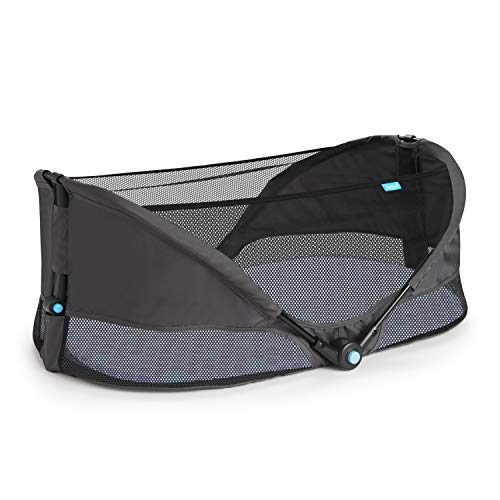
Safe, durable, lightweight travel pod for infants

Please make sure the newborn bassinet is horizontal when using, Cannot be used if tilted
Padding And Support
A crib, bassinet, or play yard mattress should feel firm and return to shape quickly when pressed. Stroller padding is different. It may curve around the baby, allow slumping, or press the baby into one position.
Avoid adding pillows, head positioners, cushions, or rolled towels. These items can shift and block breathing.
Temperature Regulation
Dress your baby for the room or weather, not for a covered stroller “sleep cave.” If you worry your baby is cold indoors, use a properly fitted wearable blanket in a crib or bassinet instead of loose blankets in a stroller.
Positioning And Safety
Your baby should sleep flat on their back. A stroller’s recline feature can help during supervised use, but it does not make the stroller a safe overnight bed unless the product is specifically approved as an infant sleep product and used exactly as the manufacturer directs.
Noise And Disturbance
Strollers move through changing environments. Lights, noise, bumps, and motion can interrupt deeper sleep. A consistent sleep space helps your baby rest better and makes it easier for you to follow safe sleep habits every time.
Mobility Considerations
A stroller is mobile by design. For sleep, your baby needs a stable surface that will not roll, tip, fold, or shift. Locking the stroller brakes helps during supervised use, but it does not solve the overnight safety problem.
Impact On Sleep Quality
Overnight stroller sleep can affect sleep quality because the stroller is not designed for long, settled rest. Babies may wake more often from position changes, noise, light, temperature shifts, or discomfort.
Potential Disruptions In Sleep Patterns
Babies do best with a predictable sleep routine. A crib, bassinet, or play yard can help signal that it is time for sleep. A stroller may work for a quick outing, but it can confuse the sleep routine if you use it as a regular nighttime bed.
Body Position Concerns
In a stroller, your baby may sleep semi-upright. That position can strain the neck and make slumping more likely. A flat back-sleeping position on a firm surface gives your baby a safer setup for longer sleep.
Safety And Parent Peace Of Mind
You also need rest. If your baby sleeps overnight in a stroller, you may wake up often to check their face, straps, temperature, and position. A safe crib or bassinet lowers that worry because the sleep space is made for the job.
Safety Precautions For Stroller Use
These precautions help during normal stroller use and supervised stroller naps. They do not make overnight stroller sleep safe.
Check The Stroller’s Stability
Use the stroller on flat ground. Lock the brakes whenever you stop. Do not hang heavy bags from the handle because they can make the stroller tip backward.
Ensure Proper Ventilation
Keep air moving around your baby. Avoid heavy covers, plastic rain covers indoors, or blankets over the stroller opening. If you need shade, use the stroller canopy as directed by the manufacturer.
Secure The Harness
Fasten the harness during stroller use. Adjust it so your baby cannot slide down, but make sure the straps do not press into the neck or face.
Avoid Overheating
Check your baby’s chest or back of the neck for warmth. Sweating, flushed skin, or a hot chest can mean your baby is too warm. Remove extra layers when needed.
Supervise Regularly
Stay close enough to see your baby’s face. If the baby’s chin drops, their head turns into the seat fabric, or they slide down, reposition them and move them to a safe sleep surface as soon as you can.
Consider The Surface
Park only on a level surface. Keep the stroller away from stairs, cords, pets, heaters, doors, and places where someone might bump it.
Alternatives To Stroller Sleeping
Safer overnight options give your baby a firm, flat, level surface made for sleep. Choose the option that fits your home, travel plan, and your baby’s age and size.
Crib
A crib with a firm mattress and fitted sheet is one of the safest choices for overnight sleep. Keep the crib empty. Do not add pillows, blankets, toys, bumpers, wedges, or sleep positioners.
Bassinet
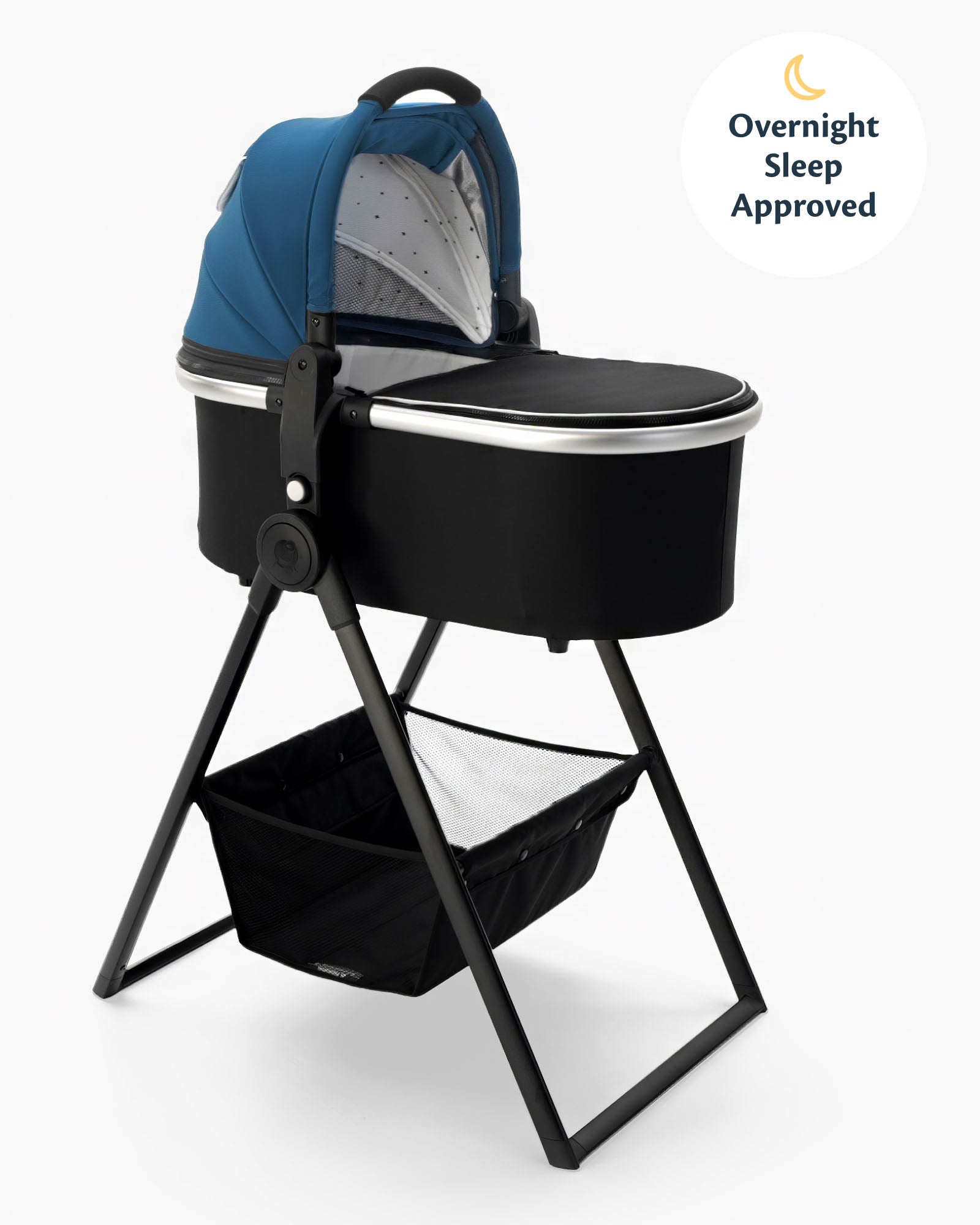
A bassinet can work well for young infants if it meets safety standards and your baby is still within the product’s weight, age, and movement limits. Stop using it when your baby reaches the manual’s limit or starts showing signs of rolling, pushing up, or outgrowing it.
Portable Crib Or Play Yard
A portable crib or play yard is often the best travel choice. Use the mattress or pad that came with it, plus a fitted sheet made for that exact model. Do not add a thicker mattress unless the manufacturer says it is allowed.
Bedside Sleeper That Meets Safety Standards
A bedside sleeper can keep your baby near your bed while giving them their own sleep space. Use only products that meet federal requirements, follow the manual, and keep the surface flat and clear.
Room Sharing, Not Bed Sharing
Room sharing means your baby sleeps in your room, close to your bed, but on their own separate sleep surface. The AAP recommends room sharing for at least the first 6 months because it is safer than bed sharing and makes feeding and comforting easier.

Credit: babybeeonline.com
Traveling Overnight With A Baby
Travel is one of the most common reasons parents consider stroller sleep. Planning ahead makes safer sleep easier.
- Bring a portable crib or travel bassinet. Check that it fits your baby’s current age, weight, and movement stage.
- Use the original sleep pad. Do not add extra mattresses, pillows, folded blankets, or cushions.
- Pack fitted sheets made for the product. Loose sheets can bunch up and become unsafe.
- Check for recalls. Search the CPSC recall database before using secondhand or borrowed sleep products.
- Keep the sleep space clear. No toys, bumpers, pillows, blankets, wedges, or positioners.
- Place the sleep space near your bed. This makes feeding and checking easier without bed sharing.
Pro Tip: Before a trip, let your baby spend a few supervised awake minutes near the travel crib at home. Familiarity can make the first travel night feel less strange.
When To Call Your Pediatrician
Ask your pediatrician for advice if your baby regularly falls asleep only in a stroller, car seat, swing, or carrier. You should also ask for help if your baby has reflux, breathing problems, poor weight gain, frequent choking, prematurity, low birth weight, or a medical device.
Do not use wedges, inclined sleepers, positioners, or stroller sleep to manage reflux unless your pediatrician gives specific medical instructions. Even babies with reflux are usually placed flat on their backs for sleep under AAP guidance.
Expert Opinions And Recommendations
Safe sleep guidance from major U.S. health and safety organizations is consistent: babies should sleep on their backs on a firm, flat, level surface made for infant sleep.
What Pediatricians Say
Pediatricians generally advise against overnight stroller sleep because strollers are not designed for prolonged, unsupervised infant sleep. A baby may not stay flat, and a slumped position can affect breathing.
Safety Concerns From Childcare Experts
Childcare safety experts focus on the same core risks: suffocation, slumping, entrapment, overheating, and unsafe products. These risks increase when a baby sleeps somewhere that is not designed for sleep.
Recommendations From Sleep Consultants
A consistent sleep environment can support better habits. Put your baby down in the same safe sleep space when possible. Use a stroller for transport, not as the main sleep routine.
Real-life Experiences From Parents
Many parents have had a baby fall asleep during a walk or errand. That can happen. The key is not to let convenience turn into an overnight habit. Watch your baby during the stroller nap, then transfer them to a safer sleep space.
Practical Tips For Parents
Set up the safe sleep space before bedtime. Keep the crib, bassinet, or play yard clear. If you return home with a sleeping baby in the stroller, move slowly and calmly, then place your baby on their back in their own sleep space.
Frequently Asked Questions
Is it safe for a baby to sleep in a stroller overnight?
No. A stroller is not a safe overnight sleep space. Use a crib, bassinet, portable crib, or play yard with a firm, flat, level surface.
Can a stroller affect a baby’s sleep quality?
Yes. A stroller can leave your baby angled, curled, or disturbed by movement and noise. A consistent safe sleep space usually supports better rest.
How long can a baby nap in a stroller?
A stroller nap should be short, supervised, and temporary. If your baby falls asleep, move them to a firm, flat, level sleep surface as soon as practical.
What are the risks of overnight stroller sleep?
Risks include slumping, positional asphyxia, suffocation, overheating, sliding in the harness, tipping, and long unsupervised sleep in a product not designed for overnight sleep.
Are there safer alternatives to stroller sleeping?
Yes. Use a crib, bassinet, portable crib, play yard, or CPSC-compliant bedside sleeper. Keep the surface firm, flat, level, and clear of loose items.
How can I make stroller use safer for short naps?
Stay close, keep the baby’s face visible, use the harness correctly, lock the brakes when stopped, avoid loose blankets, and transfer your baby to a safe sleep surface when you can.
What if my baby only sleeps well in the stroller?
Talk with your pediatrician. Your baby may need help with reflux, feeding, routine, or sleep habits, but a stroller should not become the overnight sleep solution.
Conclusion
A baby should not sleep in a stroller overnight. Strollers are helpful for walks, errands, and travel, but they are not safe substitutes for a crib, bassinet, portable crib, play yard, or approved bedside sleeper.
If your baby falls asleep in the stroller, keep them supervised and move them to a firm, flat, level sleep surface on their back as soon as possible. Keep the sleep space clear, avoid loose bedding, and ask your pediatrician for help if your baby has medical concerns or will only sleep in sitting devices.
Sources
- American Academy of Pediatrics, HealthyChildren.org — safe sleep policy explained, including moving babies from strollers to firm sleep surfaces.
- Centers for Disease Control and Prevention — back sleeping, firm flat sleep surfaces, room sharing, soft bedding, and overheating guidance.
- U.S. Consumer Product Safety Commission — safe sleep product guidance, “Bare is Best,” and warnings about seated or semi-reclined positions.
- NIH Safe to Sleep: Safe Sleep Environment — firm, flat, level sleep surface and positional asphyxia explanation.
- CDC SUID and SIDS Data — current U.S. sudden unexpected infant death categories and statistics.