How to Choose Baby Food Safely
Your baby’s first foods help shape growth, development, and eating habits. With so many jars, pouches, tubs, cereals, and snacks on the shelf, the best choice is usually the simplest one: age-appropriate food made mostly from recognizable ingredients, with no added sugar, very little sodium, and packaging that is sealed and undamaged.
This guide explains what to check before buying baby food, how to read labels, which safety details matter most, and when to ask your pediatrician for guidance.
Quick Answer
When buying baby food, choose options that match your baby’s age and texture skills, list whole foods first, contain no added sugar or honey, keep sodium low, clearly label allergens, and come in sealed, undamaged packaging. Vary grains and ingredients to reduce overreliance on any one food.
Key Takeaways
- Look for short ingredient lists with fruits, vegetables, grains, beans, meat, fish, eggs, or yogurt listed first.
- Avoid added sugars, honey before 12 months, high-sodium foods, and juice for babies under 12 months.
- Choose textures that match your baby’s development, and always supervise meals to reduce choking risk.
- Organic can be useful, but it is not automatically more nutritious; still check sugar, sodium, allergens, and packaging.
- Vary foods and grains, especially cereals, instead of relying only on rice-based products.
At a Glance
| Time Required | 2–3 minutes per product label |
| Difficulty | Easy once you know what to scan |
| Tools Needed | Ingredient list, Nutrition Facts label, expiration date, and packaging check |
| Cost | Budget to premium; store-brand organic and simple single-food options often cost less |
Note: This article is general education, not medical advice. Ask your pediatrician before starting solids if your baby was premature, has feeding trouble, poor growth, eczema, known allergies, reflux concerns, or a medical diet.

Credit: www.instagram.com
Start With Your Baby’s Age And Readiness
Before comparing brands, make sure the food matches your baby’s development. Most babies are ready for solid foods at about 6 months, but age alone is not enough. Look for signs such as good head and neck control, sitting with support, opening the mouth for food, and swallowing instead of pushing food out.
The Centers for Disease Control and Prevention explains that babies can begin eating solid foods around 6 months and can eat foods from several groups by 7 or 8 months, including vegetables, fruits, proteins, dairy without added sugars, and whole grains such as fortified infant cereals. CDC infant solid-food guidance
Match The Texture To Your Baby’s Stage
| Stage | What To Look For | Best Use |
|---|---|---|
| Early solids | Smooth, thin purees or iron-fortified cereal mixed with breast milk, formula, or water | First tastes and learning to swallow |
| Next textures | Thicker purees, mashed foods, soft lumps | Building oral-motor skills |
| Older babies | Soft, small pieces that mash easily between fingers | Practicing chewing and self-feeding |
Warning: Always supervise your baby while eating. Avoid hard, round, sticky, or slippery foods unless they are prepared safely. Whole nuts, whole grapes, chunks of raw apple, hot dog rounds, popcorn, and thick globs of nut butter can be choking hazards.
Read The Ingredient List First
The ingredient list tells you what the baby food is made from. Ingredients are listed by weight, so the first few ingredients matter most.
Recommended Products

Clearly Crafted: When it comes to caring for your baby, transparency is everything. Thats why we bring you Clearly Crafted. Our clear packaging lets you see the ingredients in each recipe, in all its vibrant color. its goodness you can see


ORGANIC TEETHING SNACK: These organic crunchy sticks dissolve easily and help soothe your baby's gums as they teethe
Look For Simple, Recognizable Ingredients
Good baby food usually starts with whole foods such as sweet potato, peas, carrots, apples, pears, oats, barley, beans, lentils, chicken, turkey, beef, egg, fish, or plain yogurt. A pouch labeled “spinach pear” should not mostly be apple juice concentrate or water.
Short ingredient lists are not always perfect, but they are easier to evaluate. A simple puree such as “organic carrots, water” is usually easier to understand than a long list of fillers, flavors, sweeteners, and starches.
Watch For Added Sugars
Babies do not need added sugar. The CDC states that infants and young children should not have added sugars, and labels should be checked for foods with no added sugars. CDC foods and drinks to avoid or limit
Natural sugar from fruit is different from added sugar, but too many sweet fruit-heavy pouches can still train your baby to prefer very sweet flavors. Balance fruit blends with vegetables, beans, meats, grains, or plain yogurt when appropriate.
Added Sugar Names To Check
| Label Term | Why It Matters |
|---|---|
| Cane sugar, sugar, brown sugar | Added sweetener |
| Corn syrup, glucose syrup, rice syrup | Added sweetener |
| Fructose, dextrose, maltose | Sugar under another name |
| Fruit juice concentrate | Can act like a sweetener when added to a product |
| Honey | Avoid completely before 12 months |
Warning: Do not give honey to babies under 12 months. Honey can cause infant botulism, a rare but serious illness.
Choose Low-Sodium Options
Babies and toddlers need very little salt. Avoid products with added salt when possible, especially snacks, meals with sauces, processed meats, and toddler foods. If two products look similar, use the Nutrition Facts label to choose the one with less sodium.
The FDA’s Nutrition Facts label explains serving size, sodium, added sugars, and other nutrients so shoppers can compare packaged foods more easily. FDA Nutrition Facts label guide
Pro Tip: Compare baby foods by serving size, not just by front-label claims. A product that says “veggie blend” may still be mostly fruit puree, while a plain vegetable jar may have fewer ingredients and less sugar.
Check The Nutritional Value
Baby food should do more than fill your baby’s stomach. It should support growth, brain development, digestion, and healthy eating patterns.
Recommended Products

Developed with Pediatric Allergists: Happy Baby Nutty Blends are the developed with pediatric allergists, to help introduce and include nuts in baby’s diet. The Dietary Guidelines recommend introducing allergens early & often

Happy Baby Savory Blends: These exciting recipes feature ingredients chosen for babys age & stage, combining organic protein and one full serving (_ cup) of veggies with flavorful oils & herbs just like you would roast or saute at home!
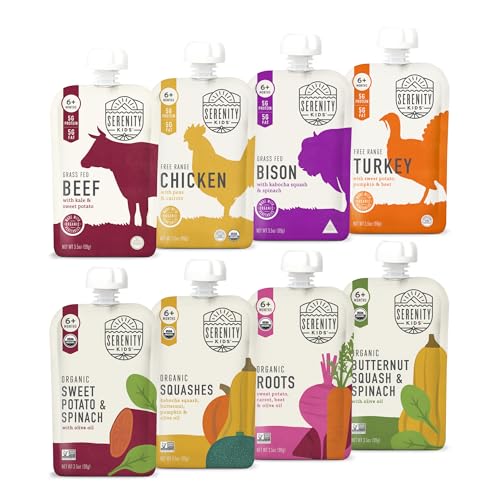
Serenity's Adventure Pouches: Dive into Serenity Kids' organic baby pouches for your little explorer's food journey. Packed with real nourishment and no added sugar, they're great for beach trips, road trips, and camping adventures
Prioritize Iron And Zinc
Iron becomes especially important when babies start solids. Good baby-food choices include iron-fortified infant cereals, pureed meats, beans, lentils, eggs, and fish that is low in mercury and prepared safely. Vitamin C-rich foods such as strawberries, citrus, bell pepper, broccoli, or fruit purees can help meals feel more balanced when paired with iron-rich foods.
Look For Protein And Healthy Fats
Protein supports growth and muscle development. Depending on your baby’s age and readiness, useful options may include pureed meat, poultry, fish, lentils, beans, egg, tofu, or plain whole-milk yogurt. Healthy fats from avocado, fish, yogurt, and nut or seed butters thinned safely into other foods can also help make meals more satisfying.
Do Not Rely Only On Fruit Pouches
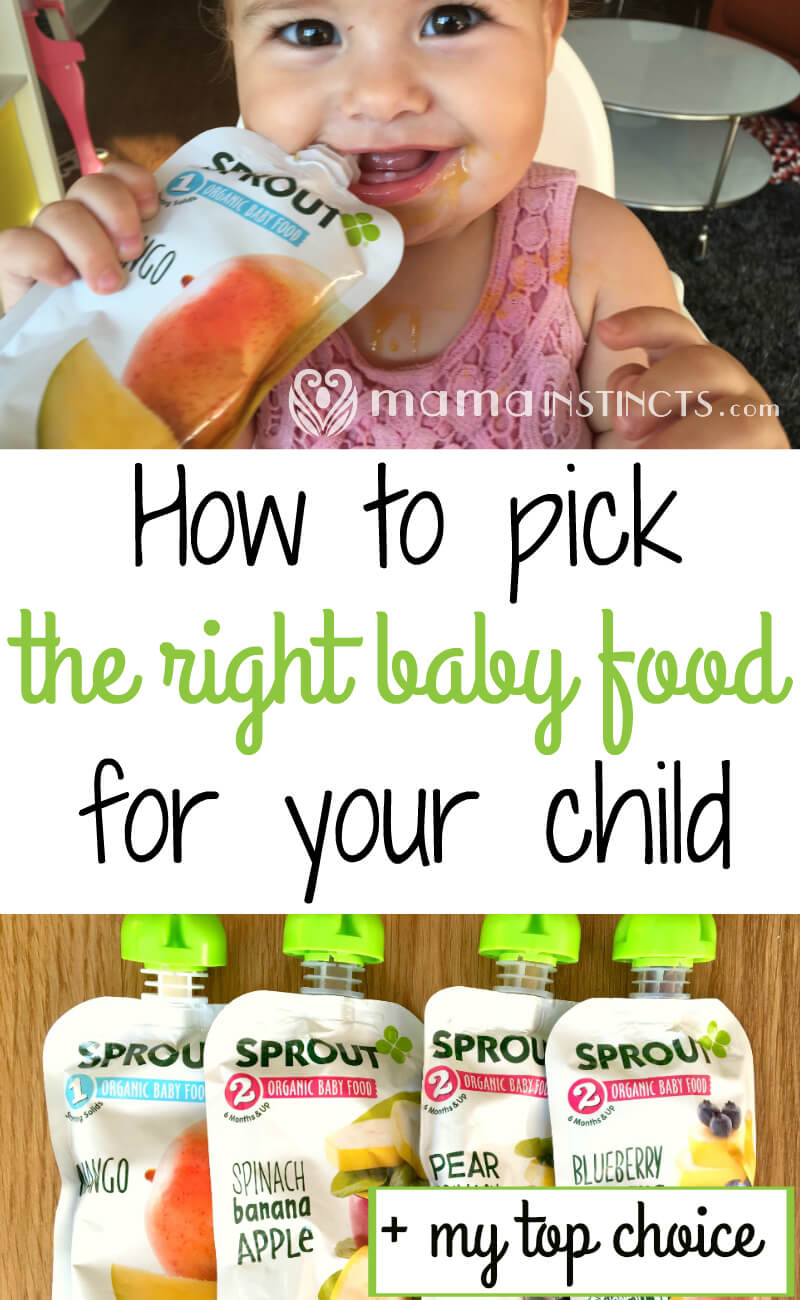
Fruit pouches are convenient, but many are very sweet and easy to overuse. Babies also need chances to see, smell, touch, and chew foods. Use pouches as occasional convenience foods, not the main way your baby learns to eat.
Vary Grains To Reduce Rice Overreliance
Infant cereal can be useful, especially when fortified with iron, but rice cereal should not be the only grain. The CDC recommends offering a variety of fortified infant cereals such as oat, barley, and multigrain because relying only on infant rice cereal can increase arsenic exposure. The FDA has also set an action level of 100 parts per billion for inorganic arsenic in infant rice cereal. FDA arsenic in infant rice cereal guidance
Variety is one of the simplest safety strategies: rotate vegetables, fruits, grains, and proteins instead of depending on the same pouch, cereal, or snack every day.
Consider Heavy Metals Without Panicking
Heavy metals such as lead and arsenic can occur in foods because they are present in soil, water, and the environment. Parents cannot remove this risk completely, but they can reduce overexposure by choosing varied foods and avoiding overreliance on a narrow group of products.
The FDA’s Closer to Zero work includes action levels for lead in many processed foods intended for babies and young children. The final guidance covers foods such as jars, pouches, tubs, boxes, purees, and dry infant cereals. FDA lead action levels for baby and young-child foods
How To Shop With Heavy Metals In Mind
- Choose a variety of grains, including oat, barley, and multigrain cereals, not only rice cereal.
- Rotate root vegetables such as carrots and sweet potatoes with other vegetables.
- Serve a mix of homemade and store-bought foods if that fits your routine.
- Limit juice, which is not recommended before 12 months and is unnecessary after that for most children.
- Do not assume “organic” means heavy-metal-free; heavy metals can come from the environment.
Check Allergen Information Carefully
Common food allergens include milk, egg, peanut, tree nuts, wheat, soy, sesame, fish, and shellfish. Baby food labels should make these easy to identify, but you should still read both the ingredient list and allergen statement.
Recommended Products

PREMIUM BABY FOOD-GRADE MATERIAL: Prioritizing durability and baby health, our containers are crafted from superior, thicker food-grade glass for extended life. Lids in six vibrant colors are not only stylish but made of quality BPA-free plastic, free of phthalates and lead, enhancing safety—a stellar choice for your baby's healthy, worry-free meals.

12-Pack, Durable 4oz Glass Jars with Lids – KeaBabies Baby Food Jars Glass check all the right boxes for a reliable baby snack containers. Ideal for busy parents as baby food containers for prepping and storing homemade meals smoothly.
![VITEVER [16 Pack] 4 oz Small Containers with Lids, Reusable Plastic Jars for Snack and Puree, Salad Dressing Container to Go, Deli Containers, Freezer Baby Food Containers, Dishwasher Safe, BPA Free](https://m.media-amazon.com/images/I/41fnLIEevxL._SL500_.jpg)
BPA-FREE; DISHWASHER SAFE; MICROWAVE SAFE; SEALABLE; STACKABLE; REUSABLE.
Introduce New Foods Gradually
When your baby is first starting solids, offer one new single-ingredient food at a time and wait 3–5 days before adding another. This makes it easier to connect symptoms such as rash, vomiting, diarrhea, swelling, or breathing trouble with a specific food.
Do Not Delay Allergens For Most Babies
Older advice often told parents to delay allergenic foods. Current guidance is different. The American Academy of Pediatrics explains that, once a baby is ready for solids, delaying allergenic foods such as egg, peanut, dairy, or sesame does not prevent allergies for most babies. High-risk babies, including babies with severe eczema or egg allergy, should have a pediatrician-guided plan. AAP/HealthyChildren allergen introduction guidance
Choose Safe Forms Of Allergenic Foods
Allergenic foods must still be prepared in baby-safe textures. Whole peanuts and tree nuts are choking hazards. Thick peanut butter can also be unsafe if served by the spoon. A safer option is to thin a small amount of smooth peanut butter into cereal, yogurt, fruit puree, or warm water until it is easy to swallow.
Credit: mamainstincts.com
Understand Organic, Natural, And Marketing Claims
Front labels are designed to sell. The ingredient list and Nutrition Facts label are designed to inform. Use both, but trust the detailed label more than the front of the package.
What Organic Really Means
USDA organic products must follow USDA organic regulations and be overseen by a USDA-authorized certifying agent. Organic production also avoids prohibited methods such as genetic engineering, ionizing radiation, and sewage sludge. USDA organic labeling rules
Organic can be a good choice if it fits your budget, but it does not automatically mean the food has better nutrition, lower sugar, safer texture, or no environmental contaminants. Always read the full label.
Be Careful With “Natural”
“Natural” is not the same as certified organic. A product can sound wholesome and still contain added sugar, high sodium, mostly fruit concentrate, or unnecessary flavors. Treat “natural,” “made with real fruit,” and “no artificial flavors” as marketing claims until the ingredient list confirms them.
Do Not Let Sweet Blends Crowd Out Vegetables
A pouch with spinach, kale, or carrot on the front may still taste mostly like apple, pear, or banana. That is not automatically bad, but babies benefit from learning savory and mildly bitter flavors too. Choose some single-vegetable or vegetable-forward options.
Avoid Unnecessary Additives
Not every additive is automatically harmful, but babies do not need artificial colors, extra sweeteners, or flavor boosters. In general, choose foods that get their taste and color from the main ingredients.
Skip Artificial Colors When Possible
Artificial colors add no nutrition. Many baby purees do not need them at all because fruits and vegetables already provide natural color. The American Academy of Pediatrics has encouraged families to reduce exposure to some food additives when practical, and the FDA has taken action on certain synthetic dyes such as FD&C Red No. 3. HealthyChildren food additive guidance
Question Added Flavors And Sweeteners
Vanilla flavor, fruit concentrate, and sweetened yogurt can make baby food taste dessert-like. Babies do not need dessert-style foods to accept solids. Plain, simple flavors help them learn what real vegetables, fruits, grains, and proteins taste like.
Choose Fewer Fillers
Some products use starches, gums, or water to adjust texture. These are not always unsafe, but they can dilute the main ingredients. If two products have similar prices, choose the one with more whole food ingredients and fewer fillers.
Evaluate Packaging Safety
Packaging protects baby food from spoilage and contamination. Before buying, inspect every jar, pouch, tub, or box.
Check The Seal
Do not buy baby food with a broken seal, loose lid, leaking pouch, swollen container, cracked jar, or damaged safety button. For jars, the lid should not be popped up before opening. For pouches, avoid tears, punctures, swelling, or sticky residue.
Look At Expiration And Use-By Dates
Choose products with clear, readable dates. Do not buy expired baby food. At home, use older products first and store unopened packages according to the label.
Be Realistic About BPA-Free Labels
BPA-free packaging can be a helpful signal, but it is not a complete safety guarantee. The FDA notes that BPA-based materials are no longer authorized for baby bottles, sippy cups, and infant formula packaging because those uses were abandoned, while FDA continues to review BPA for other food-contact uses. FDA BPA food-contact information
Store Opened Baby Food Safely
After opening, refrigerate baby food promptly and follow the storage directions on the package. Do not feed directly from a jar or pouch and then save the leftovers, because saliva can introduce bacteria. Spoon a portion into a clean bowl instead.
Credit: halamama.com
Know Which Foods And Drinks To Avoid Or Limit
Some foods are unsafe or unnecessary for babies, even if they seem healthy for adults.
| Avoid Or Limit | Why |
|---|---|
| Honey before 12 months | Risk of infant botulism |
| Juice before 12 months | Not recommended; adds sweetness without the benefits of whole fruit |
| Cow’s milk as a drink before 12 months | Not nutritionally appropriate as the main drink for infants |
| High-sodium foods | Babies and toddlers need very little salt |
| Unpasteurized milk, yogurt, cheese, or juice | Can contain harmful bacteria |
| High-mercury fish | Mercury can harm brain and nervous-system development |
Compare Pouches, Jars, Tubs, Frozen Food, And Homemade Options
No single format is best for every family. The safest choice is the one that fits your baby’s age, your routine, and the label standards above.
Pouches
Pouches are portable and convenient, but they can encourage sucking instead of spoon-feeding or chewing. Use them occasionally, and consider squeezing the food into a bowl or spoon so your baby can see and interact with it.
Jars And Tubs
Jars and tubs make it easier to portion food into a bowl. They are also easy to inspect for seal problems. Choose simple recipes and refrigerate leftovers according to the label.
Frozen Baby Food
Frozen baby food can be a good option when it uses simple ingredients and no added sugar or salt. Keep it frozen until use, thaw safely, and do not refreeze food that has already been thawed and served.
Homemade Baby Food
Homemade baby food gives you control over ingredients and texture. Steam or cook foods until soft, puree or mash to the right consistency, and avoid adding salt, sugar, honey, or unsafe spices. Keep preparation surfaces clean and store portions safely.
How To Buy Baby Food On A Budget
Healthy baby food does not have to be the most expensive brand. Use these strategies to save money without lowering quality:
- Buy simple single-ingredient foods instead of specialty blends.
- Compare store-brand organic and conventional options.
- Choose larger jars or tubs only if your baby can finish them safely within the recommended time after opening.
- Use affordable homemade staples such as mashed banana, avocado, cooked sweet potato, oats, lentils, peas, or beans.
- Spend more only where it matters to you, such as allergen-friendly products, organic options, or higher-protein meals.
Simple Baby Food Buying Checklist
- Is the texture right for my baby’s age and feeding skills?
- Are whole foods listed first?
- Is there no added sugar, honey, or juice concentrate used as a sweetener?
- Is sodium low compared with similar products?
- Are allergens clearly listed?
- Does the product include iron-rich or protein-rich foods when needed?
- Am I rotating grains and ingredients instead of buying the same food every day?
- Is the package sealed, undamaged, and within date?
- Does the product avoid unnecessary artificial colors, flavors, and fillers?
- Would I still buy it if the front-label claims were removed?
Frequently Asked Questions
What should I look for first when buying baby food?
Start with age-appropriate texture, then check the ingredient list. Choose foods with recognizable ingredients, no added sugar or honey, low sodium, clearly labeled allergens, and sealed packaging.
Is organic baby food always better?
Not always. Certified organic baby food follows USDA organic rules, but it can still be high in fruit sugar, low in protein, or packaged in a less suitable texture. Read the full label before deciding.
What is the 3-day rule for baby food?
The 3-day rule means offering one new food at a time and waiting about 3 days before adding another. CDC guidance allows 3–5 days at first, which helps you spot possible allergy or sensitivity reactions.
Should I avoid rice cereal?
You do not have to avoid rice cereal completely unless your pediatrician advises it, but do not rely on it as the only cereal. Rotate oat, barley, multigrain, and other iron-fortified cereals to add variety.
Are baby food pouches bad?
Pouches are not automatically bad, but they are best used for convenience rather than every meal. Spoon some into a bowl when possible so your baby can see, smell, and practice eating different textures.
When should I call the pediatrician about baby food?
Call your pediatrician if your baby has severe eczema, known food allergies, poor growth, feeding difficulty, repeated vomiting, blood in stool, choking episodes, or any reaction such as swelling, hives, breathing trouble, or persistent diarrhea.
Sources
- CDC: When, What, and How to Introduce Solid Foods — readiness cues, food variety, texture, cereal variety, and choking prevention.
- CDC: Foods and Drinks to Avoid or Limit — honey, added sugar, sodium, juice, cow’s milk, unpasteurized foods, and high-mercury fish guidance.
- HealthyChildren/AAP: Introducing Common Food Allergens — allergen timing and high-risk baby guidance.
- FDA: Lead Action Levels for Baby and Young-Child Foods — current FDA lead guidance for processed foods intended for babies and young children.
- FDA: Inorganic Arsenic in Infant Rice Cereals — arsenic action level and rationale for infant rice cereal.
- USDA Agricultural Marketing Service: Organic Labeling — what certified organic labeling means.
Conclusion
The best baby food is safe, age-appropriate, and made from simple ingredients your baby can handle. Focus on whole foods, iron-rich options, varied grains, clear allergen labels, low sodium, no added sugars, and sealed packaging. Organic can be helpful, but it does not replace careful label reading.
Start with simple foods, introduce new ingredients gradually, and give your baby many chances to try different flavors and textures. When in doubt, bring the label or product photo to your pediatrician and ask whether it fits your baby’s needs.