By Editorial Team · Updated July 19, 2026
Most babies are ready to start solid foods at about 6 months, not simply because they have reached 5 months. If your 5-month-old has strong developmental readiness signs, ask your pediatrician whether it is appropriate to begin with small tastes while breast milk or iron-fortified formula remains the main source of nutrition.
This guide explains which first foods may work well, how to prepare baby-safe textures, how to prioritize iron-rich choices, what allergy signs to watch for, and which foods and drinks to avoid.
Quick Answer: A developmentally ready 5-month-old should start solids only with pediatrician approval. Begin with a small spoon-tip taste of a soft, smooth food. Useful first options include iron-fortified infant cereal, smooth pureed meat, pureed beans or lentils, sweet potato, avocado, banana, cooked carrot, or cooked apple. Continue normal breast milk or formula feeds and never force your baby to eat.
Key Takeaways
- Most babies begin complementary foods at about 6 months. Starting before 4 months is not recommended.
- Readiness signs include steady head control, sitting upright alone or with support, opening the mouth for food, and swallowing instead of pushing food out.
- Breast milk or iron-fortified formula should remain the main source of nutrition throughout this early stage.
- Include iron- and zinc-rich choices such as iron-fortified infant cereal, smooth pureed meat, beans, or lentils instead of relying only on fruit and vegetable purees.
- Introduce common allergens in baby-safe forms without unnecessary delay once your baby is ready, but ask your pediatrician first if your baby has severe eczema, an egg allergy, or another high-risk condition.
- Avoid honey, juice, added sugar, added salt, cow’s milk or plant milk as a drink, hard chunks, and other choking hazards.

Safety note: This article is general education, not medical advice. Talk with your baby’s pediatrician before starting solids at 5 months, especially if your baby was premature, has poor head control, feeding or swallowing trouble, significant reflux, eczema, a known allergy, or concerns about growth.
Signs Your Baby Is Ready For Solids
Introducing solids is a major feeding milestone for your baby. At 5 months, readiness matters more than age alone. Your baby should show several signs together, not just interest in your plate.
1. Sitting Upright Alone Or With Support
Your baby should stay upright and stable in a high chair with the harness secured. A slumped or reclined position is not appropriate for solid-food feeding.
2. Good Head And Neck Control
Your baby should hold their head steady while seated. If the head falls forward or to the side, wait and speak with your pediatrician.
3. Opening The Mouth For Food
Your baby may lean forward or open their mouth when a spoon approaches. Watching adults eat is common at this age, but interest by itself does not prove feeding readiness.
4. Swallowing Instead Of Pushing Food Out
Young babies often push food forward with their tongue. Your baby may be closer to readiness when they can move a tiny amount of smooth food toward the back of the mouth and swallow it.
5. Bringing Hands Or Objects To The Mouth
Hand-to-mouth coordination is another useful developmental sign. It shows that your baby is gaining the oral and motor skills involved in learning to eat.
6. Calm, Responsive Feeding Behavior
Try food only when your baby is awake, calm, and comfortable. Turning away, closing the mouth, crying, stiffening, or repeatedly pushing the spoon away means it is time to stop.
Nutritional Needs At Five Months
At 5 months, breast milk or iron-fortified formula should remain the main source of calories, fluids, protein, fat, vitamins, and minerals. Early solids are complementary foods. They should add to milk feeds, not replace them.
Breast Milk Or Formula Comes First
Continue your baby’s usual milk-feeding routine. If your pediatrician approves solids, offer a small taste when your baby is calm and not extremely hungry. Do not cut back milk feeds to make room for solids.
Prioritize Iron And Zinc
Iron and zinc become increasingly important as babies grow. Iron-fortified infant cereal, smooth pureed meat, and well-pureed beans or lentils can provide more nutritional value than offering only fruit purees. Ask your pediatrician whether your baby has any additional iron needs, especially after premature birth or if growth is a concern.
Include Healthy Fats
Avocado has a naturally creamy texture and contains fat. Mash it until smooth and thin it with breast milk or prepared formula if needed.
No Extra Drinks At Five Months
Breast milk or properly prepared infant formula should provide your baby’s fluids. Do not offer water, juice, tea, herbal drinks, cow’s milk, or plant-based milk at 5 months unless your baby’s clinician gives specific instructions.
Best First Foods To Try
There is no required order for first foods. Choose nutrient-rich, single-ingredient foods with a texture your baby can manage. Keep them plain, and introduce only one new food at a time during the earliest feedings.
| First Food | Why It May Help | How To Serve It |
|---|---|---|
| Iron-fortified infant cereal | Provides iron in an easy-to-adjust texture. | Mix a single-grain infant cereal with breast milk or prepared formula until thin and smooth. Rotate oat, barley, multigrain, and rice cereals instead of using only rice cereal. |
| Smooth pureed meat | Provides iron, zinc, and protein. | Cook thoroughly, remove skin, fat, gristle, and bones, then puree with enough liquid to make a smooth texture. |
| Pureed beans or lentils | Offers plant protein and iron. | Cook until very soft, blend completely smooth, and thin as needed. Do not add salt. |
| Sweet potato | Softens easily and has a mild flavor. | Steam or bake until very soft, remove the skin, and blend smooth. |
| Avocado | Has a creamy texture and naturally contains fat. | Mash thoroughly and thin if it feels thick or sticky. |
| Banana | Soft, mild, and easy to prepare. | Use a ripe banana, mash until smooth, and thin if needed. |
| Carrot | Becomes smooth after thorough cooking. | Cook until very soft and puree fully. Never serve raw carrot pieces at this age. |
| Apple | Has a mild flavor when cooked. | Peel, core, cook until soft, and blend completely smooth. Do not offer raw apple pieces. |
Recommended Products

ON THE GO BABY FOOD: Gerber Stage 1 Baby Food Puree Tubs are designed for ease and convenience. These tubs are the perfect on the go baby food, made in a portable and easy-to-store format for busy parents

ON THE GO BABY FOOD: Gerber Stage 1 Baby Food Puree Tubs are designed for ease and convenience. These tubs are the perfect on the go baby food, made in a portable and easy-to-store format for busy parents

Iron-Fortified Infant Cereal
Choose cereal made specifically for infants and check that it is fortified with iron. Start with a thin consistency. Use several grain types over time instead of relying only on rice cereal.
Smooth Pureed Meat
Fully cooked chicken, turkey, beef, or lamb can be blended into a smooth puree. Meat can be especially useful because it supplies iron and zinc. Check carefully for bones, gristle, skin, and firm pieces before serving.
Pureed Beans Or Lentils
Cook beans or lentils until very soft, then blend them until no skins or lumps remain. Thin the puree to a spoonable texture and keep it free of salt and spicy seasonings.
Steamed And Pureed Sweet Potato
Sweet potato becomes soft and creamy after cooking. Steam or bake it, remove the skin, and blend until smooth.
Avocado
Avocado does not need cooking. Mash the flesh thoroughly and thin it with breast milk or prepared formula if the puree feels sticky.
Mashed Banana
Use a ripe banana and mash it until no firm lumps remain. Offer only a small taste at first.
Steamed And Pureed Carrot
Steam carrots until they are very soft, then blend them with enough liquid to make a smooth puree. Do not serve raw or firm carrot pieces.
Cooked Apple Puree
Peel, core, and cook apple until soft, then blend it fully. Raw apple is a choking hazard for babies.
Homemade Vs Store-Bought Baby Food
Both homemade and store-bought baby foods can fit a safe feeding plan. The better choice is the one that gives your baby an appropriate texture, simple ingredients, safe storage, and close supervision.
Recommended Products

𝗦𝘁𝗲𝗮𝗺𝗶𝗻𝗴 𝗮𝗻𝗱 𝗕𝗹𝗲𝗻𝗱𝗶𝗻𝗴 𝗶𝗻 𝗢𝗻𝗲: The height of the blender container is 4.13 inches, and the outer diameter is 4.17 inches.This GROWNSY baby food maker thoughtfully designed for babies 6 months+ during the weaning stage.It seamlessly combines steaming and blending in a single device, simplifying meal prep and eliminating the need for extra kitchen tools. The built-in sterilizer mode saves time and effort, giving you more precious moments with your baby.

𝗔𝗹𝗹-𝗶𝗻-𝗢𝗻𝗲 𝗕𝗮𝗯𝘆 𝗙𝗼𝗼𝗱 𝗠𝗮𝗸𝗲𝗿: Say goodbye to kitchen clutter! The Bear baby food maker does it all in one compact device—steam, blend, sterili-ze bottles and warm milk. Simplify your daily routine and create fresh, homemade meals for your little one without the need for extra appliances
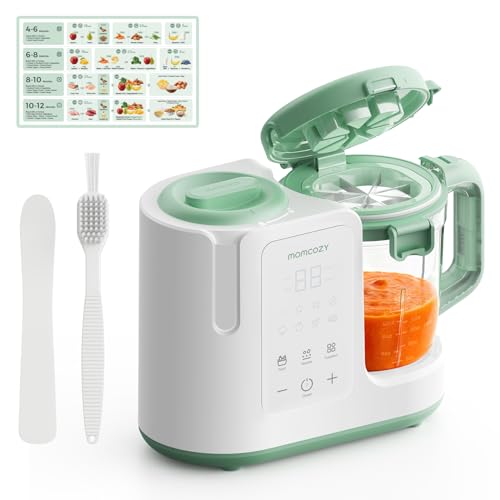
𝟑-𝐌𝐢𝐧𝐮𝐭𝐞 𝐏𝐫𝐞𝐩, 𝐈𝐭 𝐇𝐚𝐧𝐝𝐥𝐞𝐬 𝐭𝐡𝐞 𝐑𝐞𝐬𝐭 - Spend just 3 minutes prepping — the Momcozy Baby Food Maker automatically steams and blends in 18–25 minutes. No food transferring needed. For frozen ingredients, extend the duration in Auto Mode. Making fresh, healthy baby puree has never been easier.
Homemade Baby Food
Homemade food gives you control over ingredients and thickness. Cook food thoroughly, puree it to a texture your baby can manage, and avoid added salt, sugar, honey, and strong seasonings.
Cool cooked food promptly and store it in a clean, covered container. Follow food-safety guidance for refrigeration and freezing. Throw away any portion that has touched your baby’s spoon because saliva can introduce bacteria.
Store-Bought Baby Food
Choose an age-appropriate texture and read the ingredient list. Single-ingredient foods can make reactions easier to identify during the first few feedings. Avoid products containing honey, added sugar, or excessive sodium.
Check that the package is sealed and undamaged, follow the storage directions, and use a clean spoon. Do not save food from a container after a used spoon has been dipped back into it.
Balancing Both Options
Many families use both homemade and store-bought foods. Neither option replaces the need for readiness, upright positioning, responsive feeding, and pediatric guidance. The American Academy of Pediatrics offers additional guidance on starting solid foods safely.
Safe Feeding Practices
Your baby is learning a new oral skill. Keep the setting calm, the texture appropriate, and the amount small.
Recommended Products
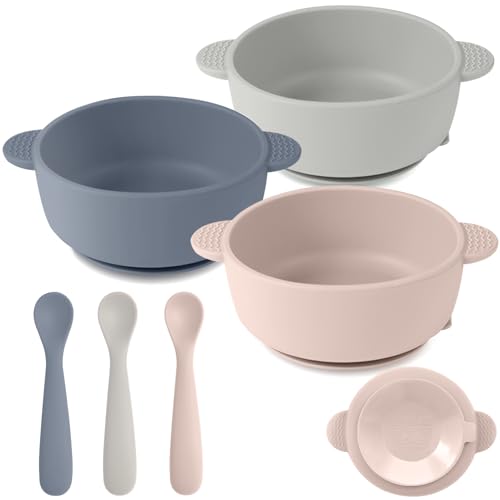
Toddler Cutlery Set: Each toddler utensils set includes 3 bowls and 3 spoons in 3 different colors for easy differentiation, designed for toddlers who are learning to self-feed, perfect for indoor or outdoor use, making your child's mealtime moments fun and tidy!

Complete Feeding Set: Includes 3 silicone suction bowls and 3 soft silicone spoons designed to support babies and toddlers during mealtime.

Perfect Dining Solution:Our baby feeding set includes 3 silicone suction bowls and 3 soft silicone spoons, offering an ultimate combination for a safe and mess-free mealtime experience for babies and toddlers.
Start With A Small Taste
Begin with a small spoon-tip amount. Your baby may lick, spit out, or refuse the food. That is normal. There is no need to reach a target serving size at 5 months.
Use A Developmentally Appropriate Texture
For an early starter, use a smooth puree or very smooth mash that falls easily from a spoon. Avoid hard pieces, round foods, tough meat, skins, seeds, stringy foods, and thick spoonfuls of nut butter.
Feed In A Stable, Upright Position
Secure your baby upright in a high chair. Do not feed solids while your baby is lying down, moving around, or riding in a stroller or car seat.
Watch Your Baby The Entire Time
Stay within arm’s reach for every bite. Do not leave your baby eating with a sibling, in front of a screen, or while you step away.
Follow Hunger And Fullness Cues
Stop when your baby turns away, closes their mouth, cries, arches, pushes the spoon away, or loses interest. Never pressure your baby to finish food.
Keep Food And Equipment Clean
Wash your hands, use clean bowls and spoons, and check warmed food for hot spots before feeding. Refrigerate food promptly and discard anything contaminated by a used spoon.
Know The Difference Between Gagging And Choking
Gagging can be noisy and may include coughing or pushing food forward. Choking can be quiet and may prevent a baby from coughing, crying, or breathing. Learn infant choking first aid and CPR before solids begin. Call your local emergency number immediately if your baby cannot breathe, cough, or cry.
Emergency warning: Never place your fingers blindly into a baby’s mouth to remove food. Follow recognized infant choking first-aid steps and get emergency help.
Avoid Salt, Sugar, Honey, And Juice
Do not add salt or sugar to baby food. Avoid honey before 12 months because it can cause infant botulism. Babies under 12 months do not need juice.
Common Allergies To Watch For
Common allergenic foods should not be delayed without a medical reason once your baby is developmentally ready for solids. Introduce them in baby-safe forms, one at a time, and ask your pediatrician for a plan if your baby is at higher risk.
How To Introduce New Foods
During the first few foods, offering one new single-ingredient food at a time and waiting three to five days can make a possible reaction easier to identify. After your baby has tolerated several foods, ask your pediatrician how to expand variety and introduce common allergens without unnecessary delay.
Common Allergenic Foods
Common allergens include egg, peanut, tree nuts, cow’s milk protein, wheat, soy, sesame, fish, and shellfish. Introduce only one allergen at a time, in a small baby-safe amount, when your baby is healthy and an adult can watch closely.
Peanut And Tree-Nut Products
Whole nuts, chopped nuts, and thick spoonfuls of nut butter are choking hazards. A clinician may recommend a small amount of smooth peanut butter thinned well into an already tolerated puree or infant cereal. Babies with severe eczema or an egg allergy need medical guidance before peanut introduction because they may require evaluation and a specific early-introduction plan.
Well-Cooked Egg
When your pediatrician says your baby is ready, use fully cooked egg in a soft, smooth form. Do not offer runny or undercooked egg.
Dairy Foods
Cow’s milk should not be used as a drink before 12 months. After solids begin, some babies can try pasteurized plain, unsweetened yogurt in a small amount. Ask your pediatrician if your baby has eczema, blood in the stool, vomiting, or a suspected milk allergy.
Reaction Signs To Watch For
Stop the food and contact your pediatrician if you notice hives, facial swelling, repeated vomiting, coughing, wheezing, or another concerning reaction after eating. Call your local emergency number immediately for trouble breathing, swelling of the tongue or throat, widespread hives with weakness, unusual paleness, or a baby who becomes limp or difficult to wake.
Foods And Drinks To Avoid At 5 Months
- Honey: Avoid honey and foods made with honey before 12 months.
- Juice and sweet drinks: Babies under 12 months do not need juice, and sugar-sweetened drinks are not appropriate.
- Water, tea, or herbal drinks: Do not offer them at 5 months unless your baby’s clinician gives specific instructions.
- Cow’s milk or plant-based milk as a drink: Do not use either as a replacement for breast milk or infant formula.
- Added salt or sugar: Keep first foods plain.
- Hard, round, sticky, or chunky foods: Avoid raw apple, raw carrot, whole grapes, nuts, popcorn, chips, sausage rounds, chunks of meat or cheese, and thick nut butter.
- Unpasteurized or undercooked foods: Avoid unpasteurized dairy or juice, raw or undercooked egg, and undercooked meat or fish.
- Cereal in a bottle: Do not add cereal or other food to a bottle unless your baby’s doctor specifically prescribes it for a medical reason.
A Simple First-Taste Plan
This example is not a meal schedule. Keep your baby’s usual breast milk or formula feeds and use only small tastes after your pediatrician confirms readiness.
- Before day 1: Confirm that your baby can sit upright with support, control their head, and swallow a small amount from a spoon.
- Days 1 to 3: Try one smooth, iron-rich food, such as iron-fortified infant cereal or smooth pureed meat.
- Days 4 to 6: If the first food is tolerated, try one new vegetable or fruit puree.
- Days 7 to 9: Try another iron-rich single food, such as pureed lentils or beans.
- After several foods are tolerated: Ask your pediatrician how and when to introduce egg, peanut, dairy, wheat, sesame, soy, fish, and other common allergens.
If your baby repeatedly gags, coughs, seems distressed, cannot keep food in the mouth, or refuses solids, stop and try again later. Contact your pediatrician if swallowing remains difficult or feeding causes ongoing coughing, choking, pain, or vomiting.
Frequently Asked Questions
What can I feed my 5-month-old baby?
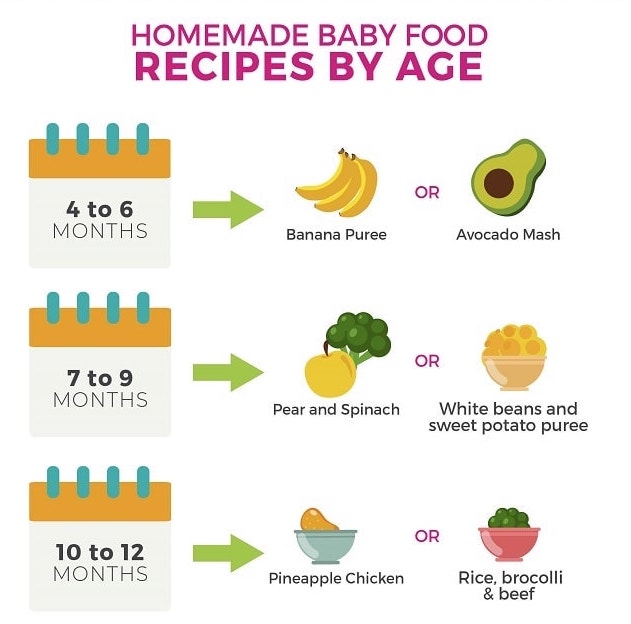
Most babies start solids at about 6 months. If your 5-month-old shows strong readiness signs and your pediatrician approves, offer a small taste of a smooth single food such as iron-fortified infant cereal, pureed meat, pureed beans or lentils, sweet potato, avocado, banana, cooked carrot, or cooked apple. Breast milk or formula should remain the main nutrition source.
Can a 5-month-old baby start eating solid food?
Some 5-month-olds may be developmentally ready, but age alone is not enough. Your baby should sit upright alone or with support, control their head and neck, open their mouth for food, and swallow instead of pushing food out. Ask your pediatrician before starting at 5 months.
What purees can a 5-month-old have?
With pediatric approval, suitable smooth foods may include iron-fortified infant cereal, pureed meat, pureed beans or lentils, sweet potato, avocado, banana, carrot, apple, pear, or pumpkin. Prioritize iron-rich foods and keep textures smooth enough for your baby’s current skills.
What finger food can I give my 5-month-old?
Most 5-month-olds are not ready to self-feed finger foods. Finger foods require stable upright sitting, hand-to-mouth control, and the ability to manage soft food safely. Ask your pediatrician about the right texture and feeding method for your baby rather than using age alone.
How much solid food should a 5-month-old eat?
Start with a small spoon-tip taste and follow your baby’s cues. There is no required serving size at 5 months because solids are for learning, not replacing breast milk or formula. Stop when your baby turns away, closes their mouth, or becomes upset.
Should I start with rice cereal?
Rice cereal can be one iron-fortified option, but it does not need to be the first or only cereal. Rotate oat, barley, multigrain, and rice infant cereals to provide variety and reduce reliance on rice.
Can I give egg or peanut to a 5-month-old?
Do not introduce them based on age alone. Once your baby is developmentally ready and your pediatrician approves solids, common allergens should not be delayed without a medical reason. Use fully cooked egg and a baby-safe, well-thinned peanut preparation. Babies with severe eczema or an egg allergy need medical guidance before peanut introduction.
Can a 5-month-old drink water with solids?
Breast milk or properly prepared infant formula should provide fluids at 5 months. Do not offer water unless your baby’s clinician gives specific instructions, and never replace a milk feed with water.
Medical References
- CDC: When, What, and How to Introduce Solid Foods
- CDC: Choking Hazards
- American Academy of Pediatrics: Starting Solid Foods
- American Academy of Pediatrics: Introducing Common Food Allergens
Conclusion
Choosing first foods for a 5-month-old starts with developmental readiness and medical guidance, not pressure to meet an age-based deadline. Most babies begin solids at about 6 months. If your pediatrician agrees that your baby is ready sooner, keep portions small and continue normal breast milk or formula feeds.
Start with simple, nutrient-rich foods, including iron-rich options. Use a safe texture, keep your baby upright, supervise every bite, introduce allergens thoughtfully, and stop when your baby shows fullness or distress. A slow, responsive approach helps make first tastes safer and more positive.