Is It Cheaper to Make Homemade Baby Food? As a parent, you’re always looking for the best ways to give your little one the healthiest start in life—without draining your wallet.
When it comes to baby food, the options can be overwhelming. Store-bought jars and pouches may seem convenient, but are they really worth the cost? What if you could save money and have full control over the ingredients your baby eats?
That’s where homemade baby food comes in. But is it truly cheaper to make it yourself, or is the convenience of store-bought worth the price tag? You deserve clear answers, and that’s exactly what this article will give you. Stick around to uncover the cost breakdown, hidden savings, and a few surprising benefits of making baby food at home. By the end, you’ll feel confident in choosing the best option for both your budget and your baby’s health. Let’s dive in!
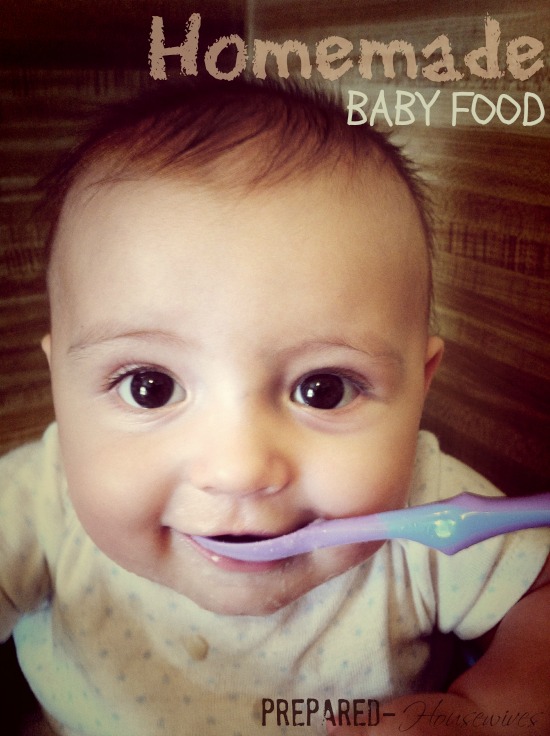
Credit: prepared-housewives.com
Cost Comparison
Many parents wonder if making homemade baby food saves money. The cost of commercial baby food can add up quickly. Homemade baby food might seem like a cost-effective alternative. But is it really cheaper? Let’s break down the costs to find out.
Cost Of Store-bought Baby Food
Store-bought baby food is convenient but often pricey. A single jar or pouch can cost $1 to $2. Babies eat several servings daily, which adds up over time. For example, purchasing just three jars daily could cost $90 monthly. Organic options cost even more, ranging from $1.50 to $3 per serving.
Cost Of Homemade Baby Food
Homemade baby food uses simple ingredients like fruits, vegetables, and grains. A pound of carrots costs around $1 and makes multiple servings. A bag of frozen peas costs $2 and lasts for weeks. Even organic produce is often cheaper than premade baby food. You can also make large batches and freeze portions to save time.
Equipment Costs For Homemade Baby Food
Homemade food requires basic kitchen tools. A blender or food processor costs $30 to $100. Ice cube trays or small containers for storage are usually under $10. These are one-time costs that pay off over time. Most parents already have basic equipment in their kitchens.
Hidden Costs Of Store-bought Baby Food
Store-bought baby food often includes packaging costs. Plastic pouches and glass jars contribute to higher prices. Frequent trips to the store also increase gas expenses. Homemade baby food avoids these hidden costs.
Which Option Saves More Money?
Homemade baby food is generally more budget-friendly. The savings grow when you make food in bulk. While there’s an upfront cost for equipment, the long-term savings are significant. Parents feeding multiple children see even greater cost reductions.
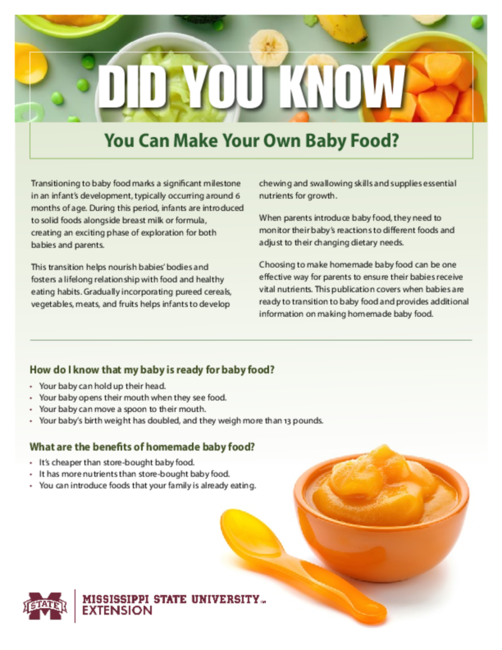
Credit: extension.msstate.edu
Ingredients On A Budget
Making homemade baby food can save you money, especially when you focus on affordable ingredients. You don’t need fancy or exotic foods to provide your baby with nutritious meals. By choosing budget-friendly options, you can keep costs low without compromising on quality or taste.
Fresh Produce: Buy Seasonal And Local
Seasonal fruits and vegetables are often cheaper and taste better. Visit your local farmers’ market or shop sales at your grocery store. For example, sweet potatoes, carrots, and bananas are usually affordable year-round and make great baby food staples.
Consider buying in bulk if you find a good deal. Freeze extra portions so you can stretch your savings for months.
Frozen Fruits And Vegetables: A Smart Alternative
Frozen produce can be a lifesaver when fresh options are expensive or unavailable. Frozen peas, broccoli, or mango chunks are budget-friendly and just as nutritious as fresh versions.
Ensure the package doesn’t contain added salt, sugar, or preservatives. A quick steam or boil, and you’re ready to blend them into baby food.
Dry Goods: Pantry Staples For Baby Food
Rice, oats, and lentils are inexpensive options that can be turned into filling and nutritious baby meals. Cook them until soft and puree them with water, breast milk, or formula.
These items are shelf-stable, making it easy to keep them on hand for quick meal prep.
Store Brand Vs. Name Brand Ingredients
Store-brand items are often significantly cheaper and just as good as their name-brand counterparts. Compare labels to ensure they meet your quality standards.
For instance, store-brand unsweetened applesauce can be a convenient base for baby food at a fraction of the cost.
Stretch Your Ingredients
Think about how versatile your ingredients can be. A single batch of steamed carrots can be blended for your baby and used as a side dish for your own dinner.
This approach reduces food waste while saving you money. How many meals can you create from one ingredient?
Diy Vs. Pre-packaged Baby Food
Pre-packaged baby food often costs more because you’re paying for convenience. By making your own baby food, you control the ingredients, save on packaging costs, and reduce waste.
With a little planning, homemade baby food can be just as quick to prepare as opening a store-bought jar.
Saving money doesn’t mean sacrificing nutrition. With these budget-friendly ingredient ideas, you can nourish your baby while keeping your wallet happy. What affordable ingredient will you try next?
Time Vs Savings
Making homemade baby food can save money compared to store-bought options. But it’s essential to weigh the financial savings against the time investment. Parents often wonder if the effort is worth the cost difference. Let’s explore whether the time spent on preparation justifies the savings.
How Much Time Does Homemade Baby Food Take?
Preparing baby food at home involves several steps. You need to shop for fresh ingredients, wash, peel, cook, and blend them. Freezing and storing portions also takes time. A single batch may take 1-2 hours depending on the recipe. For busy parents, this can feel overwhelming.
Batch cooking can reduce the overall time spent each week. Making larger quantities at once saves effort and provides meals for days. But it still requires planning and kitchen time upfront.
How Much Money Can You Save?
Store-bought baby food jars or pouches can be expensive. On average, they cost $1-$2 per serving. Homemade baby food can cost significantly less. For example, a bag of carrots might cost $2 and yield 10 servings. This makes each serving just a few cents.
Buying seasonal produce or in bulk can lower costs further. Using simple recipes with fewer ingredients also helps. Over time, the savings can add up, especially if your baby eats several servings daily.
Balancing Time And Savings
The decision often depends on your schedule and budget. If you value convenience, store-bought food might be better. But if saving money is a priority, homemade food could be worth the effort. Some parents find a middle ground by making food occasionally while still using store-bought options.
Ultimately, the balance between time and savings varies for every family. Assess your personal needs and resources to decide what works best.

Credit: www.usatoday.com
Tools For Homemade Baby Food
Homemade baby food can often be more affordable than store-bought options. Basic tools like blenders and steamers simplify preparation. Making meals at home allows you to choose fresh ingredients, reducing costs while ensuring quality.
Making baby food at home can be simple and cost-effective. The right tools make the process easier and faster. You don’t need fancy gadgets. Basic kitchen tools can handle most tasks. Below are the essential tools for preparing homemade baby food.Blender Or Food Processor
A blender or food processor is essential for smooth purees. It breaks down fruits, vegetables, and grains into a soft texture. Choose one with multiple speed settings for better control. Hand blenders are also a good option for small batches.Steamer Basket
A steamer basket is perfect for cooking vegetables and fruits. Steaming helps retain nutrients while softening the food. It fits inside most pots and is easy to clean. Use it to prepare carrots, apples, or sweet potatoes.Baby Food Storage Containers
Storage containers keep homemade baby food fresh and organized. Choose BPA-free containers with secure lids. Silicone freezer trays are ideal for freezing small portions. Label them with dates to track freshness.Cutting Board And Knife
A sturdy cutting board and sharp knife are basic essentials. Use them to chop fruits, vegetables, and meats into smaller pieces. Wooden or plastic boards are easy to clean and maintain. A paring knife works well for peeling and small cuts.Pot Or Saucepan
A pot or saucepan is useful for boiling and steaming. Use it to cook grains, vegetables, or soups. Choose one with a lid to cook food evenly. Stainless steel or non-stick options are both practical.Mesh Strainer
A mesh strainer helps remove lumps from purees. It’s especially helpful for foods like peas or berries. Use it to ensure a smooth texture for your baby. It’s lightweight, easy to clean, and affordable.Measuring Cups And Spoons
Measuring tools help portion baby food accurately. Use them to measure liquids and solids before cooking. Small sizes are best for baby food recipes. Stainless steel or plastic options work well.Mixing Bowls
Mixing bowls are useful for preparing and storing food. Choose bowls with a non-slip base for stability. Glass or stainless steel options are durable and easy to clean. Multiple sizes are helpful for different tasks. `Storage Hacks
Making homemade baby food can be a smart way to save money, but how you store it plays a big role in keeping costs low and avoiding waste. Proper storage ensures your hard work doesn’t go to waste and keeps your baby’s meals fresh and safe. Let’s dive into some simple storage hacks to make homemade baby food even more budget-friendly and practical.
Use Ice Cube Trays For Portion Control
Ice cube trays are a game-changer for storing baby food. They allow you to freeze small portions, which is perfect for your baby’s tiny appetite. Once the food is frozen, pop the cubes out and store them in labeled freezer bags.
This method reduces waste since you can thaw exactly what you need. Plus, it’s easy to mix and match different cubes for variety in meals.
Label Everything
Ever pulled a mystery container out of the freezer and wondered, “What is this?” Avoid that confusion by labeling everything. Write down the type of food and the date it was made on a piece of masking tape or use stickers.
Labels help you track freshness and ensure you rotate older batches first. It’s a small step that saves time and prevents waste.
Invest In Airtight Containers
Airtight containers are worth the upfront cost because they keep baby food fresher for longer. Glass containers with snap lids are particularly durable and easy to clean. If you prefer plastic, choose BPA-free options.
Using airtight containers also prevents freezer burn, which can ruin the taste and texture of your baby’s meals.
Freeze In Flat Layers
If you’re short on freezer space, try flattening baby food in resealable bags. Lay the bags flat in the freezer so they stack neatly. This saves space and makes thawing quicker.
When you’re ready to use the food, simply break off the amount you need. It’s efficient and minimizes mess.
Don’t Forget About Shelf Life
Homemade baby food doesn’t last forever, even in the freezer. Most purees stay fresh for up to three months when frozen. Make a habit of checking dates and tossing anything that’s past its prime.
Would you eat food that’s been sitting for months? Probably not. Treat your baby’s meals with the same care.
Keep Emergency Portions Handy
Life gets busy, and there will be days you don’t have time to cook. Freeze a few emergency portions in single-use containers for those hectic moments. It’s better than resorting to expensive store-bought options at the last minute.
This small prep step can save you money and stress in the long run.
Which of these hacks will you try first? Making baby food at home is already cost-effective, but with smart storage, you’ll make it even more practical. Start small, and soon you’ll have a system that works perfectly for you and your little one.
Maximizing Nutritional Value
Making homemade baby food isn’t just about saving money—it’s also an opportunity to ensure your baby gets the most nutritional value from their meals. Store-bought options often include preservatives, added sugars, or other ingredients you may not want in your baby’s diet. By making it yourself, you control every ingredient, every texture, and every nutrient.
How Fresh Ingredients Make A Difference
Fresh fruits and vegetables are packed with vitamins and minerals that benefit your baby’s growing body. The closer your produce is to its harvest date, the more nutrients it retains. Buying seasonal produce or sourcing from local farmers markets can maximize freshness and keep costs low.
Think about sweet potatoes—they’re rich in vitamin A, fiber, and potassium. When you bake and puree them yourself, you’re preserving all those nutrients, unlike some store-bought versions that may lose quality during processing.
Customizing For Your Baby’s Needs
Your baby’s nutritional needs evolve quickly during their first year. Homemade baby food lets you adjust ingredients and textures to match their development. If your baby needs more iron, you can easily add spinach to their purees.
Want to avoid common allergens like dairy or gluten? You’re in full control. Making your own food ensures there’s nothing in the meal your baby doesn’t need or shouldn’t have.
Reducing Nutrient Loss During Cooking
How you cook your baby’s food matters. Boiling vegetables can lead to nutrient loss, especially water-soluble vitamins like vitamin C. Steaming or roasting is often a better option, locking in more of the good stuff.
When you make homemade baby food, you can save the cooking water and use it to thin out purees. This way, even the nutrients that escape during cooking stay in your baby’s meal.
Creating Balanced Meals
A well-rounded diet is crucial for your baby’s growth, and homemade food helps you achieve that. By combining a variety of foods—like mixing avocado with banana or adding lentils to carrots—you can create nutrient-dense meals that taste great.
Don’t forget about healthy fats! Adding a teaspoon of olive oil or a pinch of ground flaxseeds can provide essential fatty acids that support brain development.
What About Organic?
Worried about pesticides? Going organic for certain items, like apples and spinach, can reduce your baby’s exposure to harmful chemicals. If organic produce is out of your budget, washing and peeling fruits and vegetables thoroughly can still make a big difference.
Even when you prioritize organic options, homemade baby food is often cheaper than store-bought organic jars or pouches.
So, is homemade baby food worth it nutritionally? Absolutely. You’re not just feeding your baby; you’re shaping their health and palate for years to come. What ingredients will you choose to maximize your little one’s nutrition today?
Frequently Asked Questions
Is Making Your Own Baby Food Cheaper Than Buying It?
Making your own baby food is often cheaper than buying store-bought options. Homemade recipes use fresh ingredients, reducing costs.
Is It Worth Making Your Own Baby Food?
Making your own baby food is worth it. It’s cost-effective, ensures freshness, and allows control over ingredients. You can tailor recipes to suit your baby’s needs, promoting healthier eating habits. Homemade options often lack preservatives, making them a safer choice.
It also encourages bonding during preparation.
How Much Does It Cost To Make Your Own Baby Food?
Making your own baby food costs around $0. 50 to $1 per serving, depending on ingredients and portion sizes.
What Is The 3 Day Rule For Baby Food?
The 3-day rule for baby food introduces one new food at a time, waiting three days to check for allergies.
Conclusion
Making homemade baby food can save money and offer health benefits. It gives parents control over ingredients and ensures freshness. Store-bought options may be convenient but often cost more. Preparing meals at home also reduces packaging waste. While it requires time and effort, many find it worthwhile.
Assess your budget, schedule, and priorities to decide what works best. Homemade baby food may not suit everyone, but it’s worth considering. Small steps like blending simple fruits or veggies can make a big difference. Choose what feels right for your family and lifestyle.