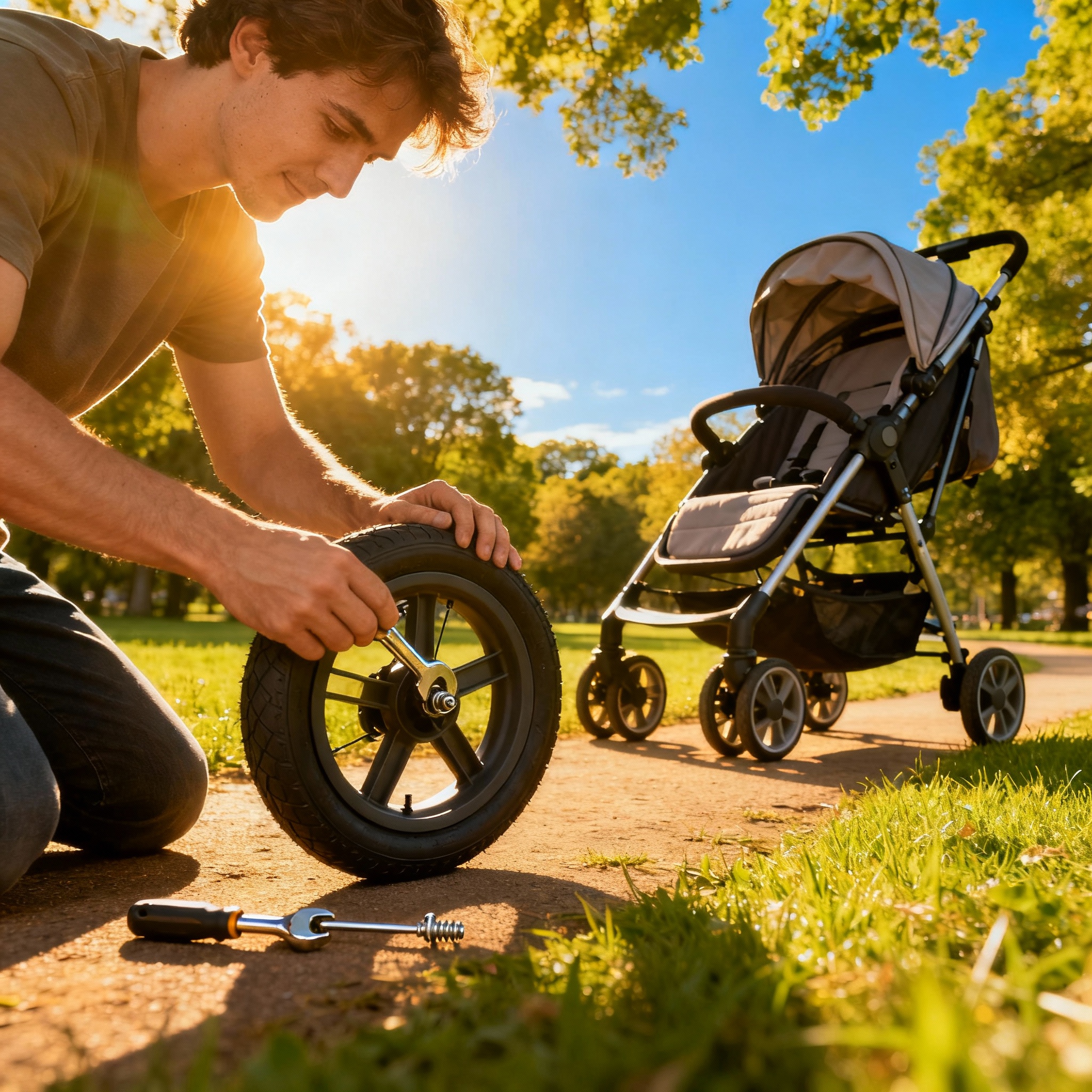
You’re all set for a walk in the park with your little one. The sun is out, the air feels great, and then you notice a wobble in the stroller wheels.
Stroller wheel repair is one of the most common maintenance tasks parents face. If your stroller suddenly feels hard to push, squeaks, or veers to one side, a quick check can usually get you rolling again. This guide walks you through simple steps to diagnose, clean, tighten, and replace parts when needed, including how to remove and reattach wheels (similar to these 3-wheel stroller wheel removal steps).
The good news: you don’t need a full workshop. With a few basic tools and a careful safety check, you can restore smooth, safe rides for your child (and decide later when it’s time to stop using a stroller).
Most stroller wheel issues come from loose hardware, trapped debris, or worn bearings and tires. Fix them by removing the wheel, cleaning the axle and wheel well, tightening fasteners, lubricating moving parts with a stroller-safe silicone spray, and replacing damaged tires or wheel assemblies. Always test brakes and stability before using.
Key takeaways
- Start with the basics: remove hair and debris, tighten hardware, and clean the axle.
- Use a stroller-safe silicone lubricant sparingly to reduce squeaks without attracting grit.
- Replace wheels or bearings when you see cracks, persistent wobble, or rough spinning.
- After any repair, test steering, braking, and wheel locks before putting your child back in.
Common wheel problems
Strollers are essential for parents, but wheels can act up. Figuring out the problem first helps you fix it quickly and keeps rides smooth for your little one.
Loose wheels
Loose wheels make the stroller feel unstable. Check the nuts, bolts, and quick-release pins regularly. Tighten hardware with the correct wrench or hex key, but avoid over-tightening, which can bind the wheel.
Jammed wheels
Jammed wheels make pushing difficult. Debris, sand, and hair are the usual culprits. Inspect around the axle and inside the wheel fork, then clean until the wheel spins freely.
Wobbly wheels
Wobble usually comes from a loose axle, worn bearings, or a cracked wheel hub. Start by tightening fasteners, then inspect the axle and bearing area for play. If the wheel still wobbles, you may need new bearings or a replacement wheel assembly.
Flat tires
Flat tires reduce efficiency and can affect stability. Check for punctures or leaks, then inflate to the pressure listed on the tire sidewall. Patch small punctures, or replace the tube or tire if the damage is severe.
Uneven wear
Uneven tread wear can make the stroller pull to one side. If your stroller allows wheel rotation (some do, many don’t), rotate as directed in the manual. Otherwise, replace worn wheels to keep handling predictable. If you’re shopping for a new set, see what to consider when buying a stroller.
Tools and materials needed
Repairing stroller wheels requires the right tools and materials. Gathering everything before you start saves time and frustration (and can help if you’re comparing gear options like lightweight bases and travel setups).
Tools you will need
- Wrench or adjustable spanner (for nuts and bolts)
- Screwdriver set (Phillips and flathead)
- Hex keys or Allen keys (common on stroller axles)
- Pliers (for stubborn clips or pins)
- Cleaning cloth and soft brush (an old toothbrush works well)
- Tire pump (for air-filled tires)
- Utility knife or seam ripper (for cutting tangled hair or string)
If you’re lubricating, use a stroller-safe silicone spray. It’s a light, non-greasy option that reduces squeaks without coating everything in oil.
Materials required for repair
- Replacement nuts, bolts, washers, or cotter pins (match the original size)
- Rubber patches and/or a spare inner tube (for pneumatic tires)
- Replacement wheels or wheel assemblies (model-specific)
- Optional: tire sealant for slow leaks (only if compatible with your tire type)
Safety gear
- Work gloves (protect against sharp edges and grime)
- Safety goggles (helpful when prying clips or using sprays)
Removing the wheels
Removing wheels lets you inspect the axle, bearings, and wheel well. Work on a clean surface so small parts don’t roll away.
Gather your tools
A simple wrench or screwdriver is often enough. Check your stroller’s manual if you’re unsure what hardware your model uses.
Locate the wheel lock mechanism
Most strollers use a quick-release button, a lever, or a retaining clip near the wheel. Find the mechanism on each wheel before you start so you know how everything fits back together.
Disengage the lock
Press the release, pull the lever, or remove the retaining clip or bolt. Keep washers, clips, and pins together in a small container so nothing gets lost.
Remove the wheel
Once unlocked, the wheel should slide off. If it sticks, wiggle gently while pulling straight out. Avoid forcing it. Bending a fork or axle can create a bigger repair.
Inspect the wheel and axle
Check for cracks, missing hubcaps, bent axles, and grit around the bearing area. If the axle looks rusty or scored, clean it and consider replacing worn parts.
Cleaning and inspecting
Regular cleaning prevents squeaks, dragging, and uneven steering. It also helps you spot wear before it becomes a safety problem.
Gather your cleaning supplies
Use warm soapy water, a soft brush or cloth, and an old toothbrush for tight areas. Mild soap is usually enough for routine cleaning.
Clean the wheels thoroughly
Scrub the treads and the wheel fork where dirt collects. For jammed wheels, remove wrapped hair or string around the axle with a utility knife or seam ripper.
Rinse and dry
Rinse with clean water, then dry fully to reduce the chance of rust and odors. Let parts air-dry before reassembly.
Inspect for wear and tear
Look for cracked plastic, worn treads, loose screws, and “gritty” wheel rotation. If a wheel feels rough even after cleaning, the bearings may be worn.
Check wheel alignment
Misalignment can cause the stroller to veer. If it pulls to one side, confirm both wheels sit straight on the axle and that no washer or spacer is missing (steering problems can also be a hidden reason a baby seems to hate the stroller).
Repairing or replacing parts
Many wheel problems are fixable at home. When parts are cracked, severely worn, or missing, replacement is usually the safest and quickest option.
Replace worn bearings
Worn bearings can cause squeaks, wobble, or resistance. After removing the wheel, check your manual (or the bearing markings) for the correct size. Press in new bearings evenly so they sit flush and secure.
Repair tire damage
For pneumatic tires, patch small punctures with a repair kit. Replace the inner tube or tire if you see sidewall cracks, repeated flats, or significant tread wear.
Lubricate moving parts (sparingly)
After cleaning and drying, add a small amount of silicone-based lubricant to the axle and bearing area. Wipe away overspray so it doesn’t collect dust, and avoid greasing the brake surfaces. Stick with a silicone spray rather than standard WD-40, which can attract dirt and wear off quickly. For more on stroller-safe lubricant choices, see this stroller maintenance guide from Strollberry.
Adjust wheel alignment
Loosen fasteners, reposition the wheel so it sits straight, then tighten again. Test-roll the stroller to confirm it tracks straight.
Replace wheel assemblies
If the wheel hub is cracked, the axle is bent, or wobble persists after tightening and cleaning, replace the wheel assembly with one designed for your stroller model. Use the exact model name and number when ordering parts.
Preventive maintenance and storage
A little regular upkeep goes a long way toward avoiding repairs.
Clean wheels every few weeks if you use the stroller often. After trips through sand, mud, or rain, clean and dry the wheels right away to prevent rust and jams. A quick wipe-down of the axles takes less than five minutes and can save you from a stuck wheel later.
When storing the stroller, keep it in a dry, sheltered spot. Damp garages, sheds, and basements can speed up corrosion on metal axles and bearings. If you have to store it outdoors, use a weather-resistant cover and check the wheels before your next outing.
Every month or so, give each wheel a spin by hand. If any wheel drags, clicks, or feels gritty, clean and lubricate the axle before the problem gets worse.
Reassembling and testing
Take your time here. This is where you confirm everything is secure and safe.
Reassemble the wheels
Align each wheel with its axle and push until it clicks or locks in place. Confirm the wheel is fully seated and doesn’t wobble.
Tighten screws and bolts
Tighten hardware firmly but don’t crank down so hard that the wheel binds. Re-check that any washers or spacers are in the same order as before.
Test steering and alignment
Roll the stroller forward on a flat surface. It should track straight and turn smoothly without pulling.
Check the brakes
Engage the brakes and gently push to confirm the stroller stays put. Release the brakes and test again. If braking feels inconsistent, stop using the stroller until you can fix or replace the brake components.

Safety checks and when to stop DIY
- Stop using the stroller if you see frame cracks, broken brakes, a wheel that won’t lock in place, or any part that keeps loosening.
- Check for recalls and register your stroller with the manufacturer for safety alerts. You can also browse stroller recalls on the U.S. Consumer Product Safety Commission website.
- Look for certified products when buying replacement parts or a new stroller. The Baby Safety Alliance (formerly JPMA) tests and verifies strollers against ASTM safety standards, giving parents extra confidence.
- Follow your manual for approved parts and maintenance steps, especially for jogging strollers and travel systems.
- After repairs, do a short test roll with an empty stroller before putting your child in.
For general stroller safety tips (including brake use and stability features), see the American Academy of Pediatrics guidance on choosing a safe stroller.
If you’re planning to run or jog, make sure your model is designed for it (here’s a quick guide on jogging with a regular stroller).
FAQs
How do I identify stroller wheel issues?
Look for squeaking, wobbling, pulling to one side, or extra resistance when pushing. Check for debris around the axle and make sure all wheels are locked in securely.
What tools do I need to fix stroller wheels?
Most repairs only need a wrench, screwdrivers, pliers, and a cleaning brush. For air-filled tires, keep a pump and a patch kit or spare tube on hand.
Can I replace stroller wheels myself?
Yes, as long as you buy wheels made for your exact stroller model and install them according to the manual. After replacement, test that the wheels lock, spin smoothly, and the brakes work correctly.
How often should I clean and service stroller wheels?
If you use the stroller often, clean the wheels every few weeks and do a quick hardware check before outings. After sand, mud, or rain, clean and dry the wheels sooner to prevent jams and rust.
What lubricant is best for stroller wheels?
A light, stroller-safe silicone spray is a popular choice because it reduces squeaks without staying sticky like heavy oils. Apply sparingly and wipe away excess so it doesn’t collect grit.
Wrapping up
Fixing stroller wheels is often simpler than it looks. Start with cleaning and tightening, then replace worn parts when needed. Regular checks before use help prevent surprises, and a quick test roll after repairs keeps every outing smooth and safe.
Want to go deeper on stroller upgrades and parts? Here are a few related reads: stroller buying checklist and Graco stroller fixes.