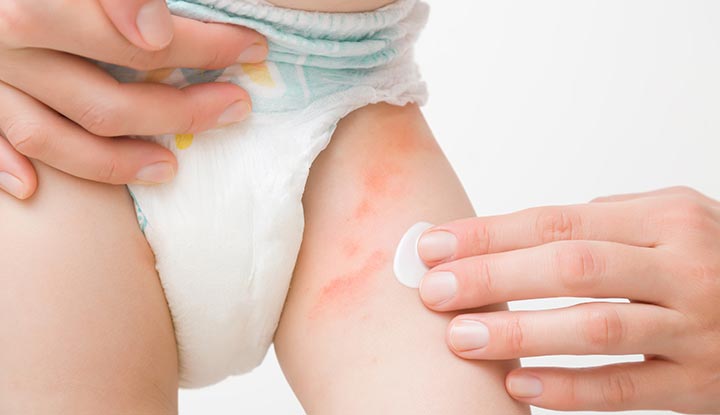
A diaper rash that won’t clear up can leave your baby sore, fussy, and hard to comfort.
Most diaper rashes come from moisture, rubbing, or irritation, but yeast can cause a brighter, more stubborn rash. You can often spot the difference by checking how the rash looks, where it appears, and how it responds to regular diaper cream.
This guide explains the key signs of a yeast diaper rash, what can cause it, how doctors often treat it, and when you should call your baby’s pediatrician.
Quick Answer
A yeast diaper rash often looks bright red, raised, and clearly bordered. It may appear in skin folds and may have small red bumps near the main rash. If the rash does not improve after a few days of regular diaper care, ask your baby’s pediatrician about yeast and antifungal treatment.
Key Takeaways
- Check for bright red patches, raised edges, and small bumps around the main rash.
- Look closely in skin folds, since yeast often grows in warm, moist creases.
- Change diapers often and keep the area clean and dry.
- Regular barrier creams may help irritation, but yeast often needs antifungal cream.
- Call your pediatrician if the rash spreads, blisters, bleeds, or does not improve.
Identifying Diaper Rash
Diaper rash can cause redness, soreness, and irritation in your baby’s diaper area. The right treatment depends on the cause, so it helps to know what type of rash you see.
A yeast diaper rash can look different from a regular irritation rash. Spotting the signs early can help you choose better care and know when to call a doctor.
Signs Of Regular Diaper Rash
Regular diaper rash often looks red and inflamed. It usually affects the skin that touches the diaper, such as the buttocks, thighs, or lower belly.
Moisture, stool, urine, and friction often trigger this type of rash. You may see small red spots or flat red patches. Many mild irritation rashes improve with frequent diaper changes, gentle cleaning, and barrier cream.
Characteristics Of Yeast Diaper Rash
Yeast diaper rash often appears bright red and may have raised, clear edges. You may also see small red bumps, sometimes called satellite spots, near the main rash.
This rash often shows up in skin folds or creases around the thighs and groin. It can spread quickly in warm, moist areas and may cause more discomfort than a mild irritation rash.
Duration Of The Rash
A regular diaper rash often starts to improve within a few days with careful diaper changes and barrier cream. A yeast rash may last longer without the right treatment.
If your baby’s rash does not improve after about three days of regular care, yeast may play a role. Call your pediatrician if the rash looks worse or your baby seems very uncomfortable.
Response To Treatment
Regular diaper rash often responds to thick barrier creams that protect skin from moisture. Yeast rashes usually need an antifungal cream, which your doctor or pharmacist may recommend.
If your usual diaper cream does not help, do not keep using stronger products without advice. A pediatrician can confirm the cause and guide safe treatment for your baby.
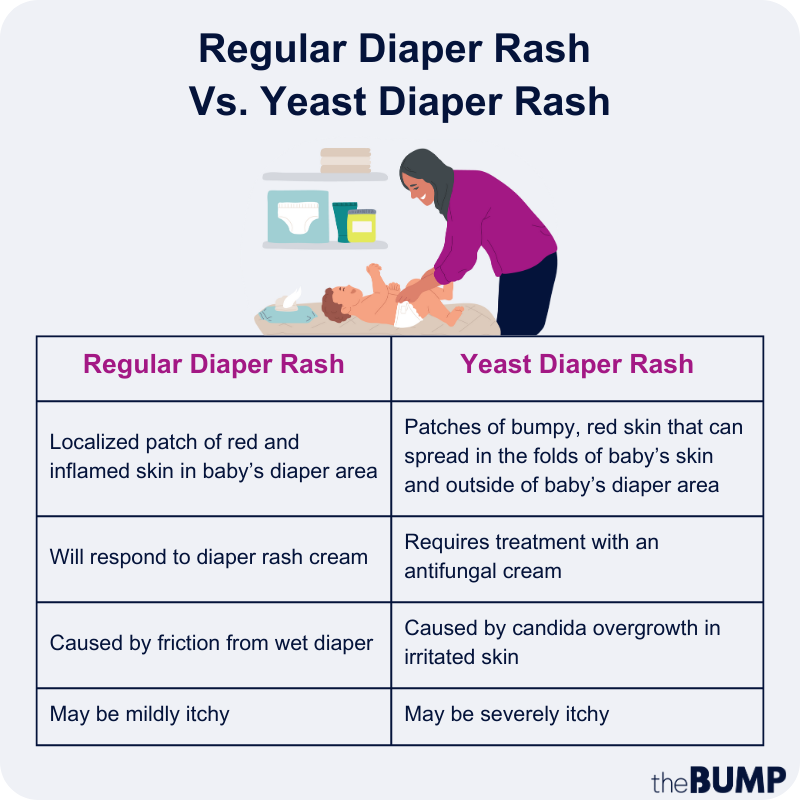
Credit: www.thebump.com
Common Causes Of Diaper Rash
Diaper rash can have more than one cause. Moisture, rubbing, sensitive skin, new foods, and yeast can all irritate your baby’s skin.
Finding the likely trigger can help you prevent the rash from coming back.
1. Moisture
Moisture often causes diaper rash. Urine and stool can sit against the skin and weaken its natural barrier.
Change wet or dirty diapers as soon as you can. Use a soft cloth or gentle wipe, then let the skin dry before you put on a clean diaper.
2. Friction
A tight diaper can rub your baby’s skin and make irritation worse. Friction can also happen when a diaper fits poorly or shifts as your baby moves.
Choose a diaper that fits snugly but does not leave deep marks. Leave enough room for comfort around the waist and legs.
3. Sensitivity To Diapers Or Wipes
Some babies react to fragrances, dyes, preservatives, or materials in diapers and wipes. A rash that starts after a new product may point to sensitivity.
Try fragrance-free wipes or plain water with a soft cloth. You can also switch back to a diaper brand that your baby tolerated well.
4. Introduction Of New Foods
New foods can change your baby’s stool. Stool that becomes more frequent or acidic can irritate the diaper area.
Watch for rashes after new foods, especially when your baby starts solids. Share patterns with your pediatrician if rashes happen often.
5. Yeast Infection
Yeast can grow in warm, moist areas under a diaper. A yeast rash can appear after irritation weakens the skin, or after antibiotic use changes the balance of normal germs.
Think about yeast if the rash looks bright red, reaches skin folds, or does not improve with regular care. A doctor can help confirm it.
Signs Of Yeast Infection
Diaper rash is common, but some rashes signal a yeast infection. Yeast grows when fungus builds up on warm, moist skin.
This type of rash can feel more irritating and may last longer than a simple friction rash.
Red, Raised Patches
Yeast infections often cause bright red patches. These patches may look raised and may have a clear border.
The redness can look more intense than a regular diaper rash. It may also feel sore when you clean the area.
Small Bumps And Pimples
Look for tiny red bumps near the main rash. These spots may cluster around the larger red area.
The bumps can spread if the rash gets worse. Call your pediatrician if you see blisters, open sores, or pus.
Rash In Skin Folds
A yeast diaper rash often affects skin folds. Check the creases around your baby’s thighs, groin, and lower belly.
Regular irritation rashes may spare the folds. Yeast often favors these warm, moist creases.
Persistent Rash
Yeast infections often linger longer than regular rashes. If the rash does not improve with frequent diaper changes and barrier cream, yeast may be the cause.
Do not wait too long if the rash worsens. A pediatrician can recommend the right antifungal treatment.
Severe Itching And Discomfort
Yeast rashes can itch or sting. Your baby may cry during diaper changes or seem more fussy than usual.
Try gentle cleaning and avoid scrubbing. Rubbing can break the skin and make pain worse.
White Or Yellowish Scales
Some yeast rashes may develop white or yellowish scaling. The skin may look shiny, peeling, or raw in some areas.
Scaling alone does not prove yeast. Use it with other signs, such as bright redness, skin-fold involvement, and poor response to regular cream.
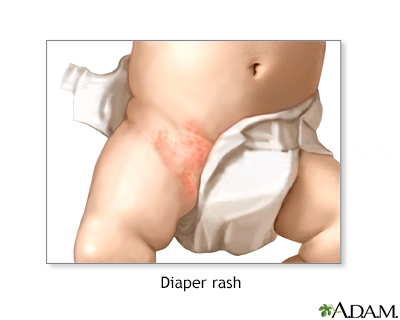
Credit: www.mountsinai.org
Differences Between Regular And Yeast Rash
Yeast diaper rash often has brighter redness, clearer borders, and small bumps near the main rash. Regular diaper rash usually looks more like flat irritation where the diaper rubs or traps moisture.
These signs can overlap, so avoid guessing if the rash looks severe. Use the differences below as a guide, then check with your baby’s doctor when you feel unsure.
Recommended Products

EFFECTIVE TREATMENT: Combat athletes foot, jock itch, and ringworm with our clotrimazole antifungal cream. This proven formula effectively treats common fungal infections, making it a trusted solution for relief and recovery.

Aquaphor Baby Diaper Rash Paste, enriched with Shea Butter, provides immediate soothing relief in just one application

Two-Tube Pack: Includes two 3.25-ounce tubes; total of 6.5 ounces
Appearance And Texture
Regular diaper rash often looks red, irritated, and patchy. It may feel warm or tender, but the edges usually look less defined.
Yeast rash often looks darker or brighter red. It may have raised, scaly patches and small red satellite spots around the main area.
Location Of The Rash
Regular diaper rash often appears on the buttocks, thighs, or other places where the diaper touches the skin. Moisture and rubbing usually drive the irritation.
Yeast rash often shows up in folds of skin. The warm, moist creases around the groin and thighs give yeast a place to grow.
Response To Treatment
A regular diaper rash often improves with thick barrier cream, gentle cleaning, and more frequent diaper changes. You may see clear improvement within a few days.
A yeast rash may keep spreading despite these steps. It often needs antifungal cream, so ask your pediatrician before you start treatment in a young baby.
When The Rash Needs Extra Attention
Call your pediatrician if your baby has fever, blisters, bleeding, swelling, pus, or a rash that spreads beyond the diaper area. You should also call if your baby seems very sleepy, refuses feeds, or acts unusually ill.
Seek advice sooner for newborns or babies with weak immune systems. These babies may need faster medical care.
Warning: Call your baby’s doctor right away if the rash has blisters, open sores, pus, fever, or fast spreading redness.
Treatment Options For Yeast Rash
A yeast rash needs care that targets fungus. Regular diaper rash creams can protect irritated skin, but they may not clear yeast by themselves.
Your pediatrician can help you choose the safest treatment for your baby’s age and symptoms.
Recommended Products
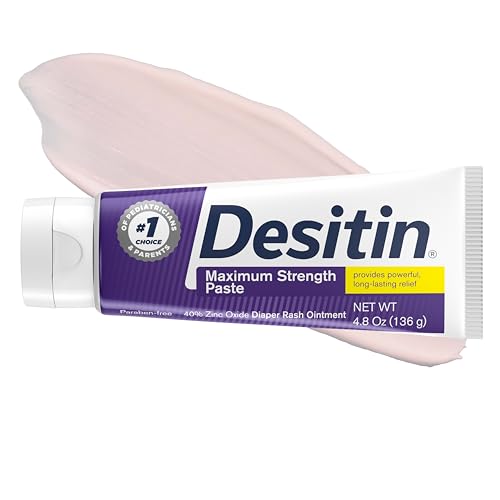
5-in-1 Baby Paste: Helps treat, heal, protect, soothe and help prevent diaper rash; Desitin Zinc Oxide paste seals out wetness and soothes chafed skin for noticeable relief on contact

Aquaphor Baby Diaper Rash Cream is a 3 in 1 solution prevents, soothes and treats diaper rash

Diaper Rash - meet your match; Our clean, gentle formula glides on easily and is infused with our Soothing Phyto-Blend to help form and support a healthy, protective skin barrier to sooth irritation
Topical Antifungal Creams
Antifungal creams treat yeast by targeting the fungus on the skin. Common options may include clotrimazole or miconazole, but your baby’s doctor should guide use.
Apply medicine only as directed. Clean the area gently and let it dry before you apply the cream.
Keeping The Area Dry
Yeast grows well in moist areas. Keep your baby’s diaper area as dry as you can.
Change diapers often, especially after stool. Give your baby short diaper-free breaks on a washable towel when you can supervise closely.
Using Barrier Creams
Barrier creams protect skin from urine and stool. Zinc oxide creams often help shield irritated skin while it heals.
Ask your doctor how to layer barrier cream with antifungal medicine. In many cases, the medicine should touch clean, dry skin first.
Probiotics For Boosting Immunity
Some parents ask about probiotics when yeast rashes come back. Evidence for infants varies, and the right choice depends on your baby’s age and health.
Talk with your pediatrician before you give probiotics to a baby. This matters more if your baby was premature or has a health condition.
Avoiding Irritating Products
Scented wipes, soaps, and lotions can irritate sensitive diaper-area skin. Choose gentle, fragrance-free products while the rash heals.
Skip powders unless your doctor recommends them. Babies can breathe in loose powder, which can irritate their lungs.

Credit: themomcentre.com
Preventing Yeast Diaper Rash
You can lower the chance of yeast diaper rash by reducing moisture, friction, and skin irritation. A simple diaper routine often makes the biggest difference.
Focus on clean, dry skin and gentle products. These steps can also help mild irritation heal faster.
Recommended Products

Super Soft & Gentle on Baby’s Skin: Made from ultra-soft fabric, our baby changing pad covers keep your baby comfortable. Whether it’s a changing pad cover girl or boys, this soft material is gentle on sensitive skin


YEAR-ROUND COZY SLEEP: Designed as a versatile baby sleep bag that layers easily over pajamas, this smooth, stretchy exterior lets little ones move freely covered, helping maintain a consistent sleep temperature so bedtime feels calm and secure.
Understand The Causes
Yeast grows best in warm, moist places. A diaper can trap heat and dampness against your baby’s skin.
Long stretches in a wet or dirty diaper raise the chance of irritation. That irritation can make it easier for yeast to grow.
Change Diapers Often
Frequent diaper changes help keep urine and stool off your baby’s skin. Change dirty diapers right away when possible.
At night, use an absorbent diaper and a barrier cream if your baby sleeps for longer stretches. This helps reduce moisture against the skin.
Choose The Right Diapers
Use diapers that absorb well and fit comfortably. A diaper that feels too tight can rub and trap moisture.
If one brand seems to trigger rashes, try a different style or material. Watch your baby’s skin after each change.
Clean Gently
Use mild wipes, plain water, or a soft damp cloth. Pat the area clean instead of scrubbing.
Let the skin dry before you fasten a new diaper. A few extra seconds can help reduce trapped moisture.
Allow Diaper-Free Time
Short diaper-free breaks let air reach the skin. Place your baby on a washable towel and stay nearby.
Even a few minutes can help damp skin dry. Stop if your baby gets cold or uncomfortable.
Avoid Scented Products
Fragrance can irritate delicate skin. Choose unscented wipes, soaps, and creams when your baby has a rash.
Avoid harsh cleansers and bubble baths. Gentle care protects the skin barrier while it heals.
Monitor Diet
New foods can change stool and may trigger irritation. Keep track of rashes that appear after new foods.
Do not restrict your baby’s diet without medical advice. Share any patterns with your pediatrician.
Consult A Pediatrician
Call your pediatrician if rashes keep coming back or do not improve with careful care. Your baby may need antifungal medicine or another treatment.
A doctor can also rule out other causes, such as allergy, bacterial infection, or eczema. Clear guidance can help your baby feel better sooner.
Frequently Asked Questions
What Are Signs Of Yeast Diaper Rash?
Yeast diaper rash often looks bright red, inflamed, and raised at the edges. You may also see small red bumps around the main rash. It often appears in skin folds and may not improve with regular diaper rash cream.
How Can I Differentiate Between Yeast And Regular Rash?
Yeast rashes often look redder and more defined than regular diaper rashes. They may have satellite bumps and may spread into the groin or thigh folds. Regular diaper rash usually looks flatter and stays where the diaper rubs or traps moisture.
Can Yeast Diaper Rash Spread To Other Areas?
Yeast can spread to nearby skin folds if moisture and irritation continue. Some babies can also have yeast in the mouth, called thrush. Call your pediatrician if you see white mouth patches, feeding trouble, or a rash that keeps spreading.
How Is Yeast Diaper Rash Treated?
Doctors often treat yeast diaper rash with antifungal cream applied to clean, dry skin. You should also change diapers often and avoid scented products. Ask a pediatrician if your baby is very young, the rash looks severe, or the rash does not improve.
Should I Use Regular Diaper Cream On A Yeast Rash?
Barrier cream can protect irritated skin, but it may not kill yeast. Your baby may need an antifungal cream as well. Ask your doctor how to use both products so the medicine can reach the rash.
Medical Disclaimer: This article is for informational purposes only and does not constitute professional medical advice. Always consult a qualified doctor before making decisions based on this information.
Conclusion
The biggest clue to a yeast diaper rash is a bright red, stubborn rash with clear edges, small bumps, or skin-fold involvement. Keep your baby’s diaper area clean and dry, and change diapers often to reduce irritation.
Call your pediatrician if the rash does not improve after a few days, spreads quickly, or looks painful. Fast, careful treatment can help your baby’s skin heal and keep diaper changes more comfortable.