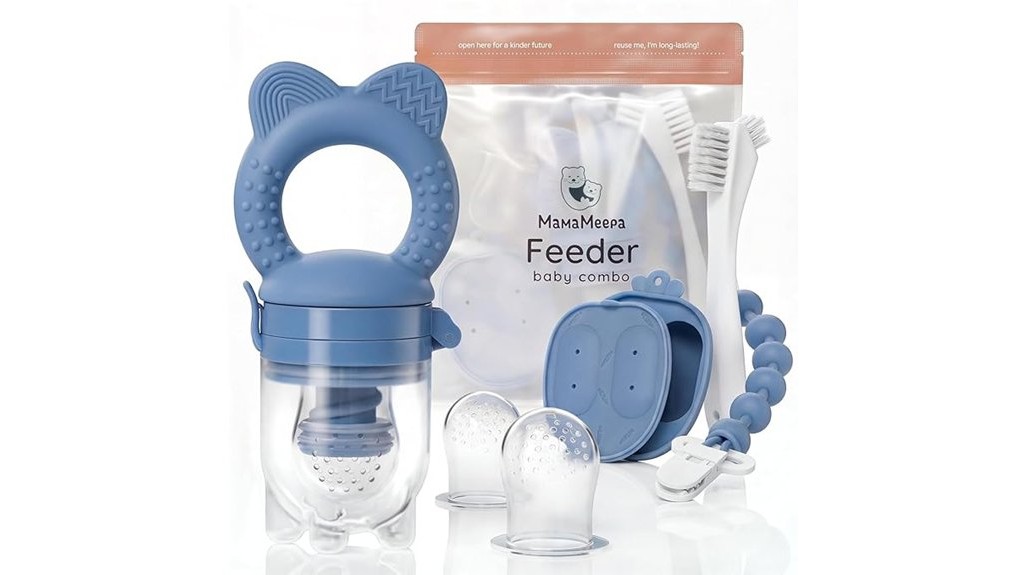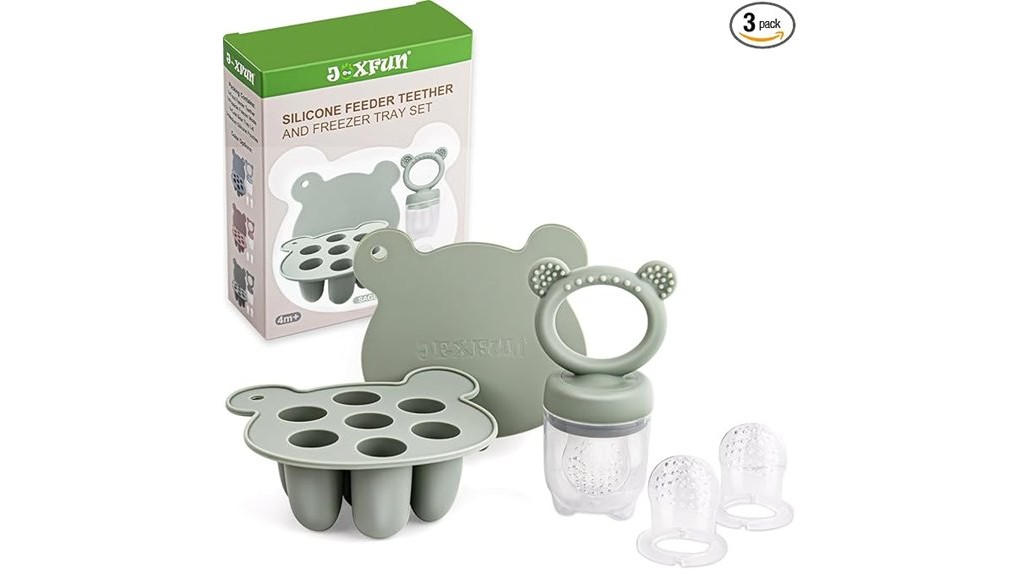
The Silicone Baby Fruit Food Feeder is a practical solution for introducing solids to infants. Constructed from 100% food-grade silicone, it features small holes designed to allow only digestible food pieces, thereby reducing choking hazards. Weighing just a few ounces, it is lightweight and easy for babies to grip. Its dishwasher-safe design guarantees effortless cleaning, while its flexibility supports safe exploration of flavors. These key attributes make it a remarkable option for parents considering weaning strategies. What other aspects should parents consider?
Understanding the Silicone Baby Fruit Food Feeder
The Silicone Baby Fruit Food Feeder serves as a practical tool for parents enthusiastic to introduce solids to their infants.
This feeder, designed with a soft silicone pouch, accommodates various organic foods, promoting feeding independence through baby-led weaning. Measuring approximately 6 inches in length, it’s lightweight and easy to handle.
The design features small holes, allowing only tiny, digestible food pieces, ensuring a safe feeding experience. By encouraging self-feeding, it empowers babies to explore flavors and textures at their own pace.
This feeder supports a nurturing environment, fostering autonomy and confidence as infants begin their culinary journey.
Essential Safety Features for Your Baby
Safety is paramount when choosing products for infants, and the Silicone Baby Fruit Food Feeder excels in this regard.
Designed with choking hazards in mind, its silicone pouch features small holes that allow only tiny, digestible food pieces to pass through, considerably minimizing risks during feeding.
Crafted from 100% food-grade silicone, it is free from harmful substances like BPA, PVC, and phthalates.
Parents can enhance their feeding tips by ensuring the feeder is used correctly, promoting safe self-feeding.
This thoughtful design not only encourages independence but also provides peace of mind, making mealtime a secure experience for both baby and caregiver.
Why Choose Food-Grade Silicone for Your Baby’s Feeder?
Why is food-grade silicone a preferred choice for baby feeders? This material is specifically designed to guarantee safety and promote ideal baby nutrition.
Free from harmful chemicals like BPA, PVC, and phthalates, it supports a healthy feeding experience, essential during key feeding milestones. Its non-toxic nature allows parents to feel confident in their choice, knowing it won’t leach harmful substances into the food.
Additionally, food-grade silicone is durable and flexible, making it easy for babies to grasp and explore new textures.
Key Features and Benefits of the Feeder
When exploring the key features and benefits of the Silicone Baby Fruit Food Feeder, it becomes evident that this innovative tool is designed with both safety and functionality in mind.
The feeder promotes self-feeding benefits, allowing infants to explore solid foods independently, which enhances baby nutrition. Made from 100% food-grade silicone, it prevents choking with small holes for digestible food pieces.
Its user-friendly design facilitates easy food insertion, while the multi-functional capability includes teething and popsicle molds.
This versatile feeder encourages a positive feeding experience, supporting both health and independence in early dietary habits.
Effortless Cleaning and Maintenance Tips?
Effortless cleaning and maintenance of the Silicone Baby Fruit Food Feeder can greatly enhance the user experience, ensuring that parents can quickly prepare for their next feeding session.
To simplify the process, utilize these cleaning tips: rinse the feeder immediately after use to prevent staining, and place components in the dishwasher for thorough sanitation.
For maintenance hacks, inspect silicone parts regularly for wear, ensuring safety. Additionally, using a mild soap solution can help remove stubborn residue, while boiling the feeder for five minutes sanitizes effectively.
Frequently Asked Questions
Can the Feeder Be Used for Frozen Fruits and Vegetables?
The feeder can accommodate frozen fruits and vegetables, enhancing flavor and nutrition. Its design guarantees safety, allowing small pieces to pass through, promoting a liberated self-feeding experience while minimizing choking risks for babies.
What Age Is Suitable to Start Using the Feeder?
Typically, parents introduce the feeder around six months, embracing feeding techniques that promote baby nutrition. Ironically, the quest for independence begins with a tool designed for self-feeding, liberating both baby and caregiver from traditional methods.
How Do I Store Leftover Purees After Use?
Leftover purees should be stored in airtight containers or freezer bags to maintain freshness. Feeding tips include labeling portions with dates, ensuring easy access for future meals, and promoting a stress-free, liberated feeding experience for caregivers.
Is the Feeder Dishwasher-Safe on the Top Rack?
The feeder, a cleaning dream, is indeed dishwasher-safe on the top rack. For ideal feeder maintenance, utilize these cleaning tips to guarantee it remains pristine, liberating parents from tedious handwashing and enhancing mealtime joy.
Can the Silicone Material Cause Allergic Reactions in Babies?
Silicone allergies are rare, but some babies may exhibit sensitivities. Parents should monitor for any reactions during initial use, ensuring a safe and comfortable introduction to solid foods while promoting independence in feeding experiences.
Conclusion
To summarize, the Silicone Baby Fruit Food Feeder emerges as a reliable choice for parents seeking a safe and effective way to introduce solids to their infants. Its food-grade silicone construction guarantees minimal choking risks, while its lightweight design promotes self-feeding. With easy cleaning options and robust durability, this feeder supports both exploration and safety during mealtime. Ultimately, investing in such a tool not only enhances feeding experiences but also nurtures a child’s growing independence with food.