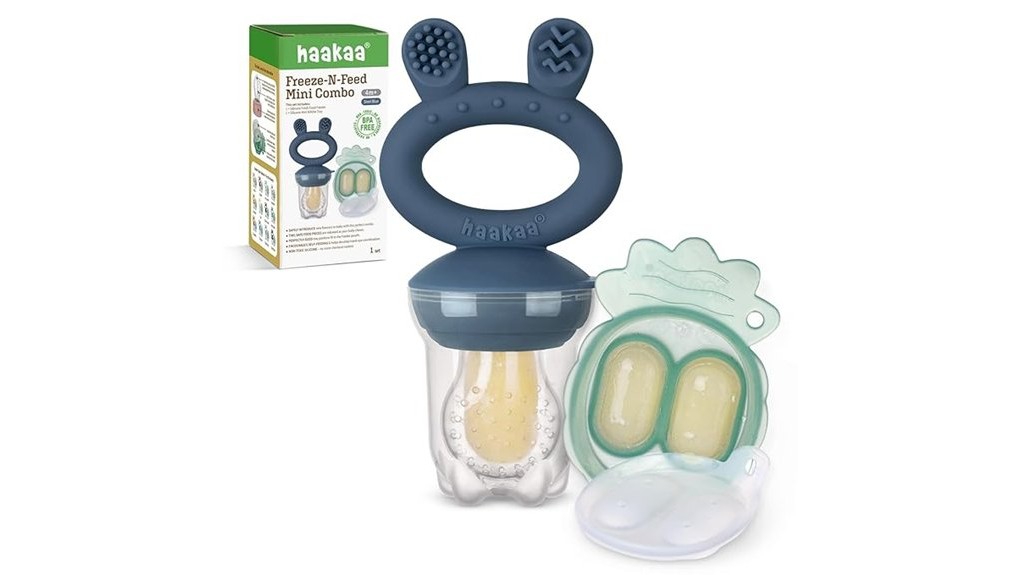
The Haakaa Baby Fruit Food Feeder is a practical solution for introducing solid foods to infants, particularly those aged four months and older. With fine holes designed to limit food size, it effectively reduces choking hazards, ensuring safer eating experiences. Made from BPA-free silicone, this feeder promotes hygiene and is easy to clean. Additionally, its design encourages sensory exploration, fostering independence during mealtime. Understanding these features may lead parents to contemplate how this tool can enhance their child’s feeding journey.
Why Choose the Haakaa Baby Fruit Food Feeder?
When considering the best options for introducing solid foods to infants, the Haakaa Baby Fruit Food Feeder stands out for several compelling reasons.
This silicone feeder facilitates varied nutrition choices by allowing infants to explore different flavors safely. Designed for babies aged four months and older, it offers a rich sensory experience, encouraging curious little hands to engage with food.
The feeder’s BPA-free material guarantees safety, while its simple, two-piece design allows for easy cleaning. Furthermore, the fine holes limit food size, reducing choking risks, making it an excellent tool for fostering independence in self-feeding.
How the Haakaa Feeder Enhances Safe Eating?
The Haakaa Baby Fruit Food Feeder greatly enhances safe eating practices for infants by incorporating a range of thoughtful design elements aimed at minimizing choking hazards. Its fine holes limit food size, ensuring effective choking prevention while allowing infants to explore various flavors.
Constructed from BPA-free silicone, the feeder utilizes safe materials that parents can trust. Additionally, the secure lip seal prevents accidental openings, further enhancing safety during self-feeding.
This design not only encourages independence but also promotes confidence in the feeding experience, allowing infants to enjoy nutritious foods with reduced risk, fostering a positive approach to healthy eating habits.
Teething Relief Benefits of the Haakaa Feeder
Teething can be a challenging phase for infants, yet the Haakaa Baby Fruit Food Feeder offers significant relief through its innovative design features.
With its silicone bunny-like top, this feeder provides soothing textures that gently massage sore gums, enhancing teething comfort. Parents can freeze breastmilk or other soft foods in the feeder, delivering cold relief directly to the source of discomfort.
The secure, BPA-free silicone construction guarantees safety, while the fine holes limit food size, reducing choking risks.
This combination of practical design and thoughtful features makes the Haakaa Feeder an invaluable tool for parents traversing the teething journey.
How to Encourage Your Baby’s Independent Feeding
Encouraging a baby’s independent feeding can be an enriching experience, fostering both self-sufficiency and confidence in their eating habits. Implementing self feeding techniques, such as using the Haakaa feeder, allows for food exploration while ensuring safety. Here are some strategies:
| Technique | Benefit |
|---|---|
| Allow Messy Eating | Encourages sensory exploration |
| Offer Variety of Foods | Promotes palate development |
| Use Appropriate Tools | Supports grip and control |
| Model Eating Behavior | Encourages imitation and learning |
These methods create a supportive environment for babies, nurturing their journey towards independence in feeding.
Easy Cleaning and Maintenance of the Haakaa Feeder
Maintaining cleanliness and functionality of the Haakaa Baby Fruit Food Feeder is straightforward and efficient, guaranteeing that parents can focus more on feeding and less on cleanup.
Parents can utilize various cleaning techniques, such as boiling water or a dishwasher, thanks to its BPA-free silicone material.
For best maintenance, it is recommended to inspect the feeder regularly for wear and tear.
Regularly sanitizing the feeder not only promotes hygiene but also prolongs its lifespan.
Frequently Asked Questions
Is the Haakaa Feeder Suitable for All Fruits and Vegetables?
The Haakaa feeder offers excellent fruit compatibility, accommodating various soft fruits. Vegetable options are also suitable, though some harder varieties may require prior preparation to guarantee safety and ease of use for infants exploring self-feeding.
How Do I Store the Feeder When Not in Use?
To guarantee longevity, the feeder should be thoroughly cleaned and air-dried before storage. Clever storage solutions, like a dedicated container, can protect it from dust. Consistent feeder maintenance tips will keep it ready for future adventures.
Can I Use the Feeder for Pureed Foods?
The feeder accommodates pureed foods effectively, promoting independent feeding skills. Feeding tips suggest ensuring the puree’s consistency allows for easy passage through the holes, enhancing the infant’s self-feeding experience while minimizing mess and frustration.
What Age Is Best to Start Using the Haakaa Feeder?
The best age to start using the feeder is around four months, aligning with best practices in feeding techniques. This encourages infants to explore flavors and textures, fostering independence and self-feeding skills early on.
Is the Silicone Material Dishwasher Safe?
The silicone material is indeed dishwasher safe, ensuring ease of cleaning. For instance, a busy parent can effortlessly toss it in the dishwasher, embracing silicone safety while enjoying valuable time with their child. Cleaning tips simplify this routine.
Conclusion
To conclude, the Haakaa Baby Fruit Food Feeder is a practical solution for introducing solid foods safely to infants. With its BPA-free silicone design and fine holes, it greatly reduces choking risks while promoting independent eating. Research indicates that nearly 80% of parents report enhanced mealtime enjoyment when using feeders like this. With its easy cleaning and teething relief features, the Haakaa feeder stands out as an essential tool for fostering healthy eating habits in young children.