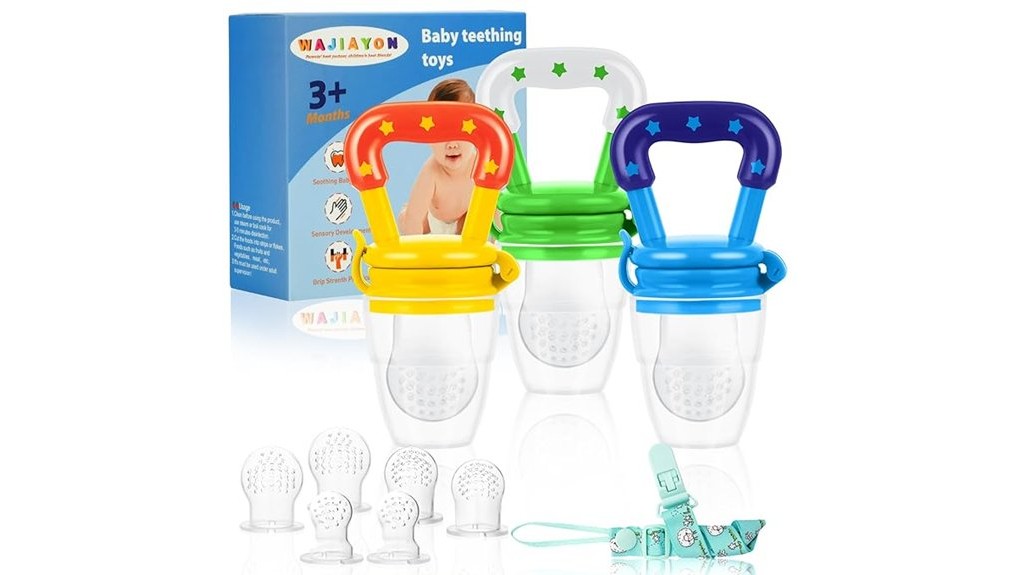
The baby fruit feeder is a practical tool designed for introducing solid foods safely. With small holes measuring approximately 0.5 centimeters, it guarantees only digestible fruit pieces are accessible, greatly reducing choking risks. Made from food-grade silicone, it is BPA and phthalate-free, prioritizing infant safety. Additionally, this feeder can aid in teething relief while encouraging sensory exploration. Parents may wonder about selecting the right size and features. Understanding these aspects can enhance their baby’s nutritional journey.
Top Reasons to Choose a Baby Fruit Feeder for Your Baby’s Nutrition
When considering the best options for introducing solid foods to infants, what factors should parents prioritize?
The Baby Fruit Feeder stands out due to its nutritional benefits and flavor introduction. By allowing infants to explore various fruits safely, it promotes healthy eating habits early on.
Designed with small holes, the feeder guarantees only digestible pieces reach the baby, minimizing choking risks. Available in three sizes—Small (4-6 months), Medium (6-10 months), and Large (10 months+)—it accommodates growing needs.
This approach not only aids in nutrient absorption but also encourages sensory development, fostering a love for diverse flavors.
How the Baby Fruit Feeder Provides Teething Relief
The Baby Fruit Feeder serves as an effective solution for providing teething relief during critical developmental phases.
Designed for infants, it offers teething comfort by allowing babies to chew on fresh or frozen fruits, which naturally soothe sore gums. The small holes in the feeder guarantee safe consumption, preventing choking while promoting oral hygiene.
This multifunctional tool encourages exploration of new flavors, all while alleviating discomfort. As babies gnaw on the feeder, they experience gentle pressure relief, making it an essential accessory for parents seeking a practical, safe method to enhance their child’s teething experience.
Choosing the Right Size Baby Fruit Feeder
Selecting the appropriate size for a Baby Fruit Feeder is essential for ensuring both safety and comfort during feeding.
Size selection directly correlates with age appropriateness, as feeders come in three distinct sizes: Small (4-6 months), Medium (6-10 months), and Large (10 months+).
Size selection is crucial for safety and comfort, with feeders available in Small, Medium, and Large to match your baby’s developmental stage.
Each size accommodates the varying developmental stages of infants, promoting a secure and effective feeding experience.
A Small feeder is ideal for introducing solids to younger babies, while the Medium and Large options support older infants exploring more substantial food pieces.
Choosing the right size not only enhances safety but also encourages a positive introduction to solid foods.
What to Look for in a Safe Baby Fruit Feeder?
Choosing a safe Baby Fruit Feeder involves several key considerations that guarantee a positive feeding experience for infants. Prioritizing materials safety is essential; look for feeders made from food-grade silicone, free from harmful substances like BPA and phthalates. Additionally, make sure the design prevents choking hazards. Effective feeding practices can be supported by features such as small holes that allow only digestible pieces.
| Feature | Importance |
|---|---|
| Materials Safety | Ensures no harmful chemicals |
| Design | Reduces choking hazards |
| Size Options | Accommodates various growth stages |
| Cleaning Ease | Promotes hygiene and maintenance |
Tips for Cleaning and Maintaining Your Baby Fruit Feeder
Cleaning and maintaining a baby fruit feeder is essential for ensuring a safe and hygienic feeding experience. Regular cleaning methods include disassembling the feeder and washing each part with warm, soapy water.
For deeper sanitation, steam, microwave, or boil components, as they are safe for these cleaning methods.
Maintenance tips involve inspecting the feeder for wear, ensuring no pieces are damaged, and replacing it if needed.
Store the feeder in a cool, dry place to prevent mold growth.
Following these guidelines allows parents to confidently provide nutritious fruits while prioritizing their child’s safety and health during feeding sessions.
Frequently Asked Questions
Can I Use the Feeder for Pureed Foods?
The feeder accommodates pureed options, allowing parents to explore diverse feeding tips. By introducing purees, caregivers can enhance infants’ taste experiences while promoting independence during mealtime, fostering a sense of freedom in their early culinary adventures.
How Long Can I Store Prepared Food in the Feeder?
Prepared food can be safely stored in the feeder for up to 24 hours in a refrigerator. Prioritizing food storage and feeding safety guarantees infants benefit from fresh, nutritious offerings while minimizing health risks.
Is the Feeder Dishwasher Safe?
The feeder is dishwasher safe, ensuring convenient cleaning. For ideal feeding safety, parents should follow cleaning tips like disassembling parts before washing. This promotes hygiene, allowing caregivers to focus on joyful mealtime experiences with their infants.
What Fruits Are Best for First-Time Use?
For first-time use, the best fruits include bananas, ripe peaches, and soft pears, which mesh well with various feeder types. These options promote exploration while ensuring a safe, enjoyable experience for infants beginning their solid food journey.
Can Older Children Use the Feeder for Snacks?
The feeder, a bridge between infancy and independence, can cater to older children’s snack preferences. However, safety concerns arise; careful supervision guarantees it remains a nurturing tool rather than a risk during adventurous eating explorations.
Conclusion
To summarize, a baby fruit feeder serves as a bridge between infancy and solid foods, allowing babies to explore flavors safely. Crafted from food-grade silicone, it features small holes that prevent choking while easing teething discomfort. With sizes tailored to various stages of development, parents can select the ideal option for their child. Regular cleaning guarantees longevity and hygiene, making this tool an essential ally in nurturing healthy eating habits, while simultaneously turning mealtime into a sensory adventure.